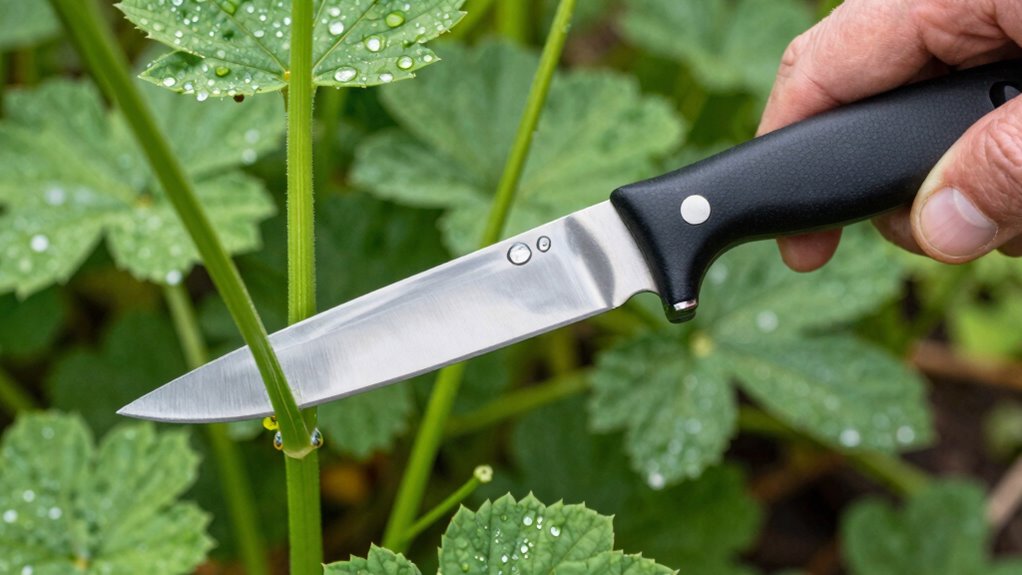
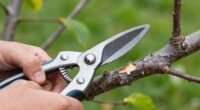
To guarantee plants bounce back, use sharp, well-maintained knives to make clean, precise cuts just above a node or leaf set. Slice smoothly with deliberate motions, angling away from the main stem to minimize damage. Supporting healthy regrowth involves limiting cuts to only what’s necessary and avoiding tearing or ripping. Incorporating proper techniques promotes quick healing and sustainable harvesting—if you want to master these essential skills, there’s more to learn below.
Key Takeaways
- Use a sharp, well-maintained knife to make smooth, clean cuts that minimize plant tissue damage.
- Cut just above a node or leaf set to promote quick healing and healthy regrowth.
- Angle your cuts away from the main stem or root to reduce stress and prevent infection.
- Employ slicing motions rather than tearing to ensure a cleaner cut and reduce plant trauma.
- Support sustainable harvesting by removing only necessary parts and avoiding overharvesting to promote plant recovery.
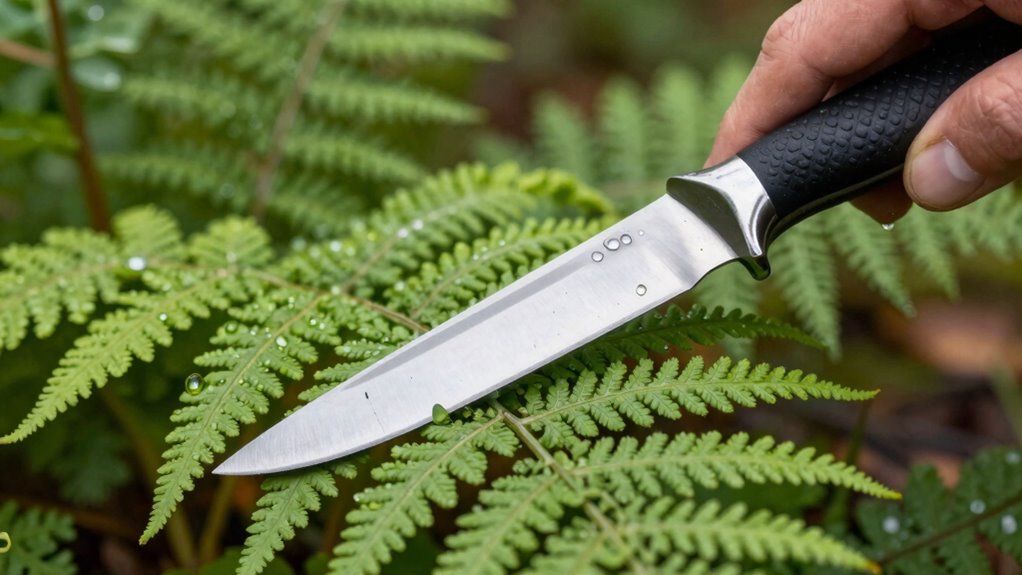
When foraging in the wild, having the right knife techniques can make all the difference in safely and efficiently harvesting plants and fungi. Your goal is to collect what you need without causing unnecessary damage to the environment, which means mastering skillful cuts and understanding sustainable pruning. Proper technique ensures you take only what’s needed while giving plants the best chance to recover and thrive for future foraging trips.
Wild harvesting isn’t just about grabbing what’s available; it’s about respecting the plant’s health and the ecosystem. When you use your knife, aim for clean, precise cuts that minimize tearing or crushing. A sharp, well-maintained blade allows you to make smooth cuts, reducing stress on the plant. For example, when harvesting herbs or leafy greens, cut just above a node or leaf set to promote healthy regrowth. This approach supports sustainable pruning, which is critical in maintaining the vitality of wild plants and fungi.
Sustainable pruning begins with understanding the growth habits of the plants you’re collecting. Instead of plucking or tearing, use a slicing motion to remove only the necessary parts. When harvesting mushrooms, carefully cut at the base to avoid damaging the mycelium, which is essential for future growth. Similarly, if you’re collecting berries or small fruits, gently cut or pinch stems rather than yanking them off, which could harm the plant’s structure and slow its recovery.
Your knife technique should also involve mindful positioning. Always angle your cut away from the plant’s main stem or root system. This prevents unnecessary harm and encourages quick healing. Keep your movements controlled and deliberate, avoiding hasty or careless cuts that can scar the plant or lead to infection. A clean, precise cut not only supports the health of the plant but also ensures that your harvest is of the highest quality.
To further support sustainable harvesting, incorporating on-device AI capabilities can assist in identifying optimal harvest points and monitoring plant health, ensuring minimal impact on ecosystems. Sustainable pruning isn’t just about individual plants; it’s about conserving the environment. By practicing responsible wild harvesting with proper knife techniques, you help maintain a balanced ecosystem. Overharvesting or careless cutting can lead to plant decline, invasive growth, or soil erosion. Your careful approach helps preserve these natural resources for future generations of foragers and wildlife alike.
In the end, mastering the art of clean, sustainable pruning through proper knife techniques makes you a more responsible forager. You protect the health of the plants, support ecological balance, and ensure that your foraging adventures can continue for years to come. With each precise cut, you’re not just harvesting—you’re contributing to the sustainability of the wild landscape.

DRACHENADER Mushroom Knife with Brush, Folding Foraging Knife
- Blade Material: VG10 Damascus Steel for durability
- Blade Design: Curved blade for clean harvesting
- Handle with Brush: Ergonomic wooden handle with soft brush
As an affiliate, we earn on qualifying purchases.
As an affiliate, we earn on qualifying purchases.
Frequently Asked Questions
What Are the Best Types of Knives for Foraging Plants?
You should choose a foraging knife with a high-quality blade material like stainless steel or carbon steel, ensuring durability and sharpness. Opt for a handle with good ergonomics, providing a comfortable grip for precise cuts without fatigue. A lightweight, balanced knife helps you work efficiently and safely. This combination allows you to make clean, careful cuts that help plants recover quickly, supporting sustainable foraging practices.
How Can I Prevent Disease Transmission When Foraging?
Like a cautious gardener tending delicate blooms, you prevent disease transmission by practicing hygienic handling and contamination prevention. Always sterilize your knife before and after foraging, and avoid cross-contamination by using separate tools for different plants. Store your tools in a clean, dry place. Wash your hands thoroughly, and handle plants carefully to minimize dirt or bacteria transfer. These steps help keep your foraged finds safe and healthy.
Is There a Specific Technique for Cutting Different Plant Species?
Yes, you should use plant-specific cutting techniques for ideal pruning. Adjust your knife angle and pressure depending on the plant species, ensuring a clean, precise cut that minimizes damage and disease risk. For woody plants, make clean, slanting cuts just above a bud or branch junction. For softer plants, use gentle, straight cuts. Proper technique promotes healthy regrowth and maintains the plant’s overall health.
How Do I Maintain the Sharpness of My Foraging Knife?
Your foraging knife stays sharp like a razor with regular knife honing, which realigns the blade’s edge. Use sharpening tools, like a whetstone or ceramic rod, to preserve its precision. After each use, clean and dry the knife to prevent rust. Store it in a sheath or a safe place. Consistent maintenance ensures you’ll always have a clean cut, helping plants bounce back quickly.
Are There Safety Tips for Handling Sharp Knives in the Wild?
To stay safe while handling sharp knives in the wild, always follow proper knife safety and handling tips. Keep your grip firm, cut away from your body, and use a stable surface. Wear gloves if needed, and store your knife securely when not in use. Stay alert, avoid distractions, and always pay attention to your surroundings to prevent accidents. Proper handling keeps you safe and your knife in top shape.

Garden Silicone Thumb Knife, Harvesting Tools for Garden, Harvesting Knife with Cut Resistant Finger Cots, Garden Tool Set for Trimming Plant, Gardening Gifts and Kitchen Help
- Multi-purpose harvesting tool: Suitable for garden, pruning, and kitchen
- Complete set includes: 4 silicone thumb knives, 6 finger cots, 1 storage bag
- Ideal for fruit and vegetable harvesting: Cucumbers, tomatoes, berries, and more
As an affiliate, we earn on qualifying purchases.
As an affiliate, we earn on qualifying purchases.
Conclusion
By mastering these foraging knife techniques, you’re like a gardener tending to delicate blooms—each cut a gentle nudge that helps plants bounce back stronger. Remember, a cleaner cut isn’t just about precision; it’s about giving your plants a fresh start and ensuring they thrive. With a steady hand and mindful approach, you’ll nurture nature’s gifts and keep your foraging adventures sustainable and rewarding. Keep your blade sharp and your spirit gentle—nature will thank you.

SPITZKANTE Precision Grafting Knife, Full-Tang Design, Precision Gardening Tool for Budding, Bonsai and Plant Grafting, Blue Handle
- Sharp Stainless Steel Blade: High-quality 5Cr14MoV steel for durability
- Ergonomic Non-Slip Handle: Grooved design for comfortable grip and control
- Vibrant Color Options: Multiple handle colors for style and visibility
As an affiliate, we earn on qualifying purchases.
As an affiliate, we earn on qualifying purchases.

OPINEL No. 08 Mushroom Knife, Curved Stainless Steel Blade, Brush
- Ideal for Foraging: Perfect for picking various wild mushrooms
- Ergonomic Beechwood Handle: Traditional, durable, and comfortable grip
- Integrated Cleaning Brush: Built-in brush for cleaning mushrooms
As an affiliate, we earn on qualifying purchases.
As an affiliate, we earn on qualifying purchases.