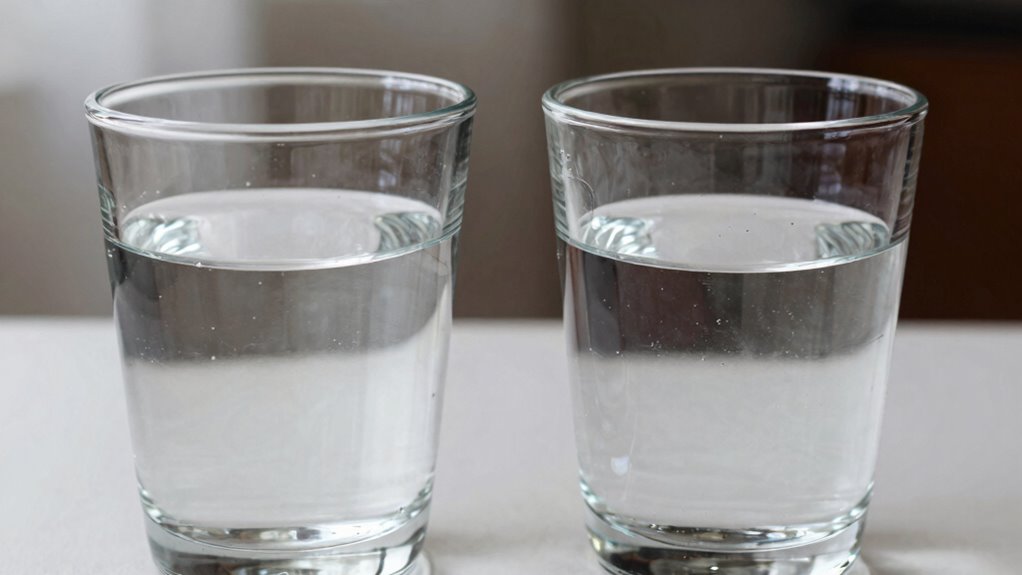

If you need pure water free from minerals and impurities, distilled water is your best choice, especially for lab, medical, or appliance use. Filtered water retains beneficial minerals like calcium and magnesium, making it more suitable for daily drinking and cooking. The difference really matters when purity or mineral content impacts your health or equipment. By understanding these distinctions, you’ll be better prepared to pick the right type every time—there’s more to evaluate that can influence your decision.

Get garden gear delivered free with Prime
- Fast, free delivery on millions of items
- Prime Video, Amazon Music and more included
- Member-only deals all year
Key Takeaways
- When absolute purity and mineral-free water are required, such as in labs or medical devices, distilled water is essential.
- For daily hydration and taste, filtered water is preferable due to retained minerals and better flavor.
- Distilled water is better suited for applications sensitive to mineral deposits and pH consistency.
- Filtered water retains beneficial minerals like calcium and magnesium, supporting overall health.
- The choice matters mainly in technical, medical, or dietary contexts where purity or mineral content impacts safety and effectiveness.

Have you ever wondered what sets distilled water apart from filtered water? The key differences lie in their purity, pH levels, and mineral content, which can notably impact their suitability for various uses. When you compare these two types of water, it’s important to understand how each process affects what you’re drinking or using, especially in situations where the slightest variation matters. Distilled water is created through a process of boiling water and then collecting the steam, leaving behind impurities and dissolved minerals. This process results in water that’s incredibly pure, with almost no mineral content. Because of this, the pH level of distilled water tends to be slightly more neutral, hovering close to 7, but it can sometimes be a little more acidic or alkaline depending on the specific distillation process and environmental factors. This near-neutral pH makes distilled water ideal for applications like laboratory experiments, medical procedures, or in devices where mineral deposits could cause damage, such as steam irons or car batteries. However, since it lacks minerals, it may taste flat or bland compared to other water types, and it may not be the best choice for daily drinking over the long term, as your body needs some minerals to stay balanced. Additionally, distilled water’s lack of minerals can impact its suitability for health and hydration over time. It’s also important to note that the absence of minerals in distilled water means it doesn’t contribute to your daily mineral intake, which could be a concern if it is your primary source of hydration. This deficiency can sometimes lead to a mineral imbalance if relied upon exclusively. Filtered water, on the other hand, undergoes a different process that typically involves passing water through activated carbon or other filtration media. This method removes many contaminants, such as chlorine, bacteria, and sediments, but it often leaves most dissolved minerals intact. As a result, filtered water usually retains a more balanced mineral profile, which can contribute to a more palatable taste and provide some essential minerals like calcium and magnesium. The pH levels of filtered water tend to be more variable, depending on the source water and filtration method, but they generally stay within a safe and acceptable range for drinking. Because filtered water preserves minerals, it can be more beneficial for your health and hydration needs, especially if you’re consuming it regularly. When the difference actually matters—say, for medical, scientific, or technical reasons—distilled water’s purity and consistent pH levels become critically important. Conversely, for everyday hydration, filtered water offers a more natural mineral content and better taste. Understanding these distinctions helps you choose the right type of water for your specific needs, whether it’s for drinking, cooking, or specialized equipment. Additionally, knowing the purity levels of each can guide your decision based on safety and quality standards. Furthermore, the presence or absence of minerals in the water can influence its use in various industrial applications, making the choice even more critical depending on the context.
As an affiliate, we earn on qualifying purchases.
Frequently Asked Questions
Is Distilled Water Safe to Drink Long-Term?
Yes, distilled water is safe to drink long-term, but you should be aware of its low mineral content and pH levels. Since distillation removes minerals like calcium and magnesium, it might not provide essential nutrients over time. Its pH can be slightly acidic, which could affect your body’s balance if consumed exclusively. It’s best to supplement with mineral-rich foods or beverages to maintain overall health.
Can Filtered Water Remove All Harmful Contaminants?
They say you can’t catch everything, and filtered water isn’t an exception. While it removes many harmful contaminants, it may not eliminate all, especially chemicals or microbes that require advanced filtration. Filtered water can affect mineral content and pH balance, so check your filter’s capabilities. For complete safety, consider additional treatments if you’re concerned about specific pollutants, but generally, filtered water provides a good level of protection.
Does Distilled Water Taste Different From Filtered Water?
Yes, distilled water tastes different from filtered water because it has a neutral flavor profile due to the lack of mineral content. Filtered water often retains some minerals, giving it a slight taste and a more familiar, invigorating feel. You might notice distilled water tastes flat or bland, while filtered water offers a subtle, natural flavor. Your preference depends on whether you enjoy mineral flavors or prefer a pure, neutral taste.
Which Is Better for Cooking—Distilled or Filtered Water?
Filtered water is better for cooking because it retains essential minerals that enhance flavor and improve overall taste. Using distilled water can sometimes lead to a flat, bland flavor since it lacks minerals. You’ll notice your dishes, especially soups and teas, taste richer with filtered water. Plus, it’s more practical, offering clean, mineral-balanced water that supports better flavor enhancement without stripping away the natural elements that make your food more delicious.
Are There Health Risks Associated With Drinking Filtered Water?
Drinking filtered water generally poses minimal health risks, but beware of potential mineral depletion and chemical leaching from certain filters. Some filters strip away beneficial minerals or release trace chemicals if not maintained properly. To stay safe, choose high-quality filters, replace them regularly, and verify they’re certified. Staying informed helps you enjoy clean water without risking your health or missing essential minerals.
activated carbon water filter pitcher
As an affiliate, we earn on qualifying purchases.
As an affiliate, we earn on qualifying purchases.
Conclusion
In the end, choosing between distilled and filtered water is like picking the right brush for your masterpiece. Distilled water offers a pure, unblemished canvas, perfect for delicate tasks or health needs. Filtered water, meanwhile, is like a vibrant splash of color—preserving minerals and taste while removing unwanted impurities. Know your palette, and you’ll select the water that turns your everyday sip into a masterpiece of health and flavor.
As an affiliate, we earn on qualifying purchases.
As an affiliate, we earn on qualifying purchases.
Halloween Picks
halloween
As an affiliate, we earn on qualifying purchases.