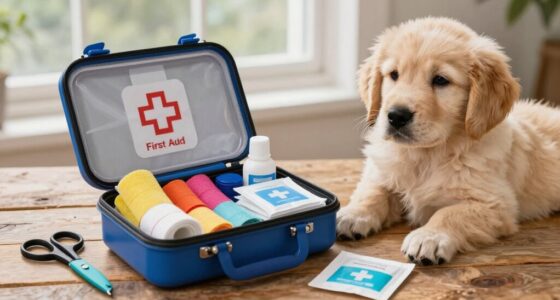

When providing pet first aid, start with gentle restraint and a calm attitude rather than rushing into action. Your steady, soft approach helps reduce your pet’s anxiety and prevents further injury. Focus on controlling the situation peacefully, using slow movements and soothing words. Maintaining your composure allows you to handle emergency procedures more effectively. If you keep this calm, gentle approach, you’ll be better prepared to manage crises confidently and safely. Keep going to discover more helpful tips.

Get garden gear delivered free with Prime
- Fast, free delivery on millions of items
- Prime Video, Amazon Music and more included
- Member-only deals all year
Key Takeaways
- Gentle, controlled restraint minimizes pet stress and injury during emergencies.
- Staying calm and speaking softly helps keep pets relaxed and receptive to handling.
- Prioritizing calmness over speed ensures safe, effective first aid responses.
- Regular training and practice build confidence in restraint techniques and calm handling.
- A composed approach prevents panic, enabling better decision-making and smoother crisis management.

Have you ever wondered how to keep your pet calm and safe during an emergency? When urgency strikes, it’s natural to want to act quickly, but rushing can sometimes do more harm than good. Instead, your first priority should be emergency preparedness—knowing what to do before an incident occurs—and applying calming techniques to keep your pet relaxed. Proper restraint is essential, but it should be gentle and controlled, not hurried or forceful.
Your instinct might be to grab your pet and rush them to the vet, but sudden movements can escalate their stress or even cause injury. Calmly approach your pet, speaking softly and using reassuring gestures. If your pet is overwhelmed or frightened, restraint should be minimal and gentle, focusing on safety without causing additional anxiety. Using calming techniques, such as slow, deliberate movements and a soothing voice, helps signal that everything is under control. This approach not only reduces panic but also makes your pet more receptive to the care you’re providing.
Approach calmly, speak softly, and use gentle restraint to keep your pet safe and reduce stress during emergencies.
Emergency preparedness involves more than just knowing first aid steps; it’s about creating a calm environment in a crisis. Keep a pet first aid kit accessible and familiarize yourself with its contents and proper usage. Practice restraint techniques regularly so that when an emergency happens, you’re confident and composed. Training your pet with positive reinforcement to tolerate handling can make restraint easier when it matters most. Remember, the goal isn’t to restrain forcibly but to secure your pet safely and compassionately, preventing injury to both of you. Developing rescue techniques that are gentle and effective can make a significant difference during stressful situations.
Using calming techniques during an emergency can notably impact your pet’s well-being. Techniques like wrapping your pet in a soft towel or blanket can provide a sense of security. Maintaining a quiet environment, avoiding loud noises or sudden movements, helps keep anxiety levels low. Your calm demeanor influences your pet’s emotional state, so staying composed reassures them that they’re safe. This mental calmness allows you to perform necessary first aid measures more effectively and efficiently. Additionally, understanding pet first aid procedures beforehand enhances your confidence and ability to respond calmly in stressful situations. Preparing yourself with emergency response skills can also significantly reduce panic and improve outcomes. Incorporating stress reduction techniques into your training can further help you and your pet remain composed when it counts.
In essence, effective pet first aid starts with restraint and calm, not speed. It’s about being prepared and applying gentle, deliberate techniques that keep your pet safe and reduce stress. When you prioritize calmness over haste, you’re better equipped to handle the situation with clarity and compassion. Your pet trusts your leadership, and your calm, controlled actions will help them get through the emergency with less fear and more comfort. Developing emergency preparedness routines and practicing restraint can further ensure you’re ready to respond effectively when it counts most.
As an affiliate, we earn on qualifying purchases.
Frequently Asked Questions
How Can I Tell if My Pet Is in Shock?
If you suspect your pet is in shock, look for symptoms like rapid breathing, weakness, pale gums, and a rapid heartbeat. Keep your emergency preparedness and pet first aid kit ready, and stay calm. Restrain your pet gently, avoid unnecessary movement, and seek immediate veterinary help. Recognizing shock early helps you provide essential first aid and stabilizes your pet until professional care arrives.
What Are the Signs of a Broken Bone in My Pet?
You’ll notice bone fractures through swelling, deformity, or unnatural angles, along with pain indicators like whimpering, reluctance to move, or sensitivity to touch. You might see limping, bleeding, or a missing limb. These signs signal a broken bone in your pet. Stay calm, handle your pet gently, and seek veterinary care immediately. Recognizing these key signs helps you act quickly and effectively, ensuring your pet gets the help they need.
How Do I Safely Handle Aggressive or Fearful Pets?
To safely handle aggressive or fearful pets, you should focus on handling anxiety with calming techniques. Speak softly, use slow movements, and avoid sudden gestures that could escalate their fear. If needed, gently restrain the pet with a calm, confident approach, always prioritizing their safety. Remember, patience is key—never force interaction. By maintaining composure, you help reduce their anxiety and create a safer environment for both of you.
What Should I Do if My Pet Is Choking?
If your pet is choking, act fast but stay calm—your quick, confident move can save their life. Perform a Pet Heimlich maneuver by gently but firmly applying abdominal thrusts just above the ribs. Prevent future emergencies with Choking Prevention by keeping small objects out of reach. Remember, staying calm helps your pet stay calm, making it easier to perform these essential steps effectively.
Are There Any Common Mistakes to Avoid During First Aid?
During first aid, avoid rushing or panicking, as it can worsen your pet’s stress or injury. Always focus on emergency preparedness and follow pet safety tips to stay calm and collected. Don’t attempt complicated procedures without proper training, and never ignore signs of severe distress. Keep your pet restrained and calm, ensuring their safety while you provide aid. Staying composed helps you administer effective care and reduces further harm.
As an affiliate, we earn on qualifying purchases.
Conclusion
Remember, in pet first aid, your calmness is the steady anchor in a storm. Restraint and a gentle touch are your guiding stars, leading your furry friend safely through chaos. Speed may seem urgent, but patience and composure build a bridge of trust, turning panic into peace. With a steady hand and a calm heart, you become the gentle lighthouse guiding your pet back to safety, shining hope in their darkest hour.
calming techniques for anxious pets
As an affiliate, we earn on qualifying purchases.
As an affiliate, we earn on qualifying purchases.
As an affiliate, we earn on qualifying purchases.
Halloween Picks
halloween
As an affiliate, we earn on qualifying purchases.