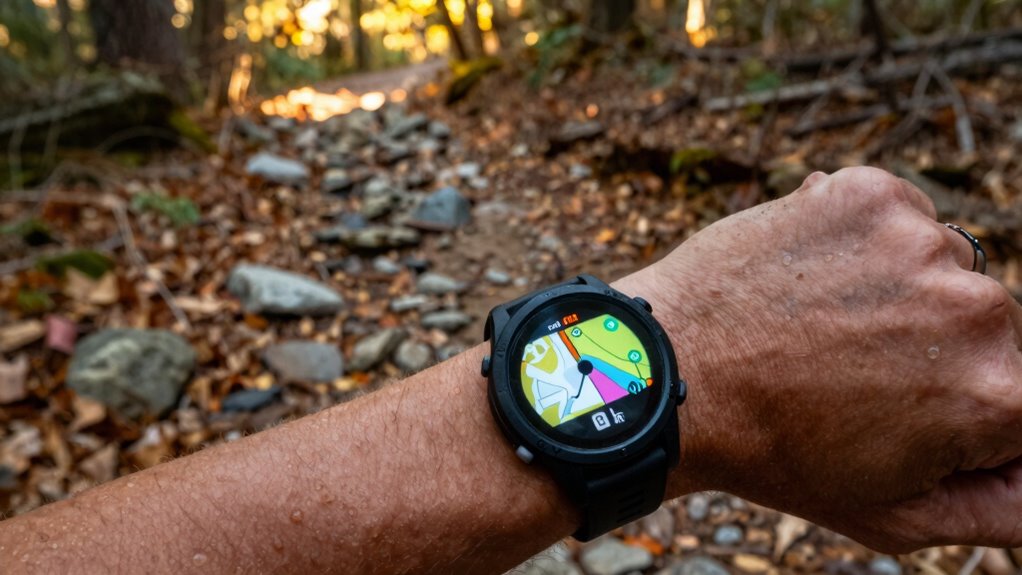

GPS watches are excellent for tracking your routes and providing real-time data on pace and distance. They use satellite signals to determine your position, helping you stay on course and adjust during activities. However, they don’t automatically boost your performance or measure factors like form, fatigue, or efficiency. Environmental factors like tall buildings or tunnels can cause inaccuracies. To get the most from your device, it’s helpful to understand what it can and can’t do—if you keep exploring, you’ll find out more.

Get garden gear delivered free — and shop member deals
- Fast, free delivery on millions of items
- Access to Prime Big Deal Days deals on October 6–7
- Prime Video, Amazon Music and more included
Key Takeaways
- GPS watches accurately track routes, distances, and pace but do not automatically improve athletic performance.
- They rely on satellite signals, which can be affected by urban buildings, trees, tunnels, and environmental interference.
- Data from GPS watches includes route, speed, and distance, but requires proper interpretation for effective use.
- Additional metrics like cadence or stride length enhance insights, but they do not measure form, fatigue, or injury risk directly.
- Environmental factors, signal loss, and battery life limitations mean GPS data should be combined with body awareness for best results.
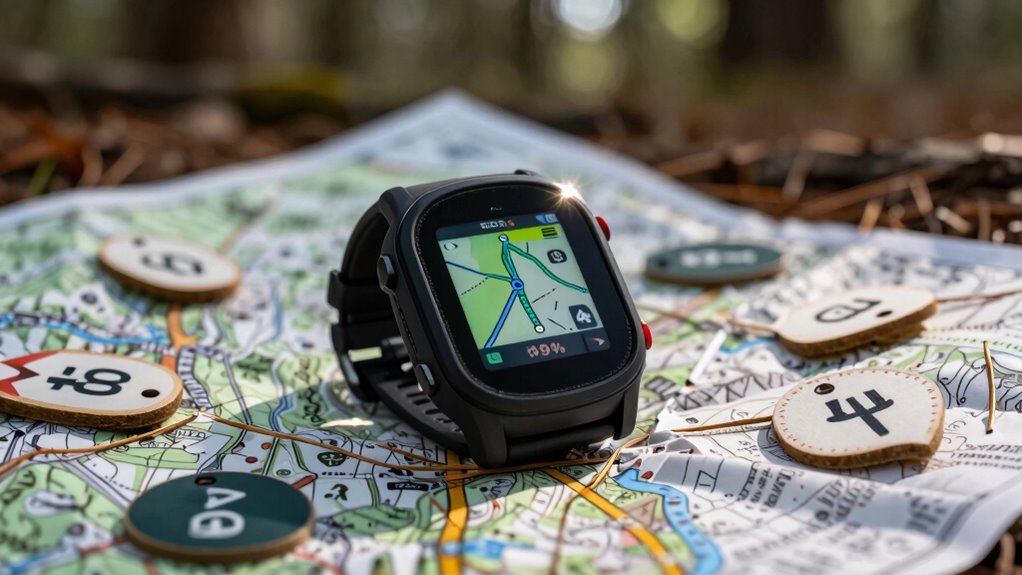
GPS watches are powerful tools for tracking your routes and monitoring your progress, but they aren’t magic devices that automatically make you a better runner or cyclist. They provide valuable insights, especially through real time data, allowing you to see your pace, distance, and route as you go. However, it’s important to understand what they truly track and how reliable that data is. While GPS technology has improved considerably, accuracy improvements can still vary depending on your environment. Urban areas with tall buildings or dense trees can cause signal interference, leading to minor discrepancies in your tracked distance or route. Knowing this, you shouldn’t rely solely on your watch’s data to judge your performance or progress.
Your GPS watch primarily tracks your movement by triangulating signals from satellites. This means it records your position at regular intervals, calculating your speed and distance based on those points. You get real time data that helps you adjust your pace on the fly or see how far you’ve gone, but keep in mind that the data isn’t always perfect. For example, if you make sharp turns or run through tunnels, your watch might momentarily lose signal or record less accurate data. Over time, many watches have seen accuracy improvements through better algorithms and sensor integration, but some variability remains. It’s a good habit to cross-reference your watch data with other metrics like a heart rate monitor or perceived exertion to get a fuller picture of your effort and progress. Additionally, GPS accuracy can be affected by environmental factors, so understanding its limitations helps set realistic expectations. To enhance your training, consider combining GPS data with performance metrics such as cadence or stride length, which can provide deeper insights into your running form. Recognizing the potential for signal interference can help you interpret your data more critically and avoid overestimating your performance. It’s also helpful to remember that battery life can influence how much data your watch can collect during longer sessions, which may impact the completeness of your tracking. Furthermore, GPS watches don’t measure everything. They don’t automatically track your form, strength, or fatigue levels—which are critical to improving as an athlete. They also don’t account for terrain or elevation unless specifically equipped with barometric altimeters. So, while they can tell you how far and how fast you’ve gone, they won’t tell you whether you’re running efficiently or risking injury. It’s tempting to focus on the numbers, but remember that real progress requires listening to your body and considering factors beyond what your GPS shows.
GPS running watch with route tracking
As an affiliate, we earn on qualifying purchases.
As an affiliate, we earn on qualifying purchases.
Frequently Asked Questions
How Accurate Are GPS Watches in Different Weather Conditions?
GPS watches are generally accurate, but weather interference can impact their signal reliability. During heavy rain or storms, your watch might experience slight inaccuracies or signal drops. Clear weather typically guarantees better accuracy, while adverse conditions can cause minor deviations. You should expect some fluctuation in accuracy during bad weather, but overall, GPS watches remain reliable for most outdoor activities. Keep in mind, weather interference can affect precise tracking.
Do GPS Watches Track Health Metrics Besides Location?
Yes, GPS watches do more than just track your location. They actively monitor your fitness metrics, including heart rate, sleep quality, step count, and calories burned. You can rely on them for all-encompassing activity monitoring, which helps you understand your overall health. This real-time data empowers you to make better fitness decisions, stay motivated, and track progress over time—making your workouts smarter and more effective.
Can GPS Watches Work Without a Smartphone?
Yes, many GPS watches can work without a smartphone, thanks to offline functionality. You can track your routes, monitor health metrics, and even use built-in GPS features without relying on a smartphone. However, some advanced features or syncing may require smartphone dependency. Always check your specific model’s capabilities, as offline functionality varies. This way, you enjoy accurate tracking even when your phone isn’t nearby or when there’s no signal.
How Long Does Battery Life Typically Last?
Battery life on GPS watches varies depending on usage and settings, but typically lasts between 8 to 20 hours with continuous GPS tracking. To maximize battery life, you can enable battery optimization features and reduce power consumption by turning off unnecessary sensors or notifications. Adjusting tracking modes and disabling background features also helps extend usage, ensuring your watch lasts longer during extended workouts or outdoor adventures.
Are GPS Watches Suitable for Swimming or Water Activities?
Yes, GPS watches are suitable for swimming and water activities, thanks to their waterproof features. You can confidently wear them in the pool or open water without worry. They also provide swimming accuracy by tracking laps, strokes, and distance. Just make certain your watch has a proper waterproof rating, like 5 ATM or higher, so it withstands water pressure during your swim. This way, you get reliable data and durability.
heart rate monitor compatible with GPS watch
As an affiliate, we earn on qualifying purchases.
As an affiliate, we earn on qualifying purchases.
Conclusion
So, next time you strap on your GPS watch, remember it’s fantastic for tracking your routes and progress, but it’s no magic wand. It won’t instantly improve your performance or reveal hidden secrets. Instead, use it as a tool to motivate and guide you on your journey. After all, isn’t the real magic in your dedication and effort? Embrace the technology, but trust your instincts and hard work even more.
As an affiliate, we earn on qualifying purchases.
stride length measurement device
As an affiliate, we earn on qualifying purchases.
As an affiliate, we earn on qualifying purchases.
Fall yard work Picks
leaf blowers
As an affiliate, we earn on qualifying purchases.