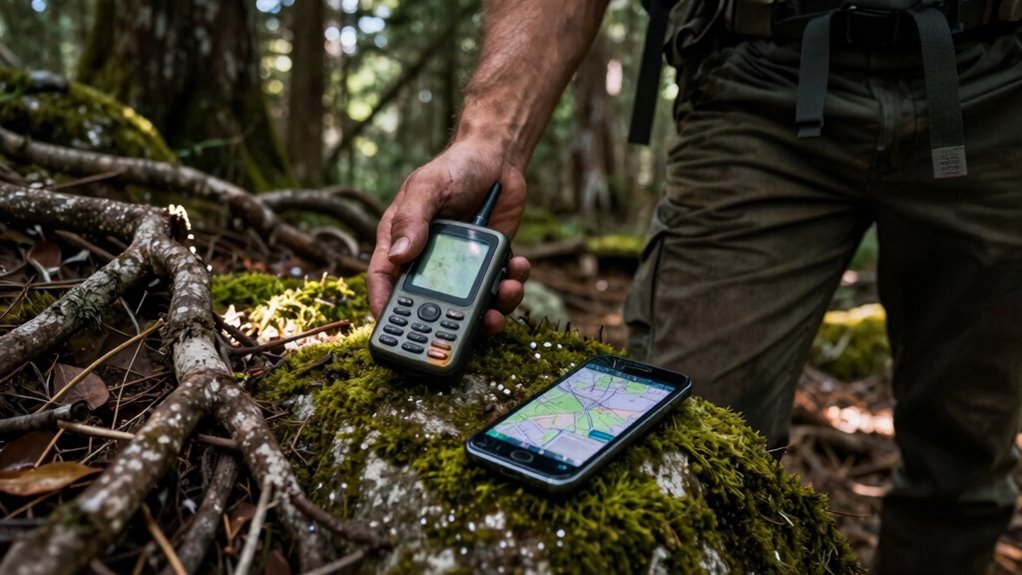

When steering off-grid, a handheld GPS is more resilient than phone maps because it connects directly to satellites and doesn’t rely on cellular signals. Phones depend on network coverage and can quickly run out of battery or lose signal, making navigation unreliable. Meanwhile, dedicated GPS devices are designed for power efficiency and work in remote areas. If you want to understand how to stay safer off-grid, uncover more insights below.

Get garden gear delivered free with Prime
- Fast, free delivery on millions of items
- Prime Video, Amazon Music and more included
- Member-only deals all year
Key Takeaways
- Handheld GPS units rely on satellite signals, ensuring functionality even without cellular or Wi-Fi coverage.
- Phones depend on cellular signals or pre-downloaded maps, risking failure in remote, signal-deprived areas.
- Dedicated GPS devices are more power-efficient, lasting longer off-grid, reducing risk of battery failure.
- Handheld GPS units maintain navigation regardless of network coverage, offering higher reliability off-grid.
- Phones are more prone to failure due to battery drain and signal loss, making them less resilient off-grid.
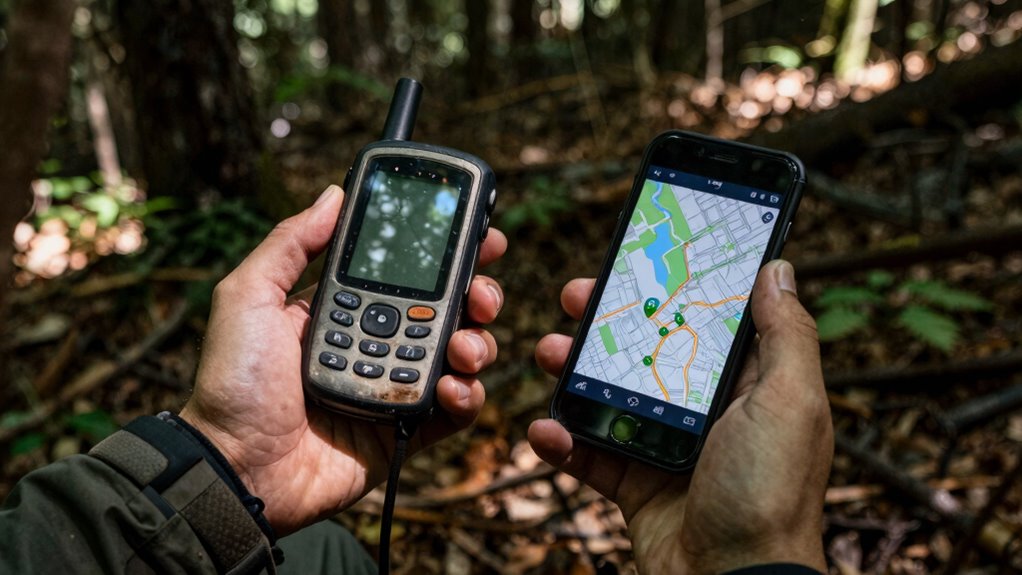
When it comes to navigation, you might wonder whether a handheld GPS or your phone’s map app is the better choice. If you’re heading into remote areas, understanding how each device performs off-grid is vital. Handheld GPS units are designed with satellite connectivity in mind, meaning they don’t rely on cellular signals to work. Instead, they connect directly to satellites, allowing you to access your location even when you’re miles away from cell towers. This independence from cellular networks makes them reliable in wilderness or mountainous regions where phone signals are weak or nonexistent. However, this comes with a trade-off: battery longevity. Handheld GPS devices are built to conserve power, often lasting for days on a single charge or batteries, which is essential when you’re off-grid for extended periods. Their power efficiency is a significant advantage in remote adventures, ensuring you don’t get stranded without navigation tools.
On the other hand, your phone’s map app depends heavily on cellular connectivity or Wi-Fi for map downloads and real-time updates. While this can be incredibly convenient in urban environments where signals are abundant, it’s a major drawback in the wild. Once you’re outside coverage, your ability to navigate diminishes rapidly unless you’ve pre-downloaded maps. Even then, your phone’s GPS can still work without a network, but only if the device has a good GPS chip and enough battery life. Unfortunately, smartphones tend to drain their batteries faster than dedicated handheld GPS units, especially when using GPS continuously or running other apps simultaneously. This shorter battery longevity can leave you vulnerable if you don’t carry portable chargers or extra batteries. Additionally, cellular connectivity is often unreliable or nonexistent in remote areas, which can further hinder your navigation if relying solely on your phone. In terms of failure modes off-grid, handheld GPS units are generally more dependable. Their satellite connectivity ensures they keep working regardless of network coverage, and their longer battery life grants you more time to find your way. Phones, however, are more likely to fail due to battery drain or lack of signal, especially if you forget to download offline maps beforehand. A robust navigation system is crucial when venturing into remote environments, and dedicated GPS units tend to provide that reliability. While phones offer additional functionalities like route planning, weather updates, and ease of use, their reliance on cellular signals and limited battery capacity make them less resilient in remote environments. Moreover, choosing the right device can significantly impact your safety and success in unfamiliar terrains. Ultimately, if you’re venturing into the wilderness, a dedicated handheld GPS often provides a more fail-safe navigation option, especially when satellite connectivity and battery longevity are your top priorities.
As an affiliate, we earn on qualifying purchases.
Frequently Asked Questions
How Does Battery Life Compare Between Handheld GPS and Phone Maps?
Your handheld GPS generally offers better battery efficiency than phone maps, especially off-grid. It’s designed for low power consumption, lasting for hours or even days on a single charge. Phones tend to drain batteries quickly due to higher power consumption from screen use and multitasking. If you’re heading off-grid, a handheld GPS is more reliable in maintaining its power longer, ensuring you don’t lose navigation capabilities when you need them most.
Which Device Is More Durable in Extreme Weather Conditions?
You’ll find that a handheld GPS is way more durable than your phone in extreme weather conditions. Its weather resistance is designed to withstand rain, snow, and dust, making it nearly indestructible. Unlike phones, which suffer from device fragility when exposed to harsh elements, a rugged GPS can handle the worst Mother Nature throws at it. So, if you’re venturing into extreme climates, trust the GPS to keep going strong.
Can Both Devices Work Without Cellular Service?
Both devices can work without cellular service, but they rely on different offline capabilities. Handheld GPS units are designed for off-grid use, so they don’t depend on signal dependency; they use preloaded maps and GPS signals. Phone maps, on the other hand, often need an internet connection for updates or real-time data, so their offline capabilities can be limited. You’ll find handheld GPS devices generally more reliable in remote, off-grid situations.
How Accurate Are Handheld GPS Devices Versus Phone Map Apps?
Like a trusty compass in a sea of modern tech, handheld GPS devices are generally more accurate off-grid. They rely on satellite signals, unaffected by map calibration or signal interference, whereas phone map apps depend on cellular signals and Wi-Fi. While phones can be precise when calibrated and with a clear view of the sky, handheld GPS units provide consistent accuracy, especially in remote, signal-deprived areas.
What Is the Cost Difference Between Handheld GPS and Smartphone Navigation?
You’ll find that handheld GPS devices tend to cost more than smartphone navigation apps, mainly due to better device ergonomics and durability. Handheld units often include features like map calibration and rugged builds, which justify the higher price. Phone maps are usually free or cheaper, but they can lack the specialized features and sturdy design of dedicated GPS devices. Consider your needs and off-grid plans when weighing the cost differences.
As an affiliate, we earn on qualifying purchases.
Conclusion
When venturing off-grid, think of handheld GPS and phone maps as your trusted compass and fragile paper map. The GPS often stays steady, like a sturdy oak weathering the storm, gracefully guiding you through tough terrain. Phone maps, meanwhile, can falter like a leaf in the wind, losing signal or draining batteries. Choose your tool wisely—because in the wild, a reliable device is your anchor, not just a fleeting shadow.
portable GPS with long battery life
As an affiliate, we earn on qualifying purchases.
As an affiliate, we earn on qualifying purchases.
satellite GPS for outdoor adventures
As an affiliate, we earn on qualifying purchases.
As an affiliate, we earn on qualifying purchases.
Halloween Picks
halloween
As an affiliate, we earn on qualifying purchases.