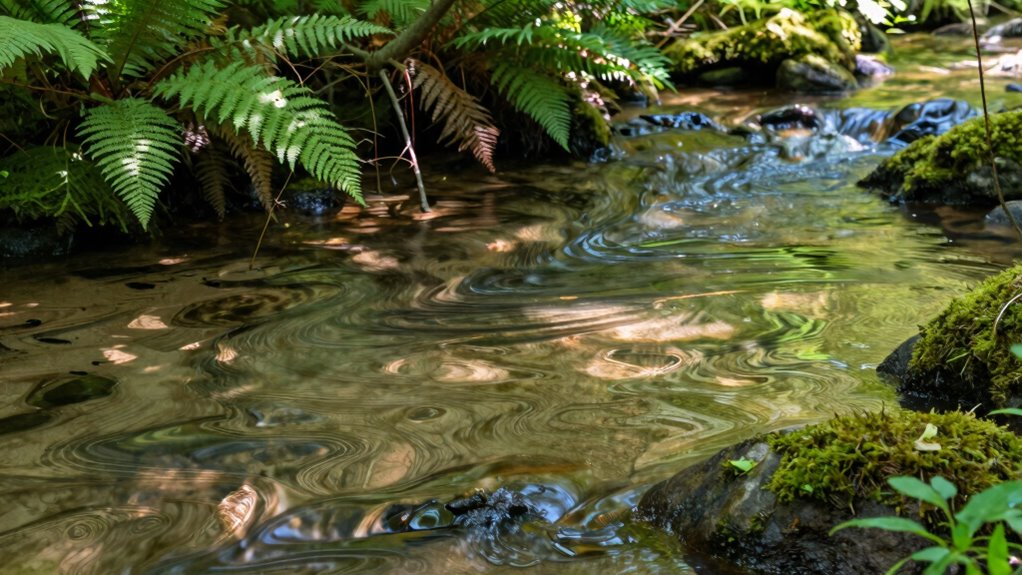

You can see how water changes in the landscape through the patterns on creekside plants. When water levels rise or flow faster, sediments settle on plant surfaces or cause erosion, affecting plant growth and shaping the environment. These patterns reflect water movement, sediment deposits, and soil stability. As conditions shift, plants adapt and show signs of these changes. Keep exploring to discover how these patterns reveal the ongoing story of creek ecosystems and their health.

Get garden gear delivered free with Prime
- Fast, free delivery on millions of items
- Prime Video, Amazon Music and more included
- Member-only deals all year
Key Takeaways
- Water level fluctuations influence plant growth, causing patterns that reflect environmental responses and sediment deposits.
- Sediment settling after water recedes creates new soil and habitat features, shaping landscape diversity.
- High water flows can cause erosion, removing nutrients and destabilizing plants, while calmer periods promote sediment accumulation.
- Plant patterns indicate changes in water movement and soil stability, serving as ecological health indicators.
- Water dynamics determine plant distribution, affecting habitat structure and landscape evolution along creekside environments.

As you explore creekside areas, you’ll notice that the plants there often display striking patterns on their leaves, stems, or flowers. These patterns aren’t just decorative; they serve important ecological functions. Water levels and flow rates fluctuate along creeks, influencing how plants grow and interact with their environment. When water rises, it can carry nutrients and sediments that settle on plant surfaces, creating natural designs that help plants adapt to changing conditions. Recognizing these patterns reveals how plants respond to water movement and how they contribute to the landscape’s health. Different patterns can also indicate the presence of specific environmental stresses or adaptations, showing how plants modify their appearance in response to shifting water and sediment levels. Wildlife interactions play a key role here. Many animals, from insects to larger mammals, depend on creekside plants for food, shelter, and breeding sites. Some plants have evolved patterns that attract pollinators, such as bees or butterflies, with bright colors or unique markings. These visual cues guide pollinators to flowers, ensuring successful reproduction. Other plants develop patterns that camouflage them from herbivores, blending seamlessly with their surroundings when water levels change or when sediment deposits alter the landscape. This dynamic interplay between plants and wildlife keeps creek ecosystems vibrant and resilient. Additionally, sediment deposition can influence the distribution of plant species, shaping the overall diversity of creekside habitats. Changes in water flow can also influence the soil composition, affecting which plants are able to thrive in certain areas. Water changes influence soil stability as well. During high flows, fast-moving water can erode soil along the creekbank, stripping away essential nutrients and causing plants to lose their anchorage. As the water recedes, sediments settle and settle in new arrangements, often leaving behind patterns on the soil surface. These sediment deposits shape the landscape, creating new habitats and influencing where plants can establish roots. In some cases, plants with extensive root systems help stabilize the soil, reducing further erosion and creating a more stable environment for other flora and fauna. The presence of patterned leaves or stems can also indicate areas where soil is stabilizing or where erosion is actively occurring. Soil erosion and sediment deposition are key processes that drive these landscape changes. The patterns on plants can also serve as indicators of water movement and soil conditions, helping ecologists understand the health of creek ecosystems. The interplay of water, plants, and wildlife creates a constantly shifting environment along creekside areas. The patterns you see on plants tell a story about water movement, sediment deposits, and ecological interactions. As water levels change, plants adapt by growing in ways that maximize their survival—sometimes displaying vivid markings to attract pollinators or camouflage from predators. These visual cues help maintain a balanced ecosystem, where soil erosion is minimized, and wildlife interactions are enhanced. Paying attention to these patterns can also reveal the ecological health of creekside environments, providing valuable insights for conservation. By paying attention to these patterns, you gain a deeper understanding of how water shapes the landscape and sustains the intricate web of life along creeks.
creekside plant identification guide
As an affiliate, we earn on qualifying purchases.
As an affiliate, we earn on qualifying purchases.
Frequently Asked Questions
How Do Seasonal Water Level Changes Affect Creekside Plant Growth?
Seasonal water level changes directly impact creekside plant growth by causing water table fluctuations and seasonal flooding. During high water periods, plants adapt to saturated soils, thriving in moist conditions. When water levels recede, plants must tolerate drier soils, which influences their growth patterns. These fluctuations create a dynamic environment, shaping plant diversity and structure along the creek, and encouraging some species to thrive while others decline.
What Are the Best Native Plants for Creekside Landscaping?
Imagine planting a riparian buffer along your creek, like in a case where native willows thrived. For your creekside landscaping, choose native plants that are adapted to water levels and soil moisture. Native plant selection should prioritize species like willows, dogwoods, and sedges, which are excellent riparian vegetation. These plants stabilize banks, support local ecosystems, and thrive with seasonal water changes, making your creek healthy and sustainable.
How Can I Prevent Erosion Around Creekside Plants?
To prevent erosion around creekside plants, focus on soil stabilization and smart plant selection. You can plant native grasses, sedges, and shrubs with deep roots that hold soil in place. Mulch helps retain moisture and reduces runoff. Avoid overwatering, and consider adding rocks or erosion control mats for extra stability. By combining these strategies, you’ll protect your creekside landscape from erosion while supporting healthy plant growth.
What Wildlife Benefits Do Creekside Plants Provide?
You’ll open a wildlife treasure trove when you plant creekside greenery. These plants act as cozy habitats for birds, butterflies, and beneficial insects, nurturing local biodiversity. They also support plant pollination, drawing pollinators like bees and hummingbirds to your landscape. As a result, your creekside becomes a lively, thriving ecosystem where wildlife flourishes, turning your yard into a vibrant sanctuary that benefits nature and your environment alike.
How Often Should I Water Creekside Plants During Droughts?
During droughts, you should water creekside plants less frequently but deeply, adjusting your watering schedule based on rainfall patterns. Usually, watering once every one to two weeks suffices, but monitor the soil moisture—if it feels dry below the surface, it’s time to water. Keep an eye on weather forecasts, and avoid overwatering, which can harm plants and disrupt the natural water balance.
As an affiliate, we earn on qualifying purchases.
Conclusion
As you walk along the creek, notice how the water’s gentle dance shapes the plants like an artist’s brush strokes on a canvas. These patterns aren’t just nature’s artwork—they tell a story of change, resilience, and harmony. By understanding this dance, you become part of the landscape’s rhythm, witnessing firsthand how water’s quiet whispers sculpt life’s intricate designs. Embrace these patterns, and you’ll see the creek’s symphony in every leaf and ripple.
sediment-resistant garden plants
As an affiliate, we earn on qualifying purchases.
As an affiliate, we earn on qualifying purchases.
wildlife attracting creek plants
As an affiliate, we earn on qualifying purchases.
As an affiliate, we earn on qualifying purchases.
Halloween Picks
halloween
As an affiliate, we earn on qualifying purchases.