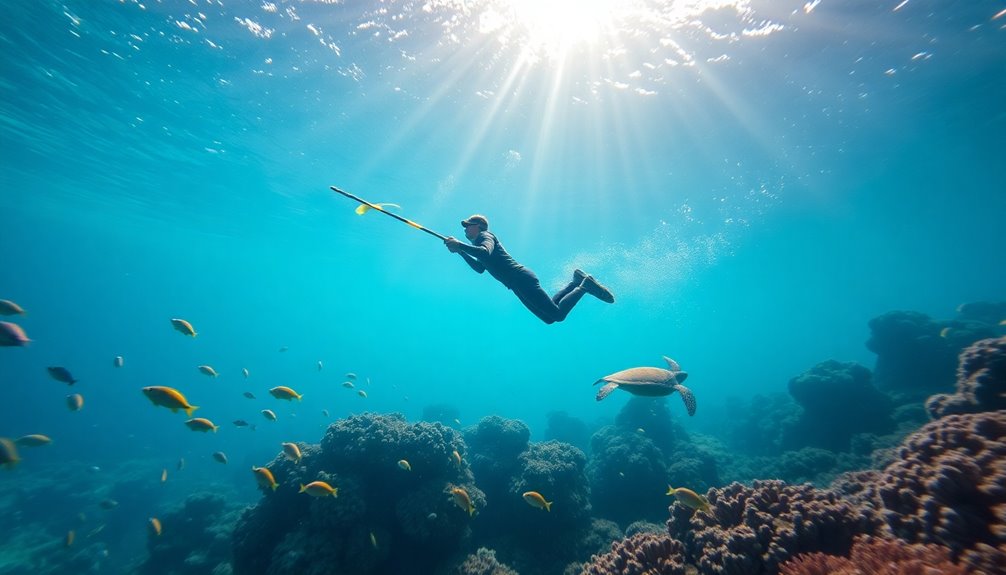
To minimize bycatch and avoid protected species, you should use gear modifications like escape panels, turtle excluder devices, and circle hooks, which help non-target animals escape safely. Adjusting mesh sizes and deploying deterrents like acoustic pingers can also reduce accidental captures. Additionally, fishing strategically in areas and times with lower species presence makes a big difference. If you keep exploring, you’ll discover more practical ways to protect marine life and promote sustainable fishing.
Key Takeaways
- Use gear modifications like escape panels, turtle excluder devices, and circle hooks to prevent protected species from being caught.
- Adjust mesh sizes and incorporate deterrents such as pingers and acoustic devices to reduce accidental captures of non-target species.
- Fish in areas and times with lower abundance of vulnerable species to minimize bycatch risks.
- Implement spatial and temporal management strategies to avoid high-risk zones for protected species.
- Ensure compliance with regulations and adopt responsible practices to support ecosystem health and sustainable fishing.

Bycatch, the unintended capture of non-target species during fishing, poses significant threats to marine ecosystems and sustainable fishing practices. If you’re involved in fishing activities, you understand that reducing bycatch isn’t just about protecting marine life—it’s about ensuring the longevity of your fishing operation and maintaining healthy oceans. To achieve effective bycatch reduction, you need to focus on gear modifications that selectively target your desired species while minimizing the capture of unwanted ones. These gear adjustments are practical, often cost-effective solutions that can be implemented relatively quickly and have a substantial impact on reducing bycatch.
One of the most common gear modifications involves changing the design and materials of nets and hooks. For example, using escape panels or devices like turtle excluder devices (TEDs) in trawl nets allows non-target species, such as sea turtles and juvenile fish, to escape. You can also implement circle hooks instead of traditional J-hooks, which are less likely to snag and injure protected species like seabirds or marine mammals. These modifications aren’t just good ideas—they’re proven methods that contribute directly to bycatch reduction while maintaining your catch efficiency.
Using escape panels and circle hooks reduces bycatch while maintaining catch efficiency.
Another effective gear modification is adjusting the mesh size of nets. Larger mesh sizes allow smaller, non-target species to escape, preventing unnecessary mortality. This approach is particularly useful in fisheries targeting larger fish but can be adapted for various species and environments. Additionally, deploying acoustic deterrents or pingers can help keep marine mammals away from fishing gear, reducing accidental entanglements. These tools emit sounds that alert animals to the presence of fishing gear, prompting them to steer clear.
Beyond gear modifications, you should consider timing and location strategies. By fishing in areas or at times when non-target species are less abundant, you naturally decrease the chances of bycatch. Combining these methods with gear modifications creates a extensive approach to bycatch reduction, helping you operate more sustainably. It’s important to stay updated on best practices and technological developments, as innovations in gear design are constantly advancing.
Implementing these solutions isn’t just about compliance with regulations; it’s also about responsibility. Protecting vulnerable and protected species benefits your reputation and promotes long-term viability for your fishery. When you adopt gear modifications aimed at minimizing bycatch, you contribute to healthier ecosystems, reduce the risk of legal penalties, and support sustainable fishing practices. In the end, reducing bycatch through targeted gear changes is a practical, impactful step you can take to safeguard marine life while maintaining a productive and responsible fishing operation.
Frequently Asked Questions
How Do Bycatch Reduction Devices Impact Target Fish Populations?
Bycatch reduction devices help protect target fish populations by allowing them to escape gear designed to catch non-target species. When you use these devices, you promote sustainable fishing practices, ensuring fish stocks remain healthy for future generations. They also reduce ecological impacts by minimizing unnecessary catch and preserving the balance of marine ecosystems. Overall, implementing bycatch reduction devices supports responsible fishing while maintaining the significance of target fish populations.
What Are the Most Effective Gear Modifications for Reducing Bycatch?
You can reduce bycatch effectively by using selective gear, such as circle hooks and turtle excluder devices, which target specific species and minimize incidental catch. Habitat modifications, like altering gear to avoid sensitive areas, also help protect protected species. These modifications make your fishing more sustainable by reducing unwanted catch while maintaining your target species catch rates. Always stay updated on new gear innovations to improve your bycatch mitigation efforts.
How Do Seasonal Fishing Restrictions Influence Bycatch Rates?
Seasonal fishing restrictions markedly reduce bycatch rates by aligning your fishing activities with migratory patterns and spawning seasons. When you follow seasonal closures, you avoid catching protected species during critical times when they’re most vulnerable. This approach helps minimize bycatch, preserves marine biodiversity, and ensures sustainable fishing. By adapting your fishing schedule to these restrictions, you contribute to healthier ecosystems and support long-term fishery productivity.
Are There Specific Training Programs for Fishermen on Bycatch Minimization?
Yes, there are specific fishermen training programs focused on bycatch awareness. These programs teach you techniques to reduce bycatch, such as selective gear use and proper handling of protected species. By participating in these trainings, you’ll learn how to mitigate unintended catches effectively, helping protect marine life and stay compliant with regulations. Training programs are often provided by fisheries management agencies or industry groups to guarantee you have the latest best practices.
How Is Technological Innovation Shaping Bycatch Mitigation Strategies?
Like explorers charting new waters, technological innovation drives your sustainable fishing efforts. You harness devices like RFID tags, smart nets, and real-time monitoring systems to reduce bycatch and protect marine life. These tools help you make smarter decisions, aligning your fishing practices with marine conservation goals. By embracing such technology, you contribute to healthier oceans, ensuring future generations can enjoy abundant, diverse marine ecosystems.
Conclusion
Bycatch is like unwanted guests crashing your fishing party—annoying, but manageable. By staying aware and using smarter techniques, you can steer clear of these unintended catches and protect our precious marine life. Think of it as planting seeds of responsibility in a vast ocean garden, ensuring healthy waters for generations to come. With every conscious choice, you’re tuning the symphony of the sea, making it a safer, more harmonious place for all its inhabitants.