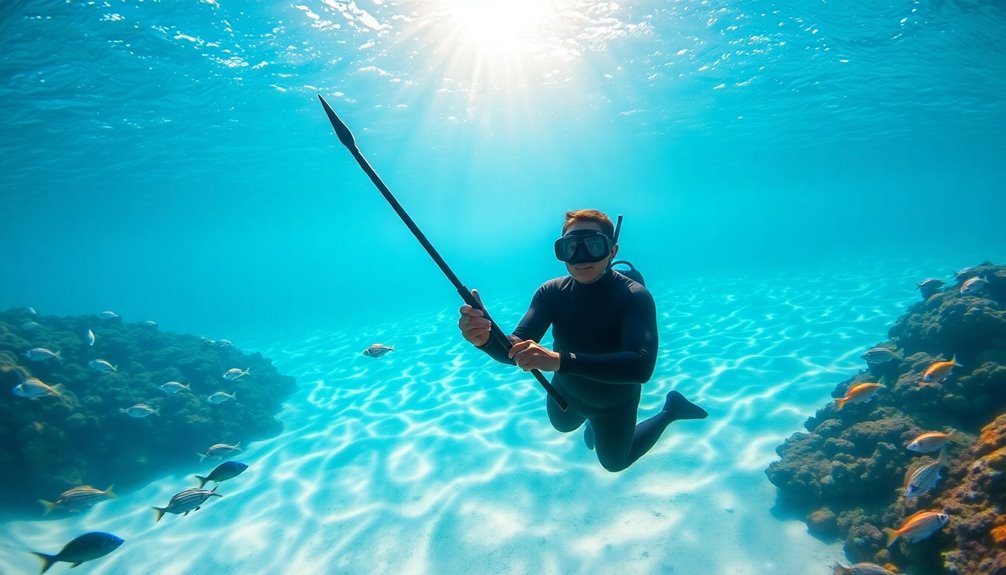
To identify kelp bass, look for their streamlined bodies, dark lateral stripes, and variable greenish to brown coloring that blends into kelp and rocky habitats. Lingcod are robust with large heads, mottled brown to greenish-gray skin, and sharp teeth, often hiding among rocks and ledges. Sheepshead have stout bodies with black vertical stripes and distinctive human-like teeth, commonly found around jetties and piers. Spotting their habitats can help you distinguish these species, and more details await if you keep exploring.

Get garden gear delivered free with Prime
- Fast, free delivery on millions of items
- Prime Video, Amazon Music and more included
- Member-only deals all year
Key Takeaways
- Kelp bass have a streamlined body with dark lateral stripes and favor kelp forests and rocky reefs.
- Lingcod are large, mottled brownish-green with a robust body and prefer rocky, reef-like habitats with ledges and caves.
- Sheepshead exhibit black vertical stripes, stout bodies, and are commonly found around jetties, piers, and rocky structures.
- Physical features such as coloration and markings, along with habitat preferences, are key to accurate identification.
- Recognizing each species’ preferred environment improves fishing success and helps distinguish between similar coastal fish.
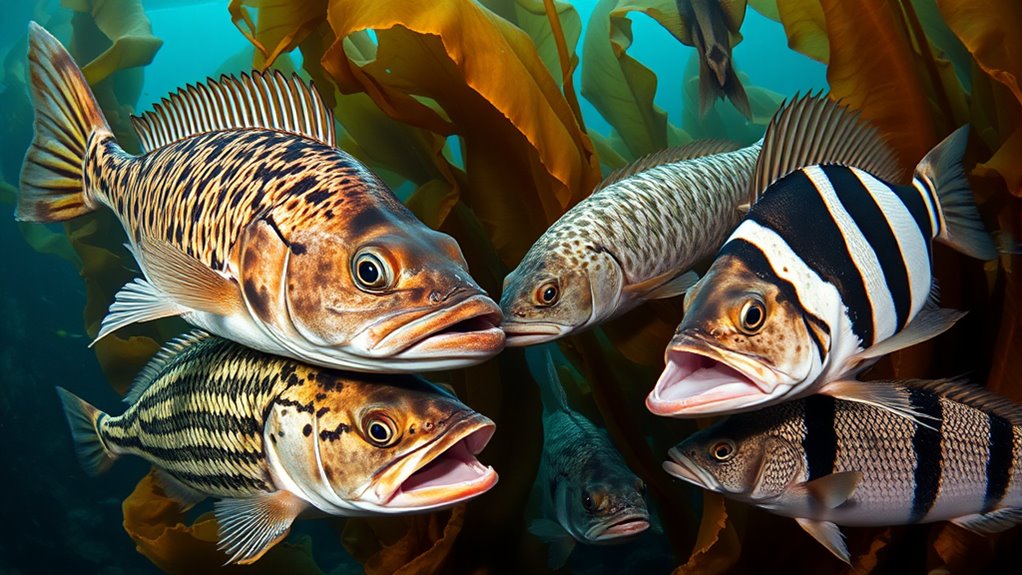
Have you ever wondered how anglers, divers, or marine enthusiasts can quickly identify different fish species? It often comes down to understanding their unique features, habitat preferences, and the fishing gear used to target them. When you’re out on the water, recognizing fish like kelp bass, lingcod, and sheepshead becomes easier once you pay attention to their distinctive markings and preferred environments. Your fishing gear, such as lures and tackle, can also hint at the species you’re after, but knowing their habitat preferences is essential for accurate identification and successful catches. Recognizing the natural habitat preferences of each species can significantly improve your fishing success and overall experience.
Kelp bass, also known as calico bass, are commonly found along rocky reefs and kelp forests along the California coast. They have a streamlined body, with a prominent dark lateral stripe running from their nose to their tail. Their coloration varies from olive green to brown, often with mottled patterns that blend into kelp and rocky surroundings. Since they prefer habitats rich in kelp and rocky outcroppings, you’ll usually find them hiding among kelp beds or near rocky structures. When fishing for kelp bass, anglers often use soft plastics, jigs, or topwater lures that mimic small fish or prey in these environments. Recognizing their habitat preference helps you choose the right fishing gear and increases your chances of success.
Lingcod are quite different in appearance and habitat. These fish are typically found along the rocky, reef-like structures of the Pacific Northwest and California. They have a robust, elongated body with a large head and an impressive mouth filled with sharp teeth. Their coloration ranges from mottled brown to greenish-gray, helping them blend seamlessly into rocky crevices and caves. Lingcod prefer habitats with plenty of hiding spots, making rocky reefs and underwater ledges their favored hunting grounds. When targeting lingcod, your fishing gear should include heavy jigs or baited hooks that can handle their aggressive strikes. Knowing they dwell in rocky habitats allows you to focus your efforts on specific areas, increasing your chances of landing this formidable predator.
Sheepshead, on the other hand, are often found along coastal jetties, piers, and rocky reefs, particularly in southern California and the Gulf of Mexico. They’re easily recognized by their stout bodies, black vertical stripes, and prominent, human-like teeth. Their habitat preferences include structures with plenty of barnacles and shellfish, which they feed on. To catch sheepshead, you’ll want to use light to medium tackle with bait that mimics their diet—such as shrimp, fiddler crabs, or small crustaceans. Their affinity for structures in areas with high shellfish populations makes understanding their habitat preferences *vital* for locating them effectively. By matching your fishing gear to their environment and diet, you increase your chances of a successful catch.
Top picks for "fish identification kelp"
As an affiliate, we earn on qualifying purchases.
Frequently Asked Questions
What Are the Best Bait Types for Catching Kelp Bass?
You should use live bait like anchovies or sardines, as kelp bass find them irresistible. Artificial lures such as soft plastics, swim baits, or small jigs also work well, mimicking prey and enticing strikes. Cast your bait or lure near kelp beds and rocky structures where they hide. Experiment with different colors and sizes until you find what triggers the bite, increasing your chances of a successful catch.
When Is the Peak Season for Lingcod Fishing?
The peak season for lingcod fishing hits its stride from late winter through early spring, when they’re most active. During this time, their seasonal migration brings them closer to shore, especially around rocky reefs and structures they prefer for habitat. You’ll find the best chances when targeting these areas, as lingcod seek out their favorite habitats during these months, making your fishing trip a potential legend in the making.
How Do Sheepshead Behavior Change During Spawning?
During spawning, sheepshead change their behavior by becoming more active and engaging in social interactions. You’ll notice they congregate in groups near structures like rocks and pilings, often exhibiting territorial displays. Their feeding slows down as they focus on spawning activities, and males may guard nests. This shift in behavior makes them easier to observe, so plan your fishing trips around these spawning periods for better chances.
Are There Any Legal Size Restrictions for These Fish?
Yes, there are size limits for these fish based on fishing regulations. You need to check the current size restrictions before you fish, as they vary by location and species. For kelp bass, lingcod, and sheepshead, regulations often specify minimum and sometimes maximum sizes to ensure sustainable populations. Always stay updated on local regulations to avoid penalties and help conserve these species.
What Are Common Predators of Kelp Bass, Lingcod, and Sheepshead?
Like players in a complex marine food chain, kelp bass, lingcod, and sheepshead face predators that keep them on their toes. Common predators include larger fish like halibut, sharks, and marine mammals such as sea lions. These predator-prey interactions shape their survival, making them cautious swimmers. Understanding these relationships highlights the delicate balance in the marine food chain, where each creature plays a crucial role in maintaining ecosystem health.
Conclusion
Now that you can spot kelp bass, lingcod, and sheepshead, think of these fish as different chapters in nature’s storybook. Each one tells a unique tale through its appearance and habits. By learning to identify them, you’re revealing the pages of an underwater novel full of surprises. Keep exploring with curiosity—you’re turning the pages of a vibrant, living story, and every encounter deepens your connection to the ocean’s endless wonder.
Fall yard work Picks
leaf blowers
As an affiliate, we earn on qualifying purchases.