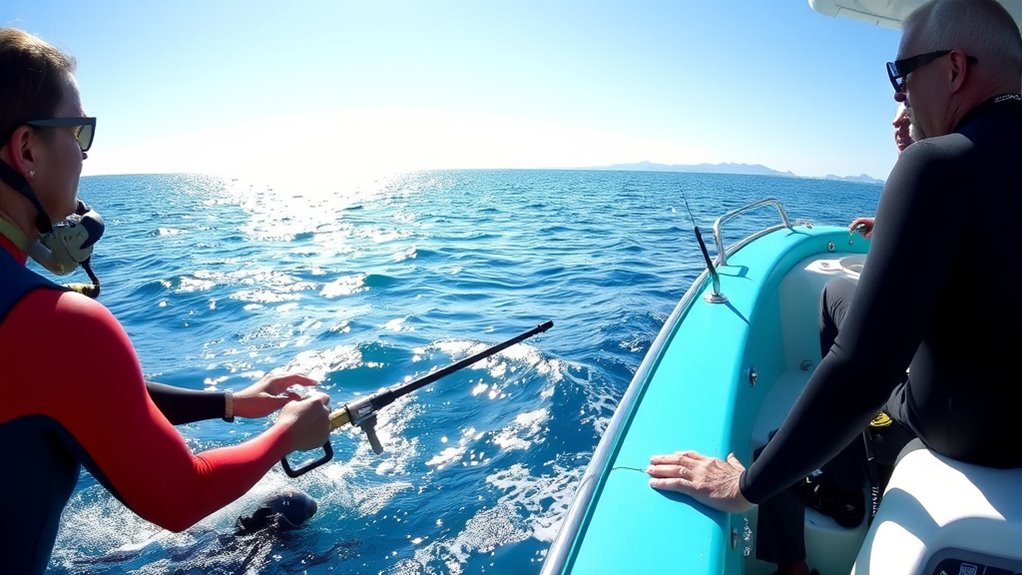

In boat-based spearfishing, clearly defining crew roles and maintaining open communication are key to safety and success. Assign specific roles like lookout, anchor handler, and fish handler, so everyone knows their responsibilities. Use simple hand signals or verbal cues to coordinate actions, alert others about fish, or signal danger. Regular check-ins and quick reactions ensure a smooth trip. Keep these strategies in mind, and you’ll discover more ways to maximize your crew’s coordination.
Key Takeaways
- Assign specific roles such as lookout, anchor handler, fish handler, and safety officer for efficient operations.
- Use pre-agreed hand signals and verbal cues to coordinate diving, boat movement, and fish retrieval smoothly.
- Conduct regular communication check-ins and safety briefings to ensure all crew understand procedures.
- Clearly define responsibilities related to anchor management and line handling to prevent injuries and ensure stability.
- Maintain open, concise communication to respond quickly to changing conditions and emergency situations.
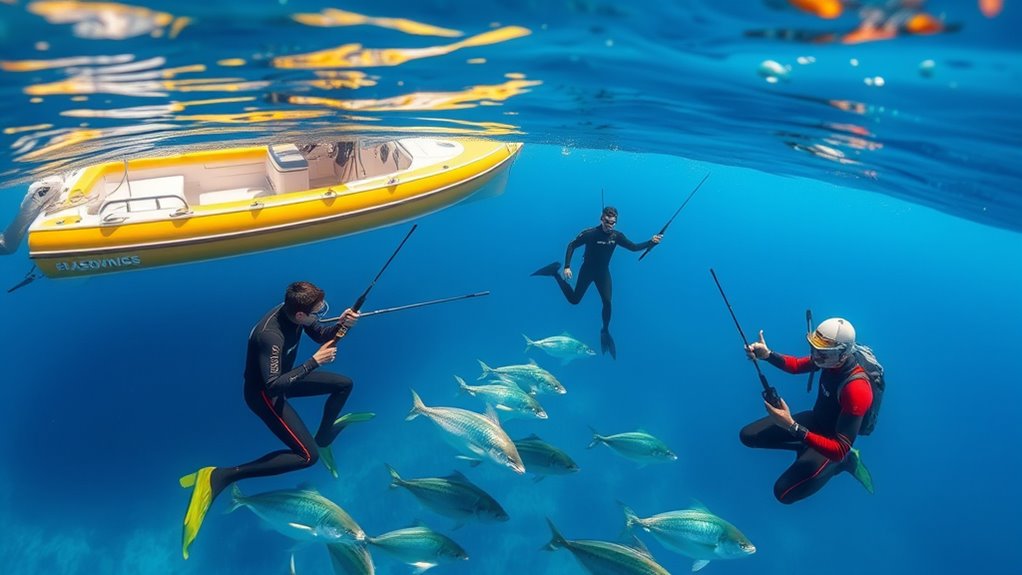
Boat-based spearfishing combines the thrill of underwater hunting with the convenience of mobility, allowing you to access a variety of prime fishing spots. As you plan your trip, understanding how crew roles and communication can make or break your experience is essential. Clear coordination ensures safety and efficiency, especially when managing crucial tasks like anchor safety and adhering to fishing license regulations. Properly securing your boat with a reliable anchor is your first priority. An unstable anchor can lead to dangerous situations, so double-check your anchor setup and ensure it’s appropriate for the seabed conditions. When deploying the anchor, communicate clearly with your crew to prevent accidental snags or drifting. Once anchored, it’s vital to verify that the anchor is holding firm, especially in current or wind conditions that might shift your position. This stability allows you to focus on hunting without worrying about your boat’s safety.
Secure your boat with a reliable anchor and clear communication to ensure safety and stability during spearfishing trips.
Knowing the fishing license regulations for your area is equally important. These rules dictate the types of fish you can target, size limits, and total bag limits. Ignoring them can lead to hefty fines or even the loss of your fishing privileges. Before heading out, familiarize yourself with local regulations, and ensure all crew members are aware of these rules. Carry your fishing licenses with you, and be prepared to show them if requested by authorities. This proactive approach helps you avoid legal issues and promotes responsible fishing practices, which are vital for conserving marine life.
Communication among crew members is the backbone of a safe and successful spearfishing trip. Use clear, concise signals for different actions—like indicating when someone is ready to dive, when the boat is moving, or when a fish is spotted. Hand signals and pre-agreed verbal cues minimize confusion underwater and on deck. Assign specific roles before you set out; for example, designate someone as the lookout, someone to handle the anchor, and others to assist with fish handling or safety checks. This division of responsibilities keeps operations streamlined and reduces accidents. Additionally, understanding the importance of contrast ratio in projectors can help you select the right display setup for reviewing your catch or navigation charts in the boat.
Regular check-ins and a shared understanding of safety procedures, including what to do if someone encounters trouble or if the boat needs to move quickly, are critical. Especially when managing anchor safety, ensure everyone knows how to handle the anchor line to prevent tangles or injuries. If conditions change suddenly, good communication allows you to react swiftly, maintaining safety and maximizing your fishing success. By respecting regulations, securing your vessel properly, and communicating effectively, you’ll enjoy a smooth, rewarding spearfishing adventure on the water.
Frequently Asked Questions
What Safety Gear Is Essential for Boat-Based Spearfishing?
You need essential safety gear like a wetsuit, weight belt, and a snorkel for diving safety. A dive knife helps in emergencies, while a buoy and signaling devices guarantee visibility. Don’t forget a first aid kit and a waterproof radio or whistle for communication. Regular equipment maintenance keeps everything dependable, preventing accidents. Always double-check gear before diving to stay safe and enjoy your spearfishing adventure confidently.
How Do Crew Members Coordinate During a Dive?
You’ll want to master diver signaling and establish crew role clarity instantly. When you dive, use clear hand signals to communicate underwater—no room for confusion! Before each dive, discuss roles like spotter, diver, and boat support. Stay alert to each other’s signals, keep constant eye contact, and update everyone on your status. This way, coordination becomes second nature, making your trip safer and more successful than you ever imagined.
What Are Common Communication Devices Used on the Boat?
You typically use a marine radio for clear, reliable communication on the boat, especially over longer distances or in emergencies. Hand signals are essential for underwater communication, allowing you to signal your status or alert others without noise. Make sure everyone knows the standard signals for danger, OK, or need assistance. Combining radios and hand signals keeps your crew coordinated, safe, and efficient during the dive.
How Do You Handle Boat Navigation in Unfamiliar Waters?
Ever wondered how you find your way through uncharted waters? You should rely on GPS coordination and navigational charts to guide you safely. First, set your GPS with known coordinates and cross-reference with detailed charts. Keep an eye on landmarks and depth markers. Constantly monitor your GPS and charts, adjusting your course as needed. This proactive approach guarantees you stay on track, even when exploring unfamiliar territory.
What Are Best Practices for Managing Fish Storage Onboard?
You should prioritize proper fish storage by using onboard refrigeration to keep your catch fresh longer. Immediately clean and gut your fish, then pack them tightly in a cooler with ice or ice packs. Keep the cooler in a shaded, dry spot, and regularly replenish the ice. Proper fish storage helps maintain quality, prevents spoilage, and guarantees your catch stays fresh until you’re ready to process or transport it.
Conclusion
Now that you understand the roles, the communications, and the teamwork needed, you’re ready to hit the water with confidence. Embrace the coordination, trust the signals, and stay alert to your surroundings. Focus on clear communication, support your crew, and respect the ocean’s rhythm. With preparation and teamwork, you’ll not only improve your spearfishing skills but also enjoy a safer, more rewarding experience. Plunge in, work together, and make every trip memorable.