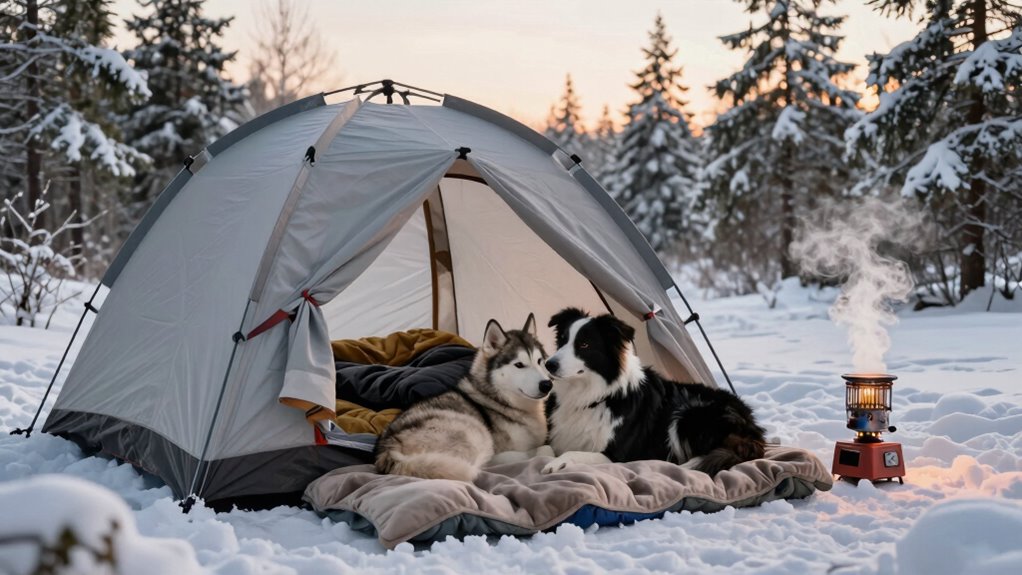

To keep your dog safe and warm during cold-weather camping, use a high-quality insulated sleeping pad to prevent heat loss to the ground, and choose a thermal sleeping bag rated for low temperatures. Add insulated bedding or cozy blankets inside the tent, and dress your dog in a sweater or layered clothing if needed. Elevating your dog’s sleeping area and ensuring proper shelter help prevent hypothermia. Discover more tips for staying warm together by continuing below.

Get garden gear delivered free with Prime
- Fast, free delivery on millions of items
- Prime Video, Amazon Music and more included
- Member-only deals all year
Key Takeaways
- Use insulated sleeping pads and thermal sleeping bags rated for low temperatures to keep your dog warm.
- Elevate your dog’s bed off the cold ground with insulating materials like foam or blankets.
- Dress your dog in sweaters or layered clothing if they have short fur or are prone to cold.
- Provide extra blankets or insulated bedding inside the tent to maintain warmth during the night.
- Monitor your dog’s behavior and body temperature regularly to detect early signs of hypothermia.
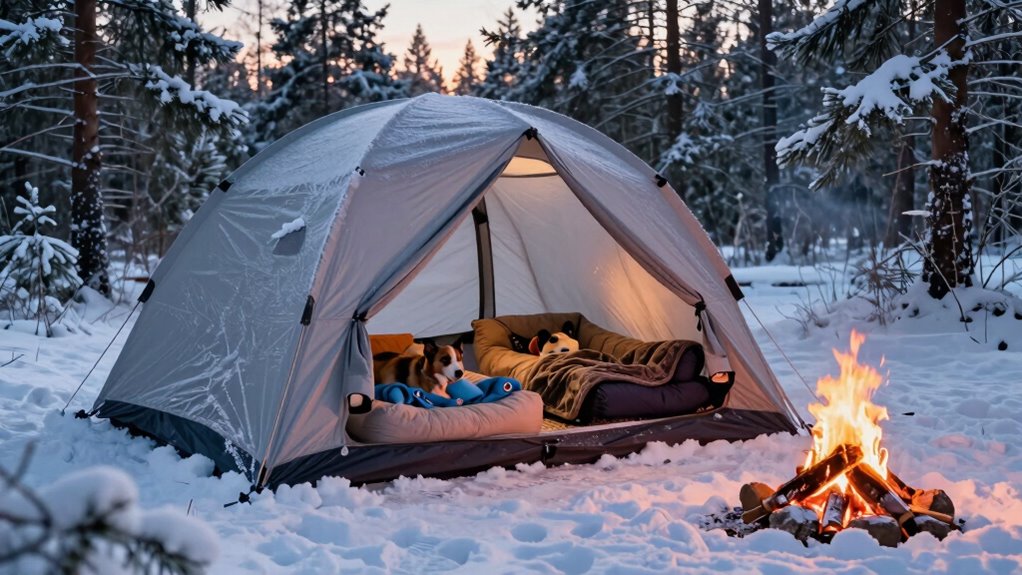
Camping in cold weather with your dog can be a rewarding experience if you’re prepared, but it also requires careful planning to keep your furry friend safe and comfortable. One of the most important steps is protecting your dog’s paws, especially when walking on snow, ice, or rough terrain. Dog booties are a must-have gear item, providing insulation and preventing cuts or frostbite. Make sure they fit well and are easy to put on, so your dog doesn’t get frustrated or uncomfortable. Regularly check their paws for signs of cold damage or irritation, and carry paw balm to keep their pads moisturized. Additionally, ensuring proper indoor air quality inside your tent can help prevent condensation and maintain a healthier environment for your dog.
Campfire safety is another critical aspect of cold weather camping. While a campfire offers warmth and comfort, it also poses risks if not managed properly. Keep a safe distance between your fire and your tent, gear, and your dog. Never leave the fire unattended, and always have water or a fire extinguisher nearby to put out sparks or if it gets out of control. Your dog might be curious about the flames, so establish boundaries to prevent accidental burns. Make sure your dog is well-behaved around the fire, and consider training commands like “leave it” or “stay” to ensure they don’t get too close.
When setting up your sleeping area, prioritize warmth and insulation. Use a high-quality sleeping pad that insulates you from the cold ground and add a thermal sleeping bag rated for low temperatures. For your dog, provide a cozy, insulated bed or a thick blanket inside your tent. Elevate their sleeping area off the cold ground to prevent heat loss. Dress them in dog sweaters or layers if needed, especially if they have short fur. It’s crucial to monitor their body temperature regularly and look for signs of hypothermia, such as shivering or lethargy.
Finally, keep your dog dry and out of the wind during the night. Wind can drastically lower their body temperature and increase the risk of hypothermia. Use windbreaks or set up your tent in a sheltered spot. Always have extra blankets or insulated bedding on hand so you can adjust for changing weather conditions. By combining proper gear, campfire precautions, and warm sleep setups, you’ll ensure your dog stays safe, warm, and happy during your cold weather camping adventure.
insulated dog sleeping pad for cold weather
As an affiliate, we earn on qualifying purchases.
As an affiliate, we earn on qualifying purchases.
Frequently Asked Questions
How Can I Tell if My Dog Is Too Cold During Camping?
You can tell if your dog is too cold during camping by watching for signs like shivering, whining, or lifting paws off the ground. Check their dog insulation and body temperature regularly, especially if they seem restless or lethargic. Use proper camping gear, like insulated bedding, to keep them warm. If they curl up tightly or seek your warmth, it’s a clear sign they need extra protection from the cold.
What Are the Signs of Hypothermia in Dogs?
You’ll notice signs of hypothermia in your dog when they start shivering excessively, become lethargic, and show stiff muscles. Their ears, paws, and tail might feel cold to the touch. To prevent this, use proper outdoor dog gear, including dog coat options suited for cold weather, and make sure they stay warm. If your dog shows these signs, get them to a warm place and consult a vet immediately.
Can I Use Human Sleeping Bags for My Dog?
Using human sleeping bags for your dog is like trying to fit a square peg in a round hole—you need the right gear. Human sleeping bags aren’t designed for dogs, so they won’t supply the insulation or fit your pup needs. Instead, invest in dog-specific sleep gear, which offers proper warmth and safety. This ensures your furry friend stays cozy and protected from hypothermia during cold camping nights.
How Often Should I Check My Dog’s Temperature Overnight?
You should check your dog’s temperature every 2-3 hours overnight to guarantee they stay warm and safe. Use a digital thermometer, and if you notice signs of hypothermia, like shivering or lethargy, act quickly. Make sure your dog wears a well-insulated coat and consider campsite safety tips, like keeping them dry and sheltered from wind. Regular checks help prevent hypothermia and keep your camping experience safe and enjoyable.
What Should I Do if My Dog Shows Signs of Hypothermia?
If your dog shows signs of hypothermia, act quickly by providing immediate shelter insulation and gently warming them with dry blankets or clothing. Keep them hydrated to support recovery, but avoid giving them food or water too cold. Monitor their temperature closely, and if it remains dangerously low or symptoms worsen, seek veterinary help immediately. Stay calm, keep them warm, and prevent further exposure to cold temperatures.
thermal sleeping bag rated for low temperatures
As an affiliate, we earn on qualifying purchases.
As an affiliate, we earn on qualifying purchases.
Conclusion
When camping in cold weather with your dog, your goal is to keep them warm and safe—more important than any adventure. With the right sleeping setups, cozy gear, and a little extra care, you’ll prevent hypothermia and turn the cold into just another memorable story. Remember, a chilly night shouldn’t turn into a rescue mission. By prioritizing warmth, you’re ensuring your furry friend stays snug—because their comfort and safety are worth more than all the stars in the sky.
As an affiliate, we earn on qualifying purchases.
As an affiliate, we earn on qualifying purchases.
Halloween Picks
halloween
As an affiliate, we earn on qualifying purchases.