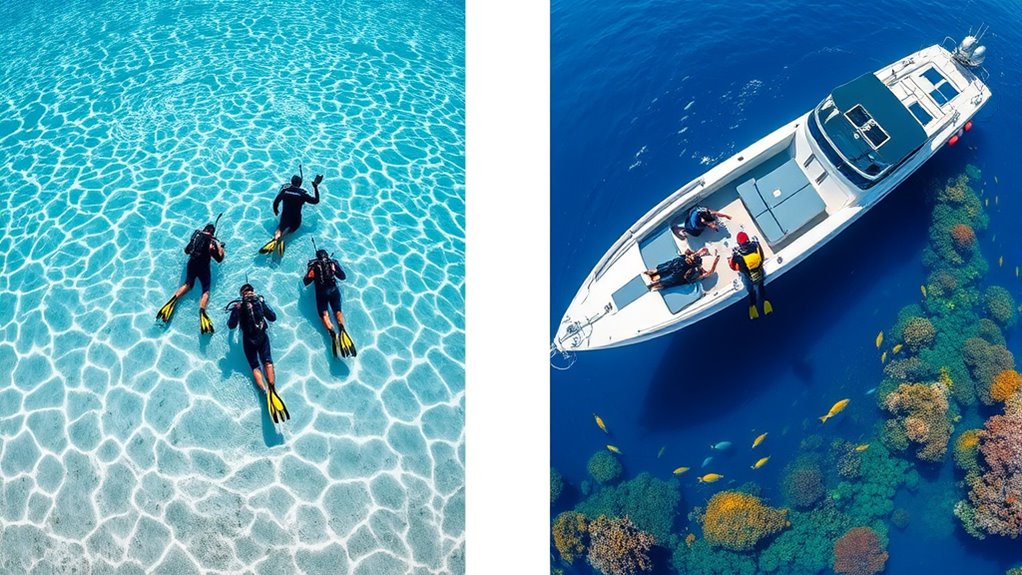

When choosing between shore and boat dives, consider safety and strategy carefully. For shore dives, you’ll need lightweight gear, easy water access, and good planning for terrain challenges. Boat dives require secure equipment storage, precise timing, and awareness of vessel safety protocols. Both types demand proper preparation to prevent accidents and ensure a smooth experience. Understanding these differences helps you dive confidently—if you want to learn how to optimize each approach, keep exploring the options available.

Get garden gear delivered free — and shop member deals
- Fast, free delivery on millions of items
- Access to Prime Big Deal Days deals on October 6–7
- Prime Video, Amazon Music and more included
Key Takeaways
- Shore dives require lightweight, streamlined gear for easy transport over terrain, while boat dives allow larger, more complex equipment setups.
- Pre-dive planning for terrain and water entry points enhances safety for shore dives; boat dives focus on vessel safety protocols and secure gear storage.
- Proper gear handling and quick setup are crucial for shore dives due to terrain challenges, whereas boat dives benefit from secure storage and transit safety.
- Environmental conditions like currents and terrain influence safety strategies and gear choices for both shore and boat dives.
- Thorough equipment checks, site-specific planning, and adherence to safety protocols minimize risks and improve overall dive safety for both methods.
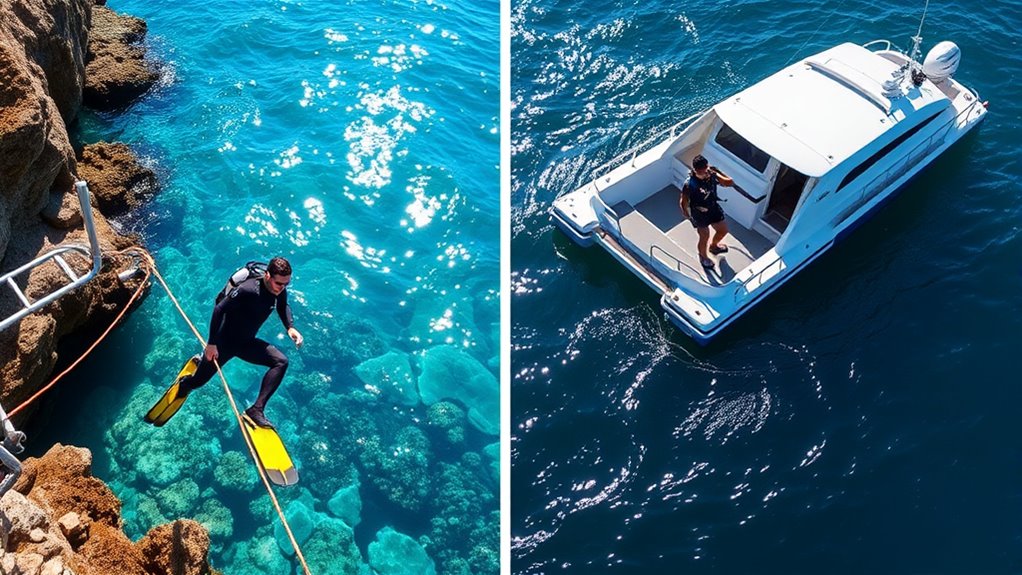
Have you ever wondered which diving experience suits you best: shore diving or boat diving? When deciding between the two, equipment selection plays a vital role. For shore dives, you’ll want gear that’s lightweight and easy to carry, since you’ll be lugging your equipment over sand, rocks, or stairs to reach the water. Think streamlined wetsuits, simple fins, and a compact mask. You’ll also need a reliable dive computer, a buoyancy control device (BCD), and a tank that’s easy to handle. Conversely, boat dives often allow for more extensive gear options, including larger tanks or additional accessories like backup lights or surface marker buoys, since you’re launching from a boat and typically have more space and time to prepare. Remember, your equipment should suit the dive conditions and your comfort, but it’s equally important to take into account dive site logistics.
Dive site logistics can profoundly influence your safety and overall experience. Onshore, you might face varying terrain, such as rocky beaches, stairs, or uneven paths, which can complicate gear transport. You need to plan ahead, making sure your equipment is easy to carry and quick to set up. You’ll also want to check the terrain and water entry points beforehand to avoid surprises that could affect your safety. For boat dives, logistics often revolve around boat schedules, departure points, and the ease of getting on and off the vessel. It’s essential to arrive early, attend pre-dive briefings, and understand how to board safely, especially if the boat is moving or rocking. Additionally, you need to coordinate gear storage, ensuring your equipment stays secure and dry during transit. Being aware of juice cleanse and detox practices can also help you maintain optimal hydration and energy levels before and after dives, enhancing your safety and performance.
Your choice between shore and boat diving impacts your gear preparation and safety protocols. Shore dives demand thorough planning for equipment weight, accessibility, and the physical effort required to reach the water. It’s wise to double-check your gear and ensure everything is functioning correctly before heading out. Meanwhile, boat dives require attention to how your gear is stored and secured during transit, along with understanding the vessel’s safety procedures. Both types of diving need careful planning around dive site logistics to minimize risks, like currents, entry and exit points, and environmental conditions. By paying close attention to equipment selection and dive site logistics, you set yourself up for a safer, more enjoyable dive — no matter which experience you choose.
Frequently Asked Questions
How Do Weather Conditions Affect Dive Safety for Shore Versus Boat Dives?
Weather conditions directly impact your dive safety by affecting tide timing and wave impact. For shore dives, rough waves can make entry and exit dangerous, while changing tides might alter underwater currents and visibility. For boat dives, high winds and choppy water increase the risk of instability and difficulty controlling the boat. Always check weather forecasts, tide charts, and wave conditions to plan your dive safely, regardless of dive type.
What Are the Best Emergency Procedures Specific to Each Diving Type?
You should follow specific emergency protocols for each dive type, starting with clear dive communication signals and maintaining contact with your buddy or team. For shore dives, verify you know your exit points and have a plan for rapid ascent or surface support. For boat dives, familiarize yourself with boat procedures, such as signaling the crew and using emergency equipment. Always review safety plans before diving to respond quickly and effectively.
How Do Diver Experience Levels Influence Safety Choices Between Shore and Boat Dives?
Your diver skill level and equipment proficiency heavily influence your safety choices between shore and boat dives. If you’re a beginner or less experienced, sticking to shore dives often feels safer because you can manage equipment and emergencies more easily on familiar terrain. As you gain experience, you might feel confident doing boat dives, but always assess your comfort, skills, and the dive site’s complexity to guarantee safety first.
Are There Specific Gear Considerations Unique to Shore or Boat Diving?
For shore diving, prioritize gear with reliable surface support and easy access, like a sturdy dive bag and quick-dry wetsuits. Keep your equipment well-maintained to prevent issues during surface support or entry. For boat diving, focus on secure gear attachment, such as clips and bungee cords, to prevent loss. Regular equipment maintenance ensures safety, whether onshore or offshore, reducing risks during surface support and dive handoffs.
How Does Marine Life Interaction Differ Between Shore and Boat Dives?
Think of marine life interaction as a dance—you lead, and they respond. During shore dives, you get close to coral interactions and observe fish behavior in their natural habitat, often with more varied encounters. On boat dives, you’re more likely to see larger species and schools. Your approach influences how animals react, making each dive a unique experience—whether you’re observing delicate coral interactions or lively fish behavior.
Conclusion
Whether you prefer shore or boat dives, safety always comes first. Some worry boat dives are riskier, but with proper planning and equipment, they can be just as safe as shore dives. Your choice depends on your experience and comfort level. Don’t let concerns hold you back—embrace the adventure with confidence. Both options offer incredible underwater sights. Ultimately, it’s about enjoying your dive safely, no matter which method you choose.
Fall yard work Picks
leaf blowers
As an affiliate, we earn on qualifying purchases.