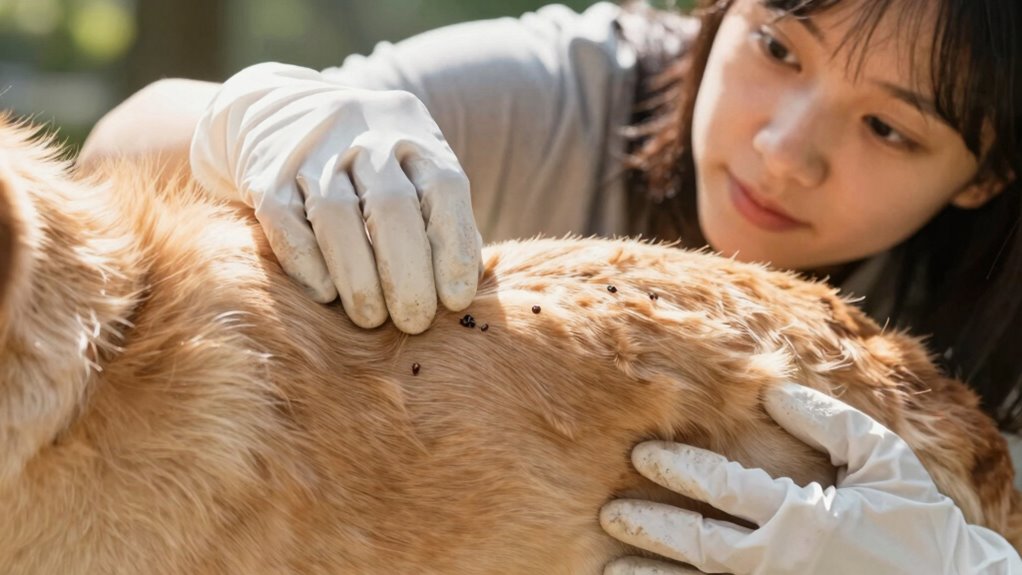

Performing a quick, 60-second check every day is key to catching ticks early and protecting your dog’s health. Focus on areas like around the ears, under the collar, between toes, and along the belly. Use gentle fingers to feel for bumps or rough patches, and familiarize yourself with your dog’s normal coat. Regular checks, combined with prevention methods, make it easier to spot and remove ticks before they cause harm—stay with us to learn more.
Key Takeaways
- Perform a quick daily check focusing on ears, collar, between toes, and belly to detect ticks early.
- Use gentle finger pressure to feel for small bumps or rough patches on your dog’s coat and skin.
- Be thorough but gentle to avoid discomfort, ensuring you cover all commonly targeted areas.
- Use fine-tipped tweezers or specialized tools to safely remove any ticks found, pulling upward steadily.
- Follow up with cleaning the area with antiseptic and dispose of ticks properly to prevent re-infestation.
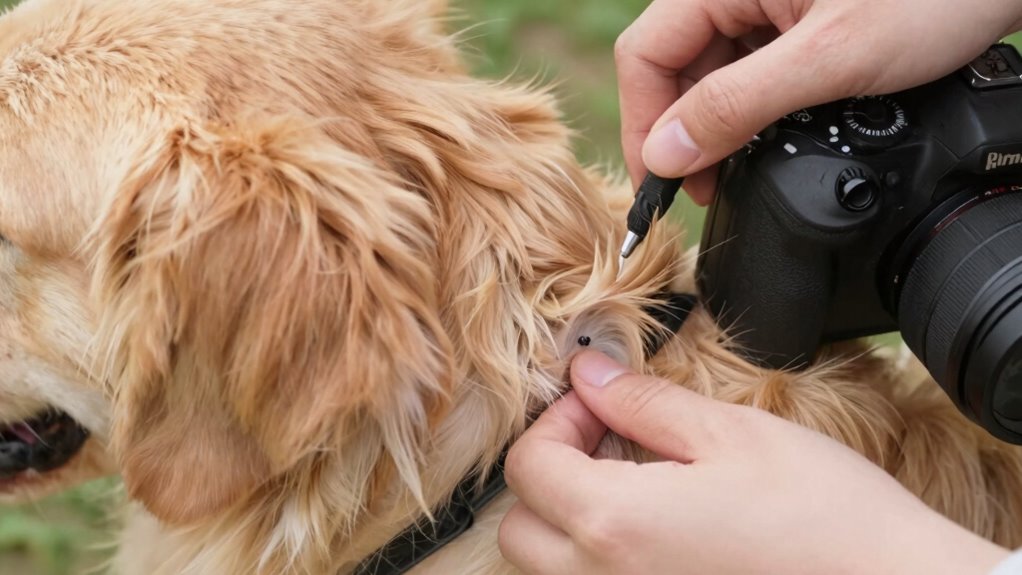
Regularly checking your dog for ticks is essential, especially during warm months when these parasites are most active. A quick, daily inspection can make all the difference in preventing tick-borne diseases and keeping your furry friend healthy. The key is establishing a simple, consistent routine that takes just a minute but offers considerable protection. When you perform your tick check, you focus on areas where ticks tend to latch on, such as around the ears, under the collar, between the toes, and along the belly. Using your fingers, gently feel for small bumps or rough patches that might signal a tick attachment. It’s important to be thorough but gentle, so you don’t cause discomfort or miss any parasites. The more familiar you are with your dog’s normal coat and skin, the easier it will be to spot anything unusual.
Incorporating regular tick prevention strategies into your routine makes early detection easier. There are various tick prevention products available, including topical treatments, oral medications, and collars, which can considerably reduce your dog’s risk of infestation. These products work best when combined with a vigilant check routine because they act as an extra layer of protection. When you find a tick, don’t panic. Use fine-tipped tweezers or a specialized tick removal tool to grasp the tick close to your dog’s skin and pull upward with steady, even pressure. Avoid twisting or squeezing the tick, as this can cause parts of its mouth to break off and stay embedded. After removal, clean the area with antiseptic and dispose of the tick safely.
Performing your tick check at least once a day, especially after walks or outdoor play, maximizes early detection. The quicker you spot a tick, the easier it is to remove it before it has a chance to transmit diseases like Lyme disease or Rocky Mountain spotted fever. Keeping your dog on a regular tick prevention regimen not only reduces the chances of tick bites but also gives you peace of mind. Remember, the goal isn’t just to find ticks when they’re attached but to prevent them from latching on in the first place. A simple, 60-second routine can save your pet from potential health issues down the line. By staying vigilant, using effective tick prevention products, and knowing how to quickly detect and remove ticks, you’re giving your dog the best protection against these tiny but dangerous parasites. Color accuracy and proper lighting conditions can also help you spot ticks more easily during your routine checks.
Frequently Asked Questions
How Often Should I Perform a Tick Check on My Dog?
You should check your dog for ticks daily, especially during peak tick season or after outdoor activities. Seasonal precautions are essential, so increase checks in spring and summer when ticks are most active. Use tick prevention products recommended by your vet, and perform a quick 60-second tick check after every outdoor adventure. Regular checks help catch ticks early, reducing disease risk and keeping your dog safe and healthy.
Are Certain Breeds More Prone to Ticks?
Certain breeds are more prone to ticks due to breed susceptibility and their coat types. Dogs with long, thick, or dense fur, like retrievers or terriers, often hide ticks more easily, increasing their risk. To protect your dog, follow tick prevention strategies tailored to your breed’s susceptibility, including regular tick checks, using vet-recommended preventatives, and avoiding tick-prone areas during peak seasons. Stay vigilant to keep your dog safe.
What Tools Are Best for a Thorough Tick Check?
When it comes to thorough tick checks, you need the right tools in your arsenal. A fine-toothed comb, a pair of tweezers, and a handheld magnifying glass are your best friends. These tick prevention tools help you spot and remove ticks quickly using proper tick removal techniques. Don’t just wing it—be prepared. With these tools, you’re more likely to catch those pesky ticks before they cause trouble.
Can Ticks Transmit Diseases Even if Removed Quickly?
Yes, ticks can transmit diseases even if removed quickly. Early detection of ticks is essential because it helps reduce the risk of tick-borne illnesses. You should check your dog thoroughly after outdoor activities and remove ticks promptly with proper tools. Quick removal minimizes the chance of disease transmission, but it’s best to monitor your dog for symptoms and consult your vet if you notice any signs of illness.
When Is the Peak Tick Season in Most Regions?
Peak tick season usually hits in late spring through early summer, like a wave cresting in many regions. Seasonal variations and regional differences influence when ticks are most active, so you might see these critters earlier or later depending on where you live. To stay ahead of the game, stay vigilant during warmer months, especially in wooded or grassy areas, and perform regular tick checks on your dog.
Conclusion
By dedicating just 60 seconds to a quick tick check, you can catch ticks early and protect your dog from potential diseases. Did you know that around 20% of ticks carry illnesses like Lyme disease? Regular checks markedly reduce your pet’s risk. Make tick checks a daily habit—your furry friend’s health depends on it. Stay vigilant, stay safe, and enjoy more moments together without worry.