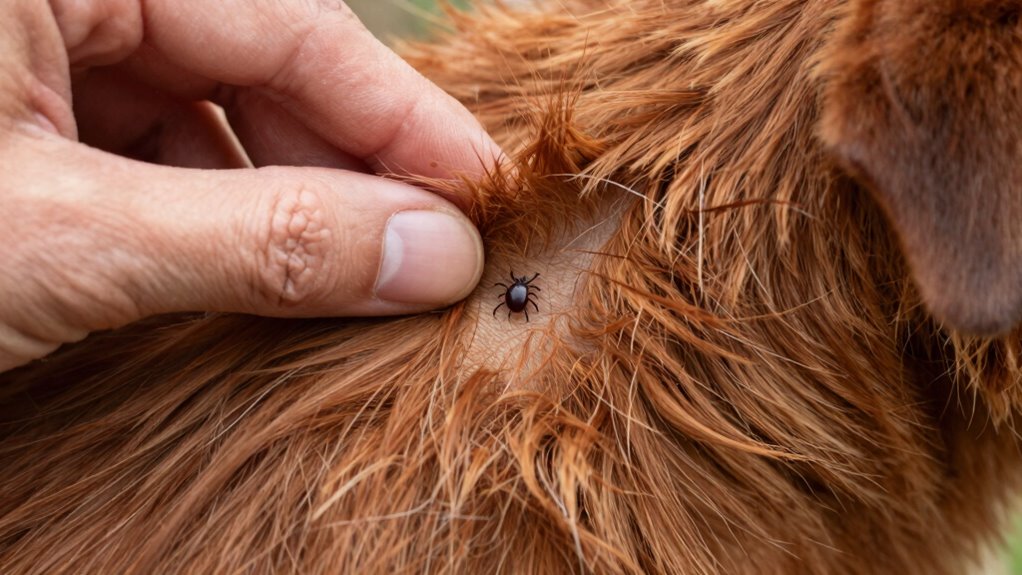

When checking your pet for ticks, start around the ears, inside the ears, and under the collar around the neck, since ticks often hide in these warm, hidden spots. Next, examine between the toes, paw pads, armpits, groin area, and around the tail and spine base, as these are common attachment sites. Regularly inspecting these areas helps catch ticks early and keeps your pet healthy, so stay tuned for more tips on effective detection and prevention.

Get garden gear delivered free with Prime
- Fast, free delivery on millions of items
- Prime Video, Amazon Music and more included
- Member-only deals all year
Key Takeaways
- Focus on areas like ears, neck, and paws where ticks commonly attach.
- Regularly inspect these prime spots to detect ticks early and prevent disease transmission.
- Ticks prefer warm, hidden areas, making thorough checks crucial after outdoor activities.
- Proper removal from these areas minimizes health risks and supports overall parasite control.
- Routine inspections during peak tick seasons help maintain your pet’s health and safety.
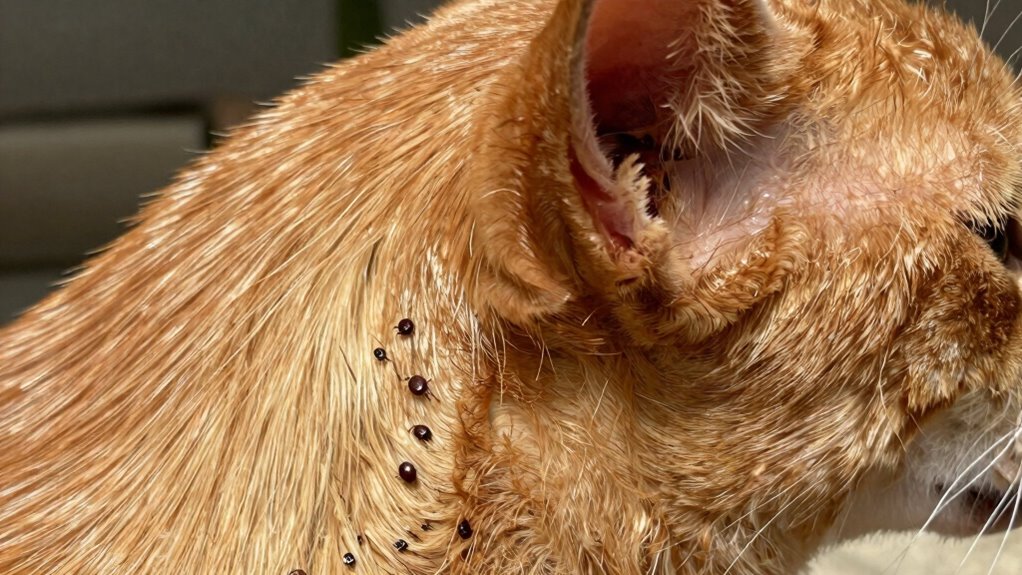
With tick season approaching, conducting regular checks on your pets for these tiny parasites is essential. Ticks can carry serious diseases like Lyme disease, which can affect both pets and humans. Recognizing where to look first and understanding why these checks matter can make a big difference in keeping your furry friends safe. Ticks often latch onto parts of your pet’s body where the skin is thin or where hair is shorter, making these areas prime spots for inspection. Focus on areas like around the ears, inside the ears, around the neck, under the collar, and between the toes. These are common attachment sites because they provide easy access and a cozy hiding spot for ticks. Don’t forget to check the armpits, groin area, and around the tail. Ticks tend to hide in warm, hidden places, so thorough grooming is vital. Regular grooming not only helps with checking for ticks but also keeps your pet comfortable and healthy. Being aware of tick habitats can help you target your checks more effectively and prevent infestations. Additionally, understanding the behavior of ticks can help you anticipate where they might be hiding on your pet. Proper removal minimizes the risk of disease transmission, including Lyme disease, which ticks can transmit if they remain attached for a certain period. After removing the tick, clean the bite area with antiseptic and wash your hands thoroughly. Staying informed about tick prevention options can further reduce the chances of these parasites successfully attaching to your pet. Knowing the environmental factors that support tick populations can also help you take targeted steps to reduce risks around your home.
In addition, understanding tick life cycles can aid in timing your prevention efforts and identifying when your pet is most vulnerable. Preventing tick infestations involves more than just regular checks; tick prevention tips can help reduce the chances of attachment altogether. Talk to your vet about appropriate tick preventatives, whether topical treatments, oral medications, or collars. These options can effectively create a barrier, making it less likely for ticks to latch on. Maintaining your yard by keeping grass trimmed and removing leaf litter also minimizes tick habitats, further protecting your pet. Remember, early detection is key. The sooner you identify and remove a tick, the lower the risk of disease transmission. Regular checks after walks or outdoor playtime should become part of your routine, especially during peak tick season.
In short, understanding where to look first and implementing proper tick checks can save your pet from discomfort and serious health issues like Lyme disease. Combined with effective tick prevention tips, these habits help guarantee your pet stays healthy and tick-free throughout the season. Your vigilance makes all the difference, so stay attentive and proactive in your pet’s tick prevention plan.
As an affiliate, we earn on qualifying purchases.
Frequently Asked Questions
How Often Should I Perform Tick Checks on My Pet?
You should perform tick checks on your pet daily, especially during peak tick season or after outdoor activities. Regular checks are a crucial preventive measure against tick-borne diseases. Focus on areas like ears, neck, and paws, where ticks often hide. Seasonal risks increase the need for frequent inspections. Staying vigilant helps catch ticks early, reducing health risks for your pet and ensuring your preventive measures are effective throughout the year.
Are Certain Breeds More Prone to Tick Infestations?
Sure, some breeds are more prone to tick infestations, thanks to their breed susceptibility and coat types. Breeds with long, dense, or wiry coats, like Spaniels or terriers, often trap ticks more easily, making them more vulnerable. Ironically, your sleek-coated breeds might seem less appealing to ticks, but they’re not immune. Regular tick checks are essential for all breeds, regardless of coat type, to keep your pet safe.
Can Ticks Transmit Diseases Even if They Are Removed Quickly?
Yes, ticks can transmit diseases like Lyme disease even if they’re removed quickly. That’s why tick prevention is essential—removing a tick promptly reduces the risk, but doesn’t eliminate it entirely. To protect your pet, regularly check for ticks and remove them carefully. Early removal helps, but staying vigilant with prevention measures is your best defense against tick-borne illnesses like Lyme disease.
What Are the Signs of a Tick-Borne Illness in Pets?
You’ll notice signs of tick-borne illness in your pet through symptoms like fever, lethargy, loss of appetite, and joint pain. Regular tick prevention and thorough pet grooming are essential for early detection. Keep an eye out for unusual behavior or swelling where a tick was attached. Promptly consult your vet if you spot these signs, as early treatment can prevent serious health issues in your furry friend.
Should I Use Specific Tools for Removing Ticks Safely?
Yes, you should use specific tools for tick removal to guarantee safety and effectiveness. Use fine-tipped tweezers or a tick removal tool to grasp the tick close to your pet’s skin, following proper tick removal techniques. Incorporate tick checks into your pet grooming routines regularly, especially after outdoor activities. Using the right tools minimizes the risk of leaving parts behind and helps prevent infection or disease transmission.
As an affiliate, we earn on qualifying purchases.
Conclusion
Now, as you finish your tick check, imagine your pet’s fur as a soft, welcoming blanket, hiding tiny invaders. Feel each gentle stroke, knowing you’re safeguarding their health. With steady hands and attentive eyes, you’re the protector, scanning the places ticks love to hide—around ears, between toes, under collar. Every careful touch is a shield, a promise that your bond stays strong, and your pet remains happy, healthy, and tick-free, ready for many more adventures together.
As an affiliate, we earn on qualifying purchases.
pet grooming brush for tick checks
As an affiliate, we earn on qualifying purchases.
As an affiliate, we earn on qualifying purchases.
Fall yard work Picks
leaf blowers
As an affiliate, we earn on qualifying purchases.