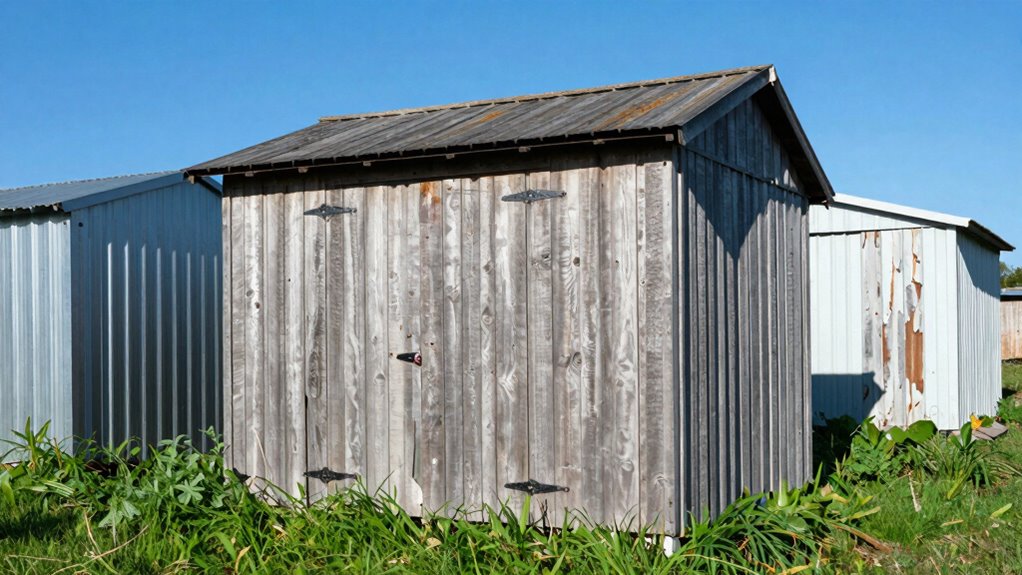

Your shed’s placement considerably impacts its ability to avoid temperature swings that can damage stored items. Choosing a shaded spot or a natural windbreak can help reduce heating and cooling extremes, while good drainage prevents flooding and moisture buildup. Proper placement makes it easier to insulate and ventilate effectively, protecting tools, electronics, and wooden items. Keep in mind that strategic positioning can extend your shed’s life and safeguard your belongings—discover more tips for ideal placement.

Get garden gear delivered free — and shop member deals
- Fast, free delivery on millions of items
- Access to Prime Big Deal Days deals on October 6–7
- Prime Video, Amazon Music and more included
Key Takeaways
- Proper placement minimizes exposure to extreme temperatures, protecting stored items from damage.
- Shaded or wind-protected locations reduce interior temperature fluctuations.
- Site selection influences insulation effectiveness and overall temperature regulation.
- Good drainage and low water exposure prevent moisture buildup and temperature-related issues.
- Adequate ventilation in the chosen location helps control humidity and prevent mold.
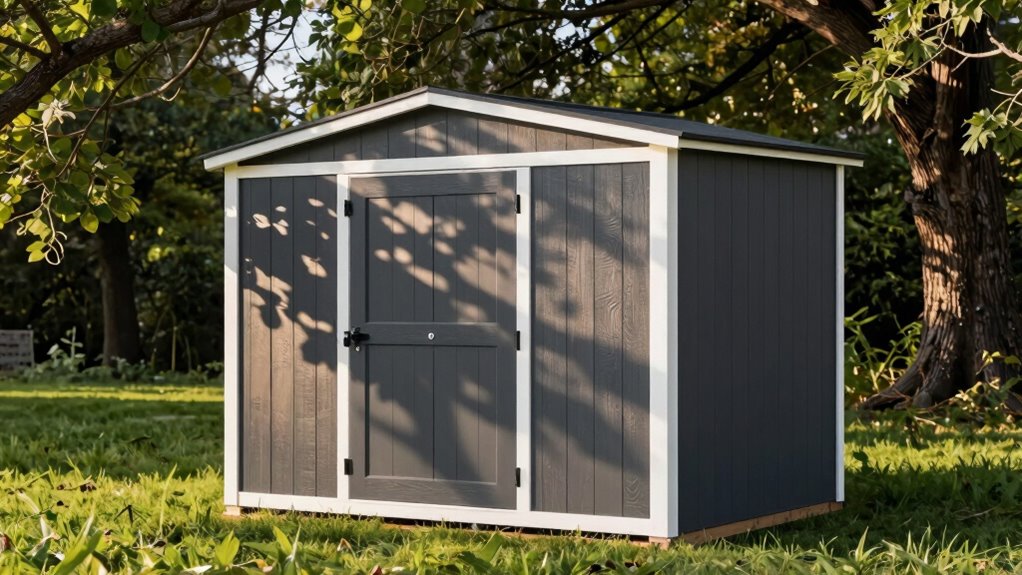
Storage sheds are practical solutions for organizing your outdoor space, but they can be vulnerable to temperature swings that occur throughout the year. When you place your shed in the wrong spot, extreme heat in the summer or cold in the winter can cause damage to the items inside. That’s why considering insulation needs and ventilation importance is essential. Proper insulation helps regulate internal temperatures, protecting delicate tools, electronics, or wooden items from warping, cracking, or deterioration caused by rapid temperature changes. Without adequate insulation, your shed becomes a makeshift greenhouse in summer and a freezer in winter, putting your stored belongings at risk.
Location plays a vital role in how well your shed handles temperature swings. If you place it in full sun, you’ll notice the interior heats up quickly, which can compromise insulation and accelerate wear on stored items. Conversely, positioning your shed in a shaded area or near natural windbreaks can reduce temperature extremes. Proper placement minimizes the workload on insulation, making it more effective in maintaining a stable environment. Additionally, Proper placement can help prevent damage caused by external elements like high winds or flooding. Recognizing the importance of site selection can significantly enhance the longevity of your shed and its contents. Considering climate considerations helps in choosing the best location for your shed. Ensuring the site has good drainage is also critical to prevent water accumulation and potential flooding that could damage your stored items and shed foundation.
Ensuring adequate ventilation is also essential for moisture control and temperature regulation. Even with good insulation, poor airflow can lead to moisture buildup, which fosters mold, mildew, and rust. Installing vents or windows that can be opened allows air to circulate freely, equalizing temperature and humidity levels. This airflow prevents condensation during cold months and reduces internal heat during hot spells. Proper ventilation also helps prevent internal humidity levels from reaching the point where mold or mildew can develop, especially in humid climates. When you prioritize ventilation, you’re not just protecting your belongings—you’re also prolonging the lifespan of your shed itself by preventing moisture-related damage. Proper ventilation is a crucial element in maintaining a healthy and durable storage environment.
As an affiliate, we earn on qualifying purchases.
Frequently Asked Questions
How Can I Improve Ventilation in My Storage Shed?
You can improve ventilation in your storage shed by installing ventilation fans to actively move air and reduce humidity. Additionally, incorporate passive airflow by adding vents or windows positioned to promote natural cross-ventilation. Keep vents unobstructed, and consider placing them higher or lower depending on airflow needs. These steps help regulate temperature and moisture, protecting your stored items and creating a more comfortable environment inside your shed.
What Materials Are Best for Temperature Regulation?
If you’re seeking the best materials for temperature regulation, consider those that combine durability and climate adaptability. Metal with insulation offers excellent temperature control, resisting extreme swings. Wood, especially when treated, provides natural insulation and durability. For added control, look into composite materials designed specifically for climate resilience. These choices help keep your shed cooler in summer and warmer in winter, protecting your belongings from unpredictable temperature changes.
Can Insulation Prevent Damage From Temperature Swings?
Yes, insulation can prevent damage from temperature swings by enhancing insulation effectiveness and mitigating temperature fluctuations. When you add proper insulation, it creates a barrier that slows heat transfer, keeping your shed more stable regardless of outside weather. This helps protect your stored items from extreme temperature changes, reducing the risk of warping, cracking, or mold growth. Proper insulation is a smart investment for maintaining a consistent, protected environment inside your shed.
How Often Should I Check My Shed’s Temperature?
You should check your shed’s temperature weekly, especially during seasonal changes. Regular temperature monitoring helps you identify swings that could harm your stored items. During colder months, consider making seasonal adjustments like adding insulation or using a heater. In warmer weather, guarantee proper ventilation. By keeping an eye on the temperature, you prevent damage and maintain a safe environment for your belongings year-round.
Are There Specific Locations to Avoid Placing a Shed?
You should avoid placing your shed directly under trees or in shaded areas that trap moisture, as these spots can compromise shed security and invite pests. Stay away from low-lying areas prone to flooding, which can damage your shed and create pest issues. Choose a well-drained, open location with good airflow to prevent pests and maintain security. Proper placement guarantees your shed stays safe, dry, and pest-free.
ventilation vents for storage shed
As an affiliate, we earn on qualifying purchases.
As an affiliate, we earn on qualifying purchases.
Conclusion
By choosing the right spot for your storage shed, you’re not just protecting your tools—you’re creating a sanctuary that withstands the wild dance of temperature swings. Imagine stepping into your shed, feeling the cool, stable air inside, a quiet refuge amid the changing seasons. When you place it wisely, you’re safeguarding your belongings and cultivating peace of mind, knowing your cherished tools are shielded from nature’s unpredictable mood swings. Your shed becomes a steadfast companion in every season.
As an affiliate, we earn on qualifying purchases.
As an affiliate, we earn on qualifying purchases.
Halloween Picks
halloween
As an affiliate, we earn on qualifying purchases.