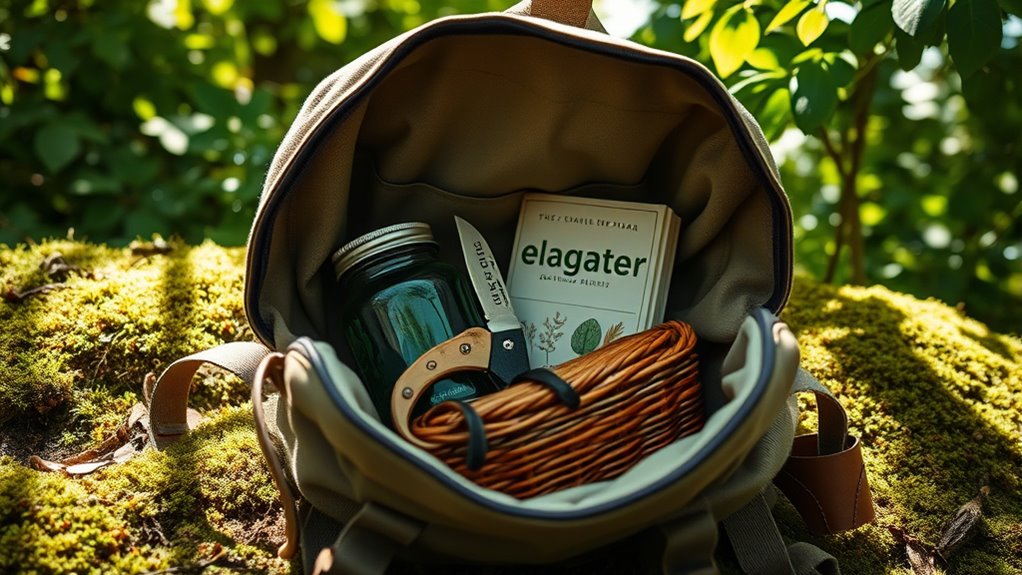

To build a portable foraging kit, select essential tools like sharp knives, magnifying glasses, and a field guide or plant app for accurate ID. Include safety supplies such as first aid items and a whistle, and organize everything in small, accessible containers. Regularly check and clean your tools, replenish supplies, and tailor the kit to your environment’s hazards. Keep it lightweight and ready to go—more tips await if you keep exploring.
Key Takeaways
- Select essential tools like a plant ID guide, magnifying glass, and sharp harvesting instruments for accurate identification and safe collection.
- Organize supplies in small, accessible containers or compartments for quick retrieval during foraging trips.
- Include safety gear such as a first aid kit, whistle, flashlight, and environment-specific hazards to prepare for emergencies.
- Regularly inspect, clean, and replace tools and supplies to ensure reliability and hygiene before each outing.
- Tailor the kit contents to the environment, considering potential hazards and necessary items for safe, efficient foraging.
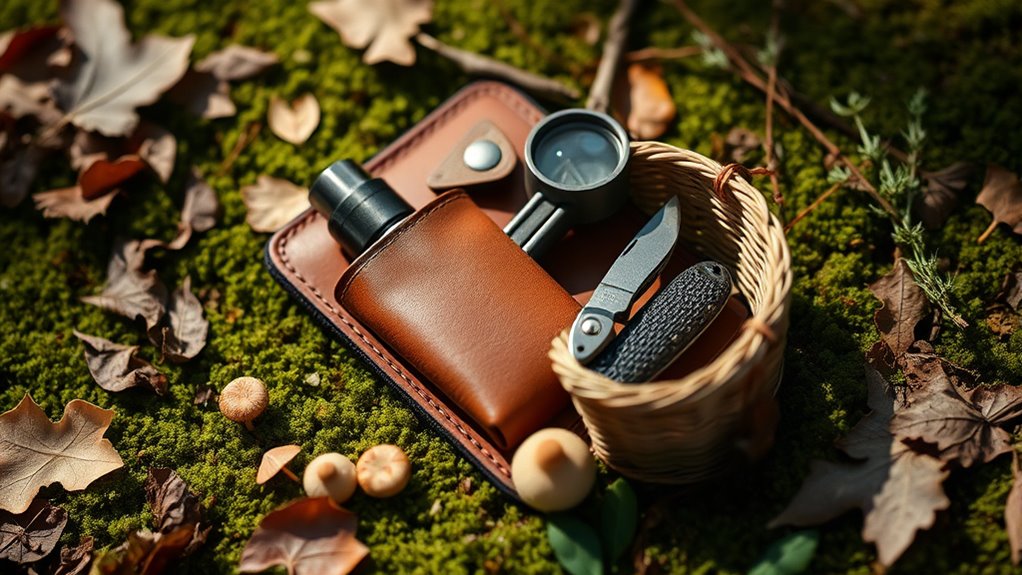
Foraging can be a rewarding activity, but having the right tools on hand makes all the difference. A well-equipped portable foraging kit ensures you’re prepared for whatever nature offers while keeping safety at the forefront. When assembling your kit, prioritize foraging safety by including items that help you identify edible plants accurately and avoid toxic ones. A good field guide or plant identification app is essential, but physical reference materials are often more reliable in remote areas. Carry a small magnifying glass or a hand lens to examine plant details closely, helping you distinguish safe species from look-alikes. Also, include a knife or scissors for harvesting, and always ensure they’re sharp and clean to prevent contamination and make clean cuts.
Maintaining your kit is just as important as assembling it. Regularly check all tools and supplies to replace worn or damaged items, and keep everything clean to prevent rust and bacterial growth. Proper kit maintenance extends the lifespan of your tools and ensures they perform reliably when needed. Keep your kit organized with compartments or small bags to avoid losing essential items and to facilitate quick access during your outing. When you return from foraging, clean and dry your tools thoroughly before storing them to prevent corrosion. Replenish consumables like gloves, bandages, or antiseptics regularly to ensure you’re always ready for minor injuries or mishaps.
In addition to safety gear, your kit should include basic first aid supplies to handle cuts, scrapes, or insect bites promptly. A small first aid manual can be invaluable in emergencies, guiding you through proper procedures. Consider packing a whistle for signaling in case you get separated from your group, and include a flashlight or headlamp if you plan to forage in low-light conditions. Always think ahead about your environment and the potential hazards you might encounter, such as poison ivy or stinging insects, and pack accordingly.
Frequently Asked Questions
What Are the Essential Safety Items to Include?
You should include essential safety items like a first aid kit to treat cuts or scrapes quickly and emergency signaling tools such as a whistle or mirror to attract attention if needed. These items help guarantee your safety during foraging adventures. Always carry basic supplies, stay aware of your surroundings, and know how to use your signaling tools effectively. Prioritizing safety keeps your foraging experience enjoyable and secure.
How Can I Ensure My Kit Is Lightweight?
To keep your kit lightweight, focus on a compact design that minimizes bulk. Choose multi-functional tools to reduce the number of items needed and opt for lightweight materials like plastic or aluminum instead of heavier metals. Regularly assess your gear, removing unnecessary items to prevent weight accumulation. Prioritize essential safety items that are small yet effective, ensuring your kit remains easy to carry without sacrificing safety or functionality.
What Tools Are Best for Identifying Edible Plants?
You might think a fancy app or a hefty field guide is your best bet for plant identification, but sometimes, simple is better. Use a good plant identification app or carry a compact field guide with clear photos and descriptions. Focus on edible plant tips like leaf shape, smell, and growing environment. Remember, the best tool is your keen eye and knowledge — don’t rely solely on gadgets when foraging.
How Should I Maintain and Clean My Kit?
You should regularly maintain and clean your foraging kit by organizing your gear to keep everything accessible and in good condition. Use cleaning supplies like alcohol wipes or mild soap and water to sanitize tools and containers after each use. Make sure to dry everything thoroughly to prevent rust or mold. Proper gear organization and routine cleaning guarantee your kit stays reliable and ready for safe foraging adventures.
Are There Specific Storage Options for Different Environments?
Did you know that using the right storage containers can extend the lifespan of your foraging kit by up to 30%? For different environments, choose durable, waterproof containers for wet conditions and breathable options for dry, humid areas. Consider environmental considerations like temperature and moisture, which influence container choice. By selecting appropriate storage options, you guarantee your kit stays organized, protected, and ready for any adventure.
Conclusion
Your portable foraging kit is more than just tools; it’s a compass guiding you through nature’s hidden treasures. Each item represents a key to revealing the wild’s secrets, like a lantern illuminating your path. As you carry it, remember you’re holding a small universe of possibility—your ticket to adventure and discovery. With this kit, you’re not just exploring the outdoors; you’re forging your own story within the vast, wild tapestry that awaits.