
To keep wild foods fresh during transit, use breathable containers like mesh bags or padded crates to prevent bruising and promote airflow. Pack perishables with ice packs or gel packs in coolers, and store non-perishables in a cool, shaded spot. Handle everything carefully, label containers precisely, and sort items beforehand to reduce cross-contamination. Proper packaging and temperature control make all the difference—stick with these tips to guarantee your wild harvest stays fresh longer.

Get garden gear delivered free with Prime
- Fast, free delivery on millions of items
- Prime Video, Amazon Music and more included
- Member-only deals all year
Key Takeaways
- Use breathable containers like mesh bags or baskets to promote airflow and prevent moisture buildup.
- Pack harvests with ice packs or gel packs in coolers to slow bacterial growth during transport.
- Pre-sort wild foods by type to reduce cross-contamination and streamline handling.
- Label containers clearly with date and food type for easy tracking and prioritized usage.
- Process and preserve wild foods promptly upon arrival through freezing, drying, or pickling to maintain freshness.
Transporting wild foods can be tricky, but with the right hacks, you can keep your harvest fresh and intact. When you’re out in the field collecting wild edibles, it’s essential to think about wild food preservation during transport. Proper methods not only ensure your foods stay fresh but also support sustainable sourcing, allowing you to enjoy wild flavors without harming the environment. The key is to minimize spoilage, prevent damage, and reduce waste, all while respecting nature’s balance.
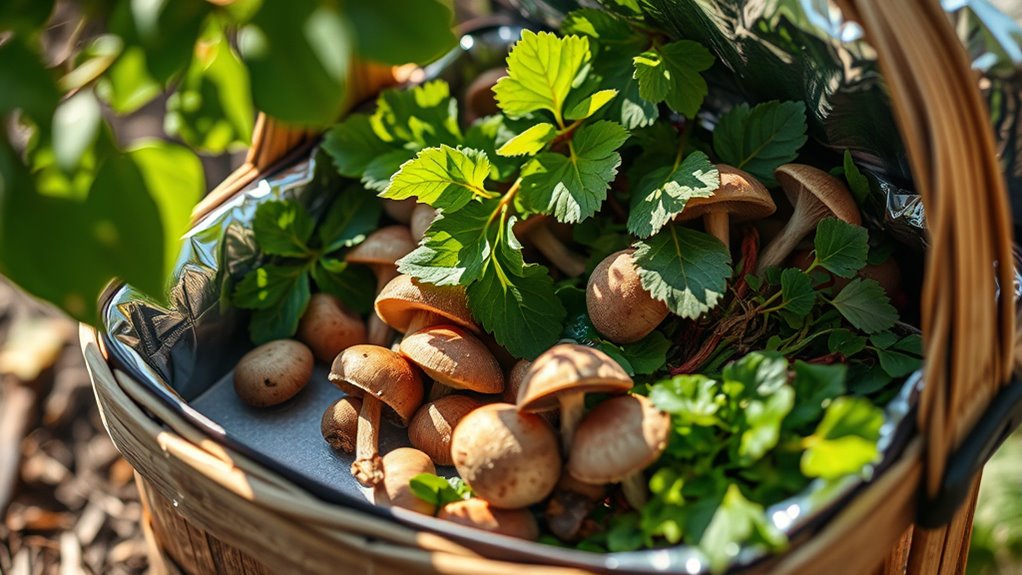
Start by choosing the right containers. Use breathable baskets or mesh bags for items like berries, mushrooms, and greens. These materials promote airflow, reducing moisture buildup that can lead to mold or rot. For heavier or more fragile items, consider padded crates or containers with dividers to prevent crushing. Keeping your wild foods separated reduces bruising and makes sorting easier once you arrive home. Always clean your containers beforehand to avoid contamination.
Choose breathable containers like baskets and mesh bags to keep wild foods fresh and prevent spoilage.
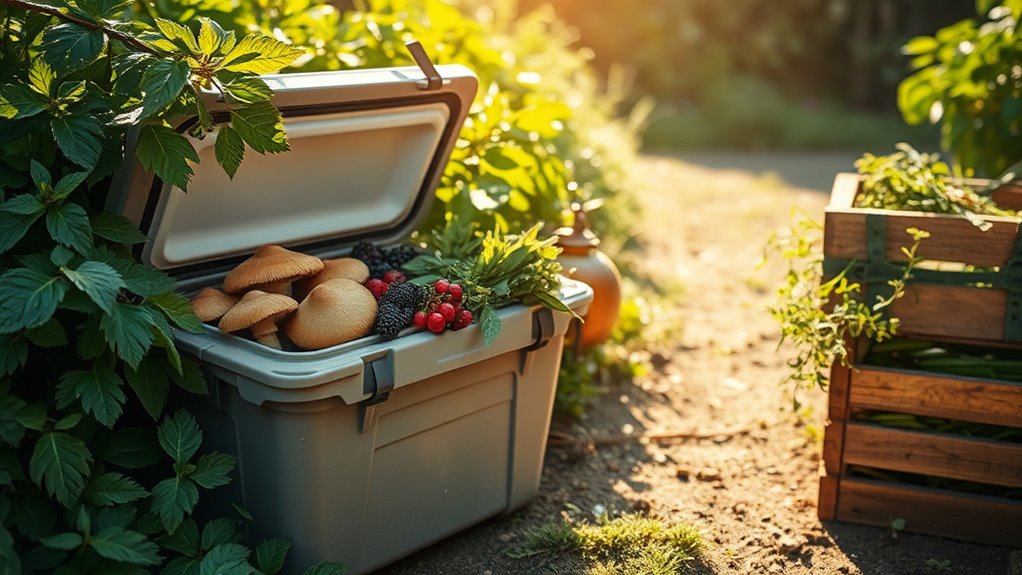
Temperature control is critical in wild food preservation. If you’re journeying over long distances or in warm weather, pack your harvest in coolers with ice packs or frozen gel packs. This slows bacterial growth and keeps perishable foods fresh longer. For items that don’t require refrigeration, like roots or nuts, store them in a cool, dry place away from direct sunlight. Avoid overpacking your containers, as crush injuries can damage delicate wild foods and accelerate spoilage.
Another smart hack involves pre-sorting your harvest. As you gather, separate mushrooms from berries, greens from tubers. This not only simplifies transport but also minimizes cross-contamination. Be mindful of sustainable sourcing practices—harvest responsibly by taking only what you need and leaving enough behind to ensure the plant’s regeneration. This respect for nature guarantees you’ll have wild foods to harvest for seasons to come.
Additionally, utilizing proper packaging techniques can further enhance preservation during transport. Label your containers clearly with the date and type of wild food. This helps you prioritize what to use first and keeps track of your harvest timeline. When you arrive home, process your wild foods promptly for long-term preservation—whether by freezing, drying, or pickling. Properly storing your wild foods ensures they remain nutritious and flavorful, ready for your next meal.
Frequently Asked Questions
How Long Can Wild Foods Stay Fresh During Transport?
Wild foods typically stay fresh for a few hours during transport if you follow proper wild food preservation and transport safety tips. Keep them cool with ice or insulated containers, and avoid direct sunlight. For longer trips, consider vacuum sealing or refrigerating. Always plan ahead to minimize transit time, and check local guidelines for best handling practices. Proper wild food preservation guarantees your harvest remains safe and delicious until you’re ready to enjoy it.
What Are the Best Containers for Transporting Wild Foods?
You should choose reusable containers like stainless steel or BPA-free plastic for transporting wild foods, as they’re durable and eco-friendly. To keep your harvest fresh, use insulation techniques such as padding with ice packs or insulated bags. These methods help maintain ideal temperature and prevent spoilage during transit. Always guarantee containers are leak-proof and properly sealed to avoid contamination and preserve the quality of your wild foods.
Are There Specific Temperature Guidelines for Different Wild Foods?
Ever wondered if wild foods need special temperature guidelines? Proper temperature control is essential to maintain freshness and safety during storage. For delicate items like mushrooms, keep them cool and dry, while game meats require colder temperatures to prevent spoilage. Generally, aim for refrigeration at 32-40°F and limit storage duration to reduce risks. Do you know the specific needs of each wild food you’re transporting? Proper guidelines guarantee quality from field to feast.
How Can I Prevent Cross-Contamination During Transport?
To prevent cross-contamination during transport, you should follow strict sanitization protocols for all containers and tools you use. Keep wild foods separated by type and store raw ingredients below cooked or ready-to-eat items. Use sealed, clean packaging and avoid touching foods directly. Regularly clean your hands and surfaces, and monitor temperature to reduce bacterial growth, ensuring contamination prevention throughout your journey from field to feast.
What Should I Do if Wild Foods Start to Spoil During Transit?
Oh no, your wild foods are spoiling mid-transit—what a surprise! When wild food spoilage hits, act fast with emergency preservation. Quickly cool the foods in ice or a chilled environment, and if possible, repackage them to limit further decay. Don’t delay; prompt action keeps your harvest edible and safe. Remember, swift response is your best defense against spoilage turning your wild bounty into wasted effort.
Conclusion
Now that you’ve learned these transport hacks, you’re like a skilled chef carefully preserving each ingredient’s freshness. Imagine carrying delicate wild berries on a windy day—without proper insulation, they’d turn to mush. Just as a trusty boat keeps cargo safe through rough waters, your smart packing keeps wild foods fresh from field to feast. With these tips, you’ll turn every trip into a smooth journey, ensuring your wild harvest stays vibrant and ready to enjoy.
Fall yard work Picks
leaf blowers
As an affiliate, we earn on qualifying purchases.