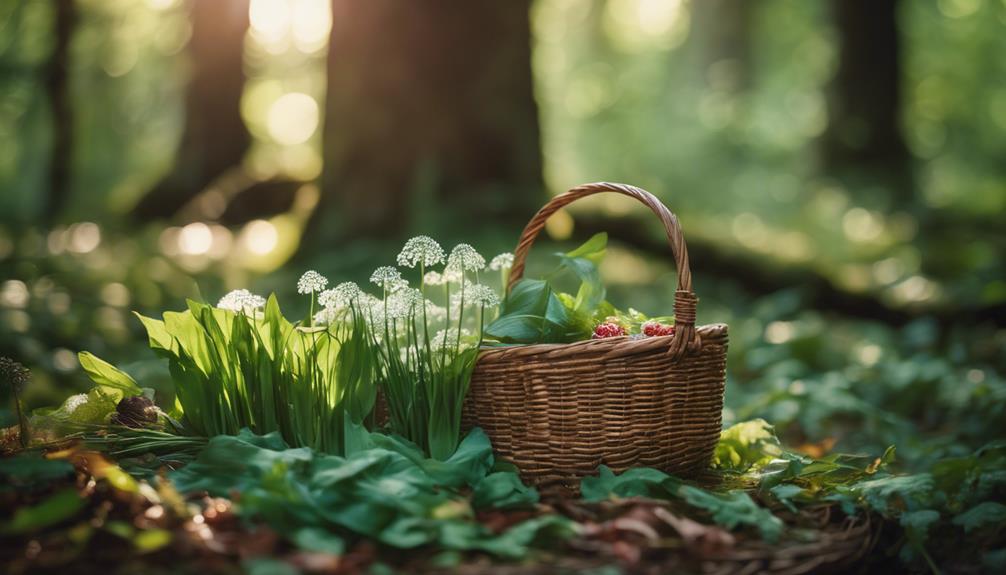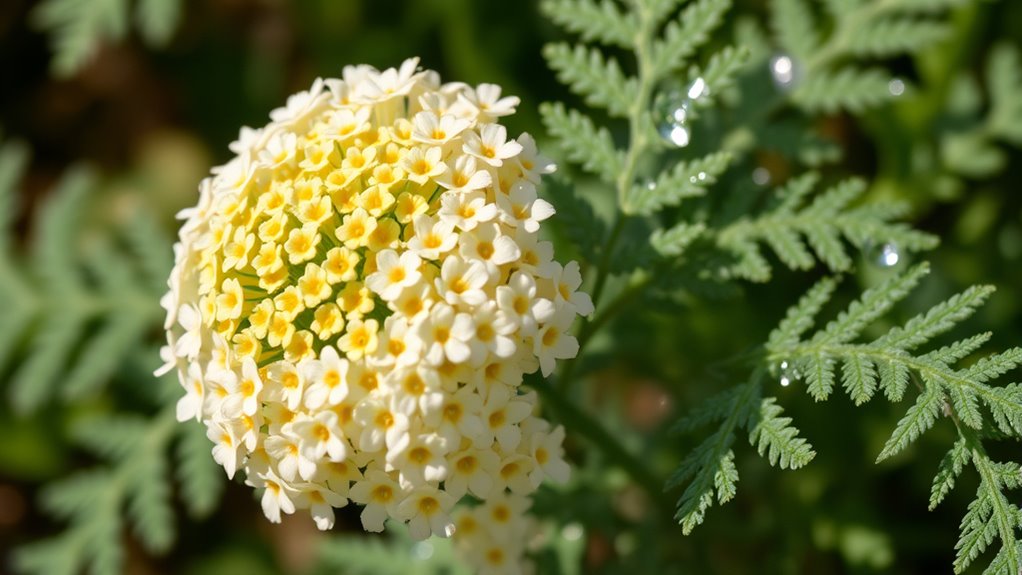
Yarrow is easy to identify with its feathery, fern-like leaves and clusters of tiny flowers that come in white, pink, and yellow shades. You’ll notice its distinctive appearance whether in gardens or wild areas. This versatile plant has been used traditionally to heal wounds, reduce inflammation, and boost immunity—mainly through teas, poultices, and salves. If you keep exploring, you’ll discover how to harness its full potential for health benefits.
Key Takeaways
- Yarrow has feathery, fern-like leaves and clusters of tiny, colorful flowers from white to pink and yellow.
- It contains flavonoids, alkaloids, and tannins, used traditionally to reduce inflammation, stop bleeding, and boost immunity.
- Commonly prepared as teas, tinctures, or poultices for healing, digestion, respiratory issues, and skin conditions.
- Harvest during flowering for maximum medicinal compounds; dry leaves and flowers properly for future use.
- Recognized in traditional medicine as a first aid herb for wounds, and supported by modern research for its healing and anti-inflammatory properties.

Yarrow is a versatile perennial herb easily recognized by its feathery, fern-like leaves and clusters of tiny, colorful flowers that range from white to pink and yellow. Its distinctive appearance makes it easy to identify in the wild or cultivated gardens. Beyond its attractive look, yarrow has long been valued for its medicinal properties. Traditionally, people have used it in herbal preparations to promote healing and support overall health. You’ll find yarrow in many herbal remedies because it contains compounds like flavonoids, alkaloids, and tannins that contribute to its therapeutic effects. These components help reduce inflammation, stop bleeding, and boost the immune system, making yarrow a go-to herb for minor cuts, bruises, and colds.
When you prepare herbal remedies with yarrow, you can make teas, tinctures, or poultices. For example, brewing yarrow into a tea allows you to harness its medicinal properties internally, helping with digestion, fever reduction, or respiratory issues. Applying a poultice of crushed yarrow leaves directly to a wound can accelerate clotting and prevent infection. Its ability to staunch bleeding and speed up tissue repair has made it a staple in traditional first aid. You might also see yarrow used in topical ointments or salves, especially in herbal medicine circles, to treat skin conditions or minor injuries. The plant’s versatility in herbal preparations means you can incorporate it into your natural health routine in various ways. Additionally, modern research supports its traditional use, highlighting its potential in wound healing and anti-inflammatory applications.
Yarrow’s role in herbal medicine extends beyond its physical healing properties. It’s also believed to have calming effects and can aid in reducing menstrual discomfort or alleviating symptoms of colds and flu. Because of its broad range of medicinal properties, yarrow has become a favorite among herbalists and those interested in natural healing methods. When harvesting yarrow for herbal preparations, ensure you pick fresh, healthy plants, ideally during the flowering period, when the medicinal compounds are at their peak. Drying the leaves and flowers properly preserves their potency for later use.
Frequently Asked Questions
Can Yarrow Be Safely Consumed in Large Quantities?
You shouldn’t consume yarrow in large quantities, as it can lead to potential overdose symptoms like nausea, dizziness, or allergic reactions. Always follow yarrow dosage guidelines carefully, and avoid exceeding recommended amounts. Overdoing it may cause adverse effects, so it’s best to use yarrow cautiously and consult a healthcare professional if you’re unsure about safe intake levels. Prioritize safety to enjoy its benefits without risking health issues.
Are There Any Known Side Effects of Using Yarrow?
Did you know that about 5-10% of people might experience allergic reactions to yarrow? Using yarrow can cause potential allergic reactions, like skin irritation or respiratory issues, especially if you’re sensitive. It can also interact with medications such as blood thinners, increasing bleeding risk. Always test a small amount first and consult your healthcare provider before regular use to avoid adverse side effects.
How Does Yarrow Compare to Other Herbal Remedies?
You’ll find yarrow compares favorably to other herbal remedies regarding effectiveness and herbal synergy. It’s known for its powerful anti-inflammatory and wound-healing properties, often working well alongside herbs like chamomile or lavender. While some remedies target specific issues, yarrow’s versatility makes it a strong choice for overall health. Its natural properties often enhance the effectiveness of other herbs, creating a balanced, synergistic effect.
Is Yarrow Effective for Specific Medical Conditions?
Yes, yarrow can be effective for specific medical conditions. Traditionally, people use yarrow to reduce bleeding, heal wounds, and ease inflammation. Modern research supports some of these uses, showing yarrow’s anti-inflammatory and antimicrobial properties. You might find it helpful for minor cuts, skin irritations, or digestive issues. However, consult your healthcare provider first, especially if you’re pregnant, breastfeeding, or on medication, to guarantee safety and proper use.
What Are the Best Harvesting Times for Yarrow?
To get the best harvesting timing for yarrow, you should aim for ideal collection during its peak flowering period, usually in late spring to early summer. Harvest the leaves and flowers just as they bloom fully, when essential oils and medicinal compounds are at their highest concentration. Avoid harvesting too early or late, as this can reduce potency. Timing your harvest carefully ensures you maximize yarrow’s medicinal benefits.
Conclusion
Yarrow is a versatile plant with fascinating medicinal and practical uses. Did you know it has been used for over 2,000 years to treat wounds and reduce inflammation? Its easy identification and numerous benefits make it a valuable addition to your natural remedy arsenal. Whether you’re interested in herbal medicine or simply want to add a touch of nature to your garden, yarrow’s rich history and usefulness make it worth exploring further.