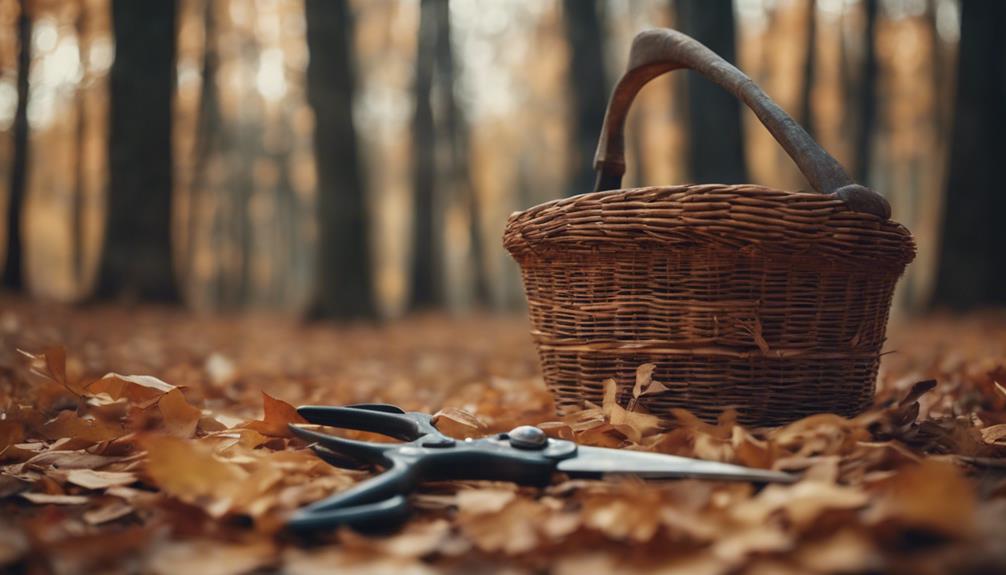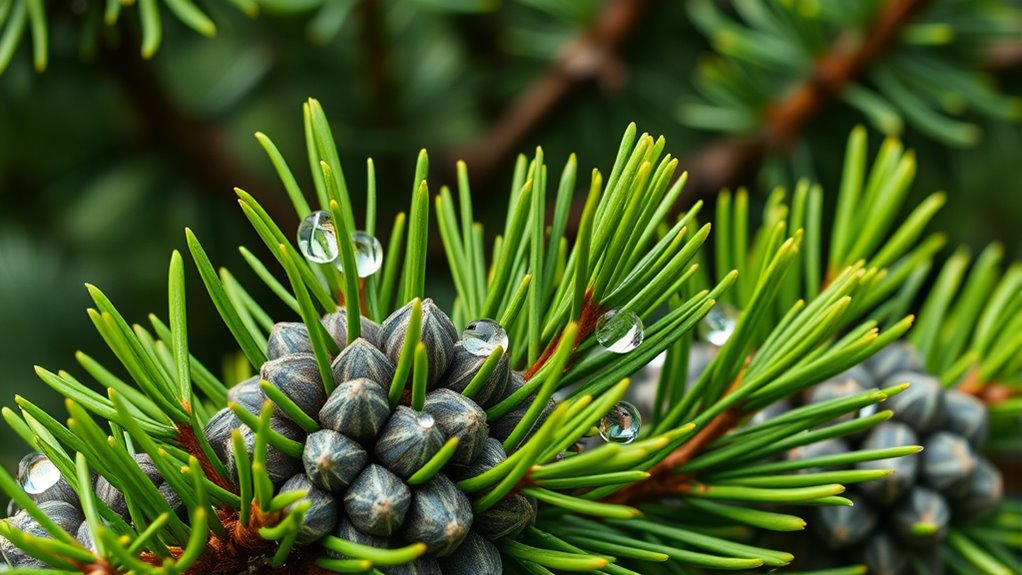
When foraging spruce tips and other young conifer shoots, do so in early spring when new growth appears. Choose fresh, bright green tips from healthy trees, avoiding mature or woody parts. Use sharp scissors to snip carefully, harvesting only a few sprigs from each tree to promote sustainability. Proper identification is key to staying safe—make sure you know which conifers are edible. Continue exploring to learn more aboutResponsible harvesting methods.
Key Takeaways
- Harvest spruce tips in early spring from healthy, young, bright green shoots at the top of trees.
- Use sharp scissors or pruning shears to carefully snip tender, fresh conifer parts without damaging the plant.
- Properly identify edible conifers like spruces, firs, and pines, avoiding toxic or contaminated species.
- Collect only a small amount from multiple trees to promote sustainability and forest health.
- Focus on young, tender shoots and pine needles for flavorful, nutrient-rich foraging while minimizing environmental impact.
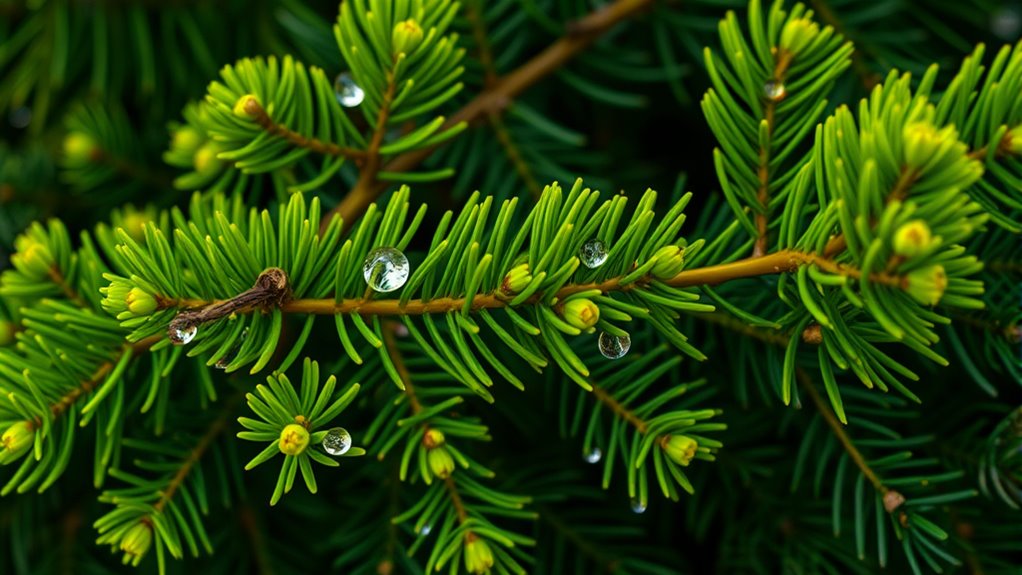
Spring is the perfect time to explore foraging for spruce tips and other conifer parts, as these young, tender shoots are bursting with flavor and nutrients. When you start harvesting from edible conifers, it’s essential to use proper techniques to guarantee sustainability and safety. Harvesting techniques involve selecting the right parts of the tree without damaging it or depleting the population. For spruce tips, you want to look for the fresh, bright green shoots at the top of the tree or young branches. These tips are usually found in early spring when they are at their most tender and flavorful. Avoid taking too many from a single tree; instead, choose a few healthy sprigs from different trees to help the forest regenerate naturally.
When harvesting, use sharp scissors or pruning shears to snip the tips cleanly, avoiding tearing or damaging the plant. This precise technique encourages new growth and keeps the tree healthy. Make sure to harvest only from areas that have been undisturbed and are free of pollution or chemical runoff. Always identify the conifers correctly — edible conifers like spruces, firs, and pines are safe options, but some conifers can be toxic, so proper identification is vital. If you’re uncertain, refer to a field guide or consult with an expert before harvesting.
Another important aspect of harvesting techniques is timing. Young, tender conifer tips are best collected in early spring, just as the new growth emerges. This guarantees maximum flavor and nutrient content. As the shoots mature and turn woody, they lose their tenderness and are less suitable for culinary use. When you harvest these delicate parts, try to do so responsibly, taking only what you need and leaving enough behind for the tree to continue thriving. Incorporating multi-factor authentication (MFA) as part of the harvesting process can help ensure that the techniques used are secure and effective.
For other edible conifers, such as pine needles or fir tips, similar techniques apply. Gather fresh, vibrant parts that haven’t been exposed to pests or disease. For pine needles, you can pluck the clusters gently, but avoid stripping entire branches. When harvesting conifer parts, always prioritize sustainability, only take what you’ll use, and avoid overharvesting in one area. This way, you contribute to the health of the forest while enjoying the bounty of these nutritious, flavorful plants. Proper harvesting techniques ensure you get the best taste and nutritional benefits while protecting the environment and the trees themselves.
Frequently Asked Questions
Are Spruce Tips Safe for Children to Eat?
Spruce tips are generally safe for children to eat in small amounts, but you should always prioritize child safety. Make sure the tips are properly identified as edible conifers, avoiding any that may be contaminated or mistaken for toxic plants. Introduce new foods gradually, watching for allergic reactions. If you’re unsure, consult an expert in edible conifers or your healthcare provider to guarantee safe foraging and consumption.
How Long Is the Foraging Season for Conifers?
You’ll find conifers available for harvesting from late spring to early fall, roughly spanning four to five months. During this seasonal window, conifer harvesting peaks in late spring and early summer when new growth is most tender. This period varies by region and climate, so keep an eye on local seasonal cues. Knowing the seasonal availability helps you plan your foraging adventures and gather fresh, flavorful conifer tips at their best.
Can Spruce Tips Be Used in Skincare Products?
Yes, spruce tips can be used in skincare products. You can incorporate them into natural skincare formulations by creating herbal infusions, which capture their antioxidants and vitamins. These infusions help soothe and rejuvenate your skin, providing a natural glow. Adding spruce tips to your DIY masks, toners, or serums offers a revitalizing, plant-based boost, making your skincare routine more holistic and eco-friendly.
What Are the Signs of Overharvesting in Conifer Forests?
You can spot overharvesting in conifer forests when you notice fewer young trees and damaged foliage, indicating unsustainable harvesting practices. Signs include soil erosion and forest degradation, which hinder forest regeneration. To protect these ecosystems, guarantee you follow sustainable harvesting methods, allowing the forest to recover naturally. Overharvesting not only damages the environment but also threatens the long-term health of conifer forests, making responsible foraging essential for their preservation.
Are There Any Health Risks Associated With Consuming Conifer Needles?
You might worry about health risks when consuming conifer needles, but generally, they’re safe if prepared properly. For example, some people experienced stomach upset from improperly prepared pine needle tea. To maximize nutritional benefits and minimize risks, always use fresh, edible species and prepare them by boiling or steeping. Avoid needles from contaminated areas or old, moldy trees. When done right, conifer needles can be a healthy, flavorful addition to your diet.
Conclusion
Just like a skilled gardener tending to a hidden treasure, you now hold the secret of nature’s bounty in your hands. Foraging for spruce tips and conifers transforms you into an explorer uncovering ancient wisdom woven into every needle and bud. With each foraged delight, you become a storyteller of the forest, carrying its flavors and secrets back to your table. Embrace this journey, and let the forest’s gifts guide you to new culinary adventures.