Sap season is a short, special time in early spring when you can tap into maple trees to collect sap. During this window, trees produce sap as part of their natural cycle, and it’s a quiet, rewarding foraging opportunity most overlook. You’ll need to identify healthy maples and use gentle tapping techniques when temperatures fluctuate above and below freezing. If you stay curious, you’ll discover how this fleeting season connects you closer to nature’s rhythms.

Get garden gear delivered free with Prime
- Fast, free delivery on millions of items
- Prime Video, Amazon Music and more included
- Member-only deals all year
Key Takeaways
- Sap season occurs in early spring when temperatures fluctuate, allowing sap to flow from healthy sugar maples.
- It is a brief, seasonal window typically lasting 4-6 weeks, often overlooked by those unaware of nature’s rhythms.
- Proper tapping techniques and timing are crucial to sustainably harvest sap without harming trees.
- Collecting sap involves careful management to protect forest health and promote biodiversity.
- After collection, sap is boiled into syrup, highlighting the season’s importance in natural foraging traditions.
Sap season is the time of year when maple trees are tapped to collect sap, which is then processed into syrup. During this brief window, you get a chance to witness nature’s quiet productivity firsthand. The process involves more than just drilling a hole; it requires knowing which tree species are suitable and applying the right foraging techniques to guarantee sustainability and maximize yield.
Sap season offers a fleeting, rewarding glimpse into nature’s quiet productivity through careful, sustainable maple tree tapping.
Not all trees are tapped during sap season. Maple trees, particularly sugar maples, black maples, and red maples, are the primary species used because their sap is rich in sugar and produces high-quality syrup. You want to look for healthy, mature trees that are at least 10 inches in diameter—these are the ones that can sustain tapping without damage. You’ll notice that the best trees are often found in forested areas with good drainage and plenty of sunlight. Identifying these tree species isn’t difficult if you familiarize yourself with their bark, leaf shape, and overall growth form. For example, sugar maples have smooth gray bark and distinctive lobed leaves, making them easier to distinguish from other trees. Recognizing the tree species is crucial for sustainable tapping practices, ensuring the forest remains healthy for future seasons.
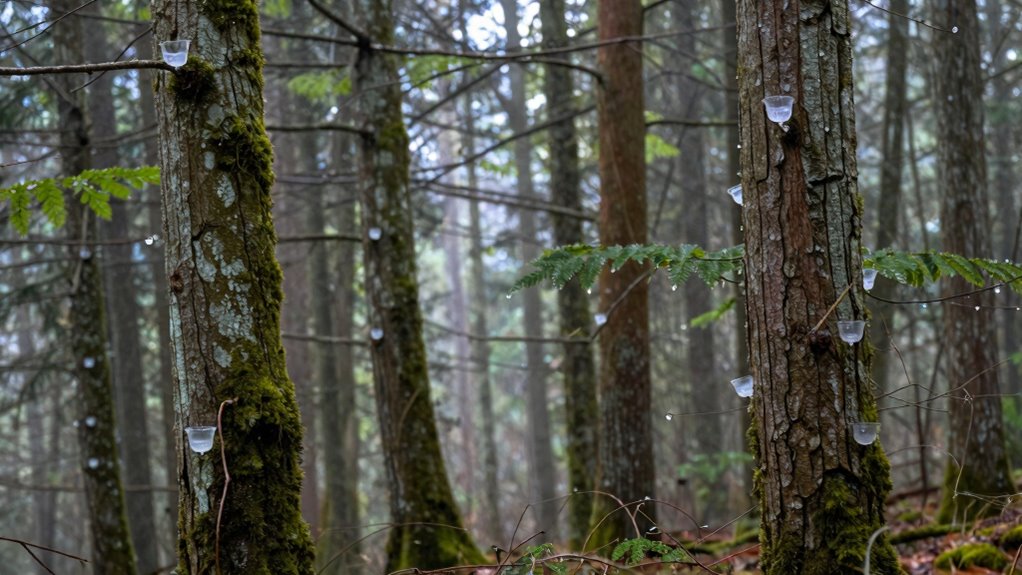
Once you’ve identified the right trees, your foraging techniques come into play. Tapping involves drilling a small hole at an angle into the tree’s trunk, usually about 1.5 to 2 inches deep, and inserting a spile or tap to allow sap to flow out. You’ll want to be gentle to avoid damaging the tree or hindering its growth. It’s essential to be mindful of the season’s timing—sap flows best when daytime temperatures are above freezing, but nights stay cold. This is when the pressure inside the tree causes the sap to rise and flow out naturally through the tap. Proper understanding of tree physiology can help optimize the collection process and minimize stress on the trees.
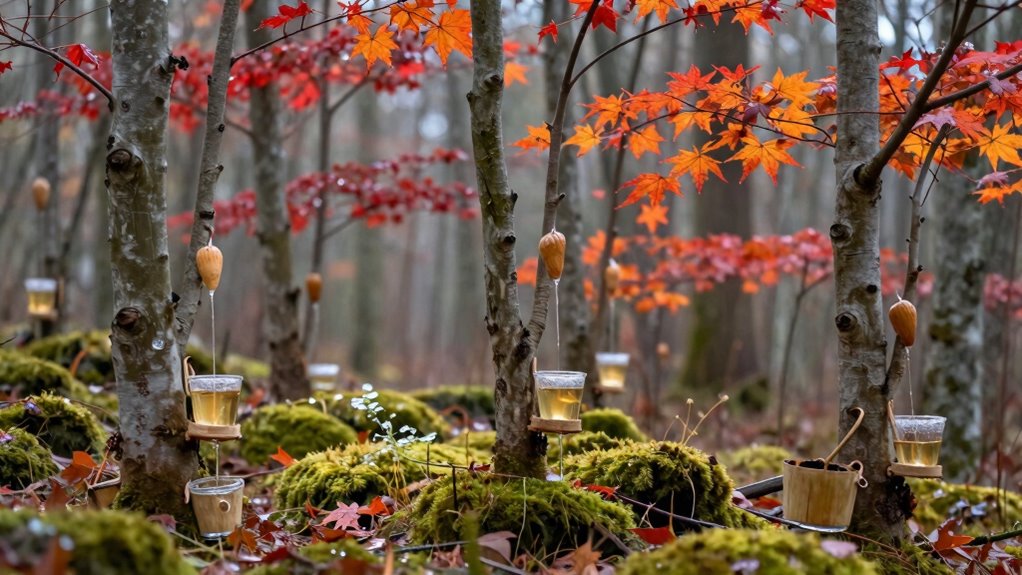
Your foraging techniques also include managing the flow. You’ll often hang buckets or attach tubing to collect the sap efficiently. Regularly checking your collection system ensures you don’t miss out on precious sap and prevents spoilage. Additionally, understanding the biodiversity of the forest helps ensure that tapping practices are sustainable and do not harm the ecosystem. Being aware of the forest’s biodiversity also helps in choosing the right locations and methods that support forest health. Once the sap is collected, it’s boiled down to produce syrup, but during the collection process, your respect for the tree species and careful technique help protect the forest’s health. When done responsibly, sap harvesting can be a sustainable activity that supports forest conservation and local ecosystems.
In essence, sap season is a fleeting but rewarding period that calls for knowledge of tree species and precise foraging techniques. It’s a quiet window most people miss because it happens so quickly and subtly. When you’re tuned into these details, you not only gather a natural treasure but also connect more deeply with the rhythm of the forest.
As an affiliate, we earn on qualifying purchases.
Frequently Asked Questions
How Do I Identify the Best Trees for Sap Collection?
You identify the best trees for sap collection by examining tree bark and sap flow. Look for healthy, mature trees with smooth, unblemished bark, typically maples or birches. During sap season, tap trees when sap flow is abundant—usually early spring—by checking for steady, clear sap flowing from the tapped area. Avoid damaged or diseased trees, as they won’t produce quality sap.
What Equipment Is Essential for Safe Sap Harvesting?
You need a clean drill, collection containers, and food-grade spouts to guarantee safe sap harvesting. Prioritize checking tree health to avoid damage and ensure high-quality sap. Use a sharp drill to minimize stress on the tree, attach spouts securely to prevent leaks, and collect sap in sanitized containers to maintain purity. These tools help protect the tree and preserve the sap’s quality during your foraging.
Can Sap Harvesting Damage the Trees?
Sap harvesting, if done correctly, doesn’t damage the tree’s health. You limit harvest impact by tapping only a few times per season and avoiding damage to the bark. Proper techniques help guarantee the tree’s vitality remains intact, allowing it to continue producing sap year after year. Always monitor tree health and avoid over-tapping, which can weaken the tree and impact its long-term sustainability.
Is There a Specific Time of Day for Optimal Sap Flow?
You’ll find sap flows best early in the morning when the air is cool and the tree’s internal pressure is high, boosting sap movement. This time aligns with natural sap flow patterns, supporting tree health as it minimizes stress. During these hours, expect the most abundant sap flow, making harvesting more efficient. So, aim for dawn to tap into the peak flow, ensuring both quality and the tree’s well-being.
How Long Does the Sap Season Typically Last?
You’ll typically find the sap season lasts about four to six weeks, depending on weather conditions. During this time, sap flavor gradually shifts from sweet to more concentrated, impacting your harvesting techniques. To maximize quality, you should tap trees early in the season when flow is strongest and monitor weather patterns. Proper timing guarantees you collect the best sap, which is essential for producing high-quality syrup and preserving the delicate flavors.
sugar maple tree identification guide
As an affiliate, we earn on qualifying purchases.
As an affiliate, we earn on qualifying purchases.
Conclusion
So, next time you hear about sap season, remember it’s more than just a quiet, overlooked period. It’s a fleeting foraging window, and if you miss it, you might miss out on nature’s sweet, subtle gift. The theory that it’s a missed opportunity holds weight—because timing truly is everything. Embrace the moment when sap flows, and you’ll connect with the rhythm of the seasons, revealing a hidden bounty that many overlook.
sap collection buckets and tubing
As an affiliate, we earn on qualifying purchases.
As an affiliate, we earn on qualifying purchases.
As an affiliate, we earn on qualifying purchases.
Halloween Picks
halloween
As an affiliate, we earn on qualifying purchases.