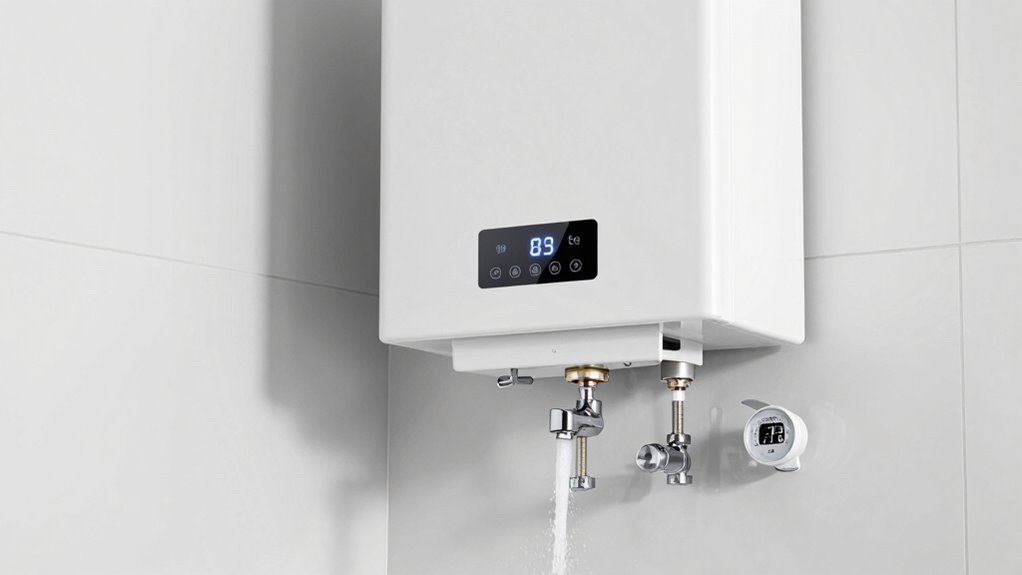

When using a tankless water heater, your flow expectations depend on the unit’s capacity and the number of fixtures you’re running simultaneously. It’s measured in gallons per minute (GPM), so choosing the right size guarantees you get hot water when you need it most. Cold incoming water can reduce flow, especially with larger households or multiple outlets. To get the most out of your system, understanding these factors will help you optimize performance—if you keep exploring, you’ll learn more about making it work perfectly.

Get garden gear delivered free — and shop member deals
- Fast, free delivery on millions of items
- Access to Prime Big Deal Days deals on October 6–7
- Prime Video, Amazon Music and more included
Key Takeaways
- Flow rates are measured in GPM, indicating how much hot water the unit can deliver simultaneously.
- Proper sizing ensures the heater meets peak household demand without performance drops.
- Cold inlet water temperature can reduce flow rates needed to maintain consistent hot water.
- Running multiple fixtures requires matching total GPM to the unit’s capacity for reliable performance.
- Installation factors like pipe length and water temperature impact actual flow and system efficiency.
Tankless water heaters are a popular choice for those seeking on-demand hot water without the bulk of traditional tanks. Their compact design saves space, and they typically use less energy, making them an attractive option for many households. When it comes to flow expectations, you’ll find that these units are designed to heat water as it flows through the system, providing instant hot water whenever you need it. However, understanding how much hot water you can expect at a given time is key to ensuring they meet your household’s needs.
Flow rates are measured in gallons per minute (GPM), and this figure indicates how much hot water the heater can deliver comfortably. For example, if you’re running a shower and a sink simultaneously, the combined flow rates should not exceed the unit’s maximum GPM, or you might experience a drop in water temperature. It’s essential to match the capacity of your tankless heater to your household’s demand. Smaller units may handle one or two fixtures at once, while larger, whole-house models are designed to support multiple outlets simultaneously without sacrificing flow or temperature. Additionally, proper sizing is crucial to ensure your system meets peak usage without underperforming. Choosing the right size also involves considering peak flow demands, which vary depending on household size and usage patterns. Proper sizing helps prevent undersized units from struggling during high-demand periods.
Match your tankless heater’s GPM capacity to household demand to ensure consistent hot water and avoid temperature drops.
When considering installation, it’s important to keep in mind that flow expectations are affected by the incoming water temperature. If your inlet water is very cold, the heater will need to work harder, and flow rates might be slightly reduced to maintain consistent hot water temperatures. This is where understanding your climate and water source becomes essential. Proper installation considerations include sizing the unit appropriately, ensuring adequate gas or electrical supply, and installing the unit at a practical location to minimize pipe run times. Proper placement helps maximize energy efficiency, as shorter pipe runs mean less heat loss and faster hot water delivery. Additionally, understanding the flow expectations and limitations of your unit can help prevent frustration during high-demand periods. Recognizing the impact of incoming water temperature can also aid in selecting the right model and setup for optimal performance. Being aware of these factors enables homeowners to optimize their system for both efficiency and reliability.
tankless water heater GPM capacity
As an affiliate, we earn on qualifying purchases.
As an affiliate, we earn on qualifying purchases.
Frequently Asked Questions
How Does Altitude Affect Flow Rates in Tankless Water Heaters?
Altitude impact reduces the flow rate of your tankless water heater because lower oxygen levels make burners less efficient. As elevation increases, you might notice less hot water output. To counter this, you should perform a flow adjustment, which involves reconfiguring the system or installing altitude-specific parts. This guarantees your heater maintains peak performance despite the altitude impact, so you still get steady hot water.
Can Multiple Fixtures Use Hot Water Simultaneously Without Loss of Flow?
Yes, multiple fixtures can use hot water simultaneously, but it depends on your hot water demand and fixture prioritization. If your tankless water heater has a high flow rate capacity, it can support several fixtures at once without loss of flow. However, if demand exceeds its capacity, flow rates may decrease, and fixtures might experience reduced water pressure or temperature fluctuations. Proper fixture prioritization helps optimize hot water use during simultaneous demand.
What Are Signs of Undersized Tankless Water Heaters During Peak Use?
If your hot water feels less abundant during busy mornings, your water heater might be whispering that it’s slightly undersized. Signs include inconsistent flow, longer wait times, or sudden drops in temperature. To avoid these issues, consider proper installation considerations and accurate water heater sizing. Ensuring your unit matches your household’s peak demand helps keep hot water flowing smoothly, preventing discomfort and ensuring your home’s efficiency.
How Does Flow Rate Impact Energy Efficiency in Tankless Systems?
Flow rate directly impacts energy efficiency in tankless systems. When flow regulation is optimized, the heater adjusts its energy use based on demand, avoiding unnecessary energy consumption during low flow periods. If flow rates are too high, the system works harder, reducing efficiency. To maximize efficiency, guarantee your system is properly sized and flow rates are controlled, enabling efficient operation and energy savings.
Are There Differences in Flow Expectations Between Gas and Electric Models?
Gas models generally have higher flow rate expectations than electric ones, making them suitable for larger households or simultaneous hot water needs. However, flow rate variability can be more pronounced in gas units due to venting and combustion demands. Electric models tend to have more consistent flow rates, but their capacity is often limited. Your choice depends on your household size and hot water demand, balancing flow expectations with energy efficiency.
best whole house tankless water heater
As an affiliate, we earn on qualifying purchases.
As an affiliate, we earn on qualifying purchases.
Conclusion
So, in real life, your tankless water heater might seem to have superpowers—delivering endless hot water just when you need it most. But don’t expect it to perform miracles with multiple high-demand appliances running simultaneously. If you push it to the limit, it might just throw up its hands and say, “No more hot water for you!” Understanding flow expectations helps you avoid turning your home into a cold, waterless wasteland.
tankless water heater flow rate calculator
As an affiliate, we earn on qualifying purchases.
As an affiliate, we earn on qualifying purchases.
tankless water heater installation kit
As an affiliate, we earn on qualifying purchases.
As an affiliate, we earn on qualifying purchases.
Fall yard work Picks
leaf blowers
As an affiliate, we earn on qualifying purchases.