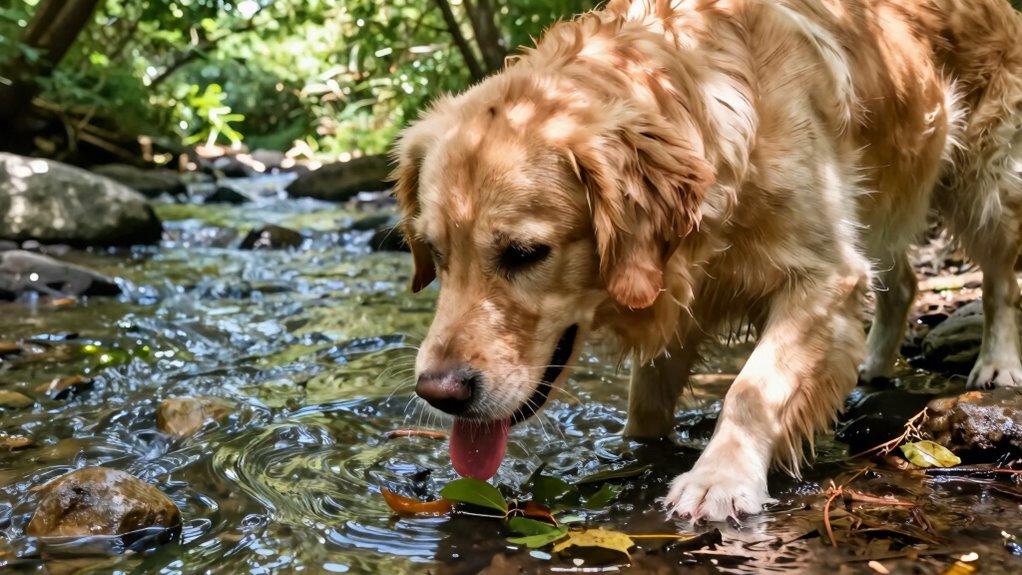

Allowing your pet to drink from streams can expose them to dangerous microbes, parasites, and toxins hidden beneath the water’s surface. Wildlife waste introduces harmful bacteria, viruses, and parasites like Giardia and Cryptosporidium that can cause severe illness. Algae blooms and pollutants add chemical risks as well. Even if the water looks clean, unseen dangers can harm your pet’s health. Stay with us to discover how you can better protect your furry friend in outdoor adventures.
Key Takeaways
- Streams can contain harmful microbes like bacteria, viruses, and parasites such as Giardia and Cryptosporidium.
- Waterborne parasites can cause serious gastrointestinal illnesses in pets.
- Algae blooms produce toxins that may irritate pets’ skin, eyes, or respiratory systems.
- Heavy rainfall can wash contaminants and increase parasite presence in streams.
- Drinking from streams exposes pets to unseen chemical pollutants and environmental hazards.
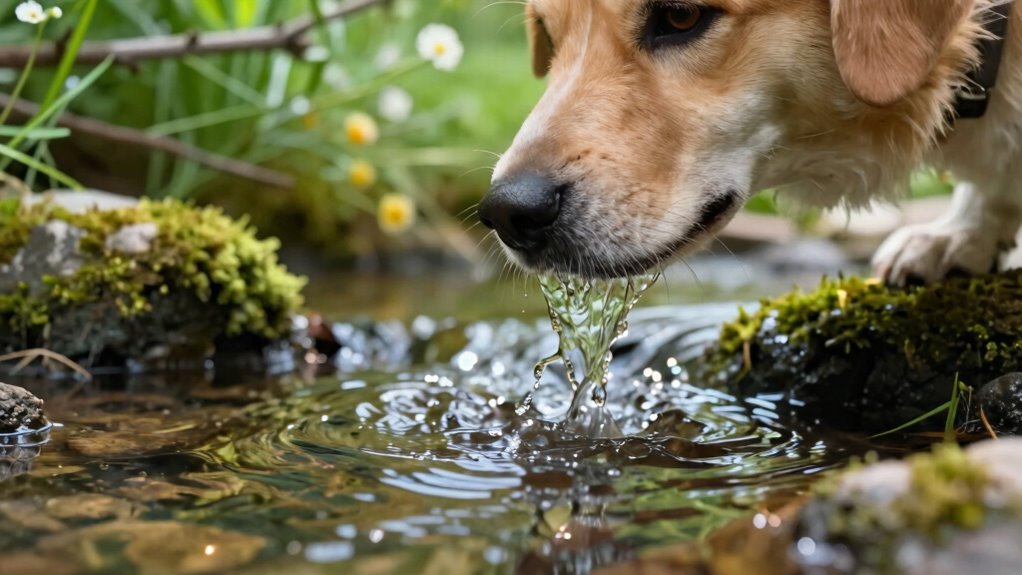
Many pet owners assume that streams are a safe, natural water source for their animals, but this can be misleading. While it might seem like a convenient way to keep your pet hydrated during outdoor adventures, streams often harbor unseen dangers. Wildlife contamination is a significant concern, as animals like birds, raccoons, and even other dogs frequently access these waters. Their waste can introduce bacteria, viruses, and parasites directly into the water, making it unsafe for your pet to drink. When your dog licks or drinks from a stream, they risk ingesting harmful microbes that can cause illness.
Streams can harbor unseen dangers like bacteria and parasites, making them unsafe for your pet to drink.
Waterborne parasites are another threat lurking in natural water sources. These microscopic organisms are often invisible to the naked eye but can cause serious health problems. For example, Giardia and Cryptosporidium are common parasites that infect water and can lead to gastrointestinal issues in pets. Once ingested, these parasites can cause diarrhea, vomiting, dehydration, and in severe cases, more complex health complications. The problem is that these parasites are resilient and can survive in the environment for extended periods, especially in stagnant or slow-moving water. Environmental conditions significantly influence the presence and concentration of these contaminants.
It’s easy to underestimate the risks because streams often look clean and inviting. But the truth is, contamination levels fluctuate based on nearby wildlife activity and environmental conditions. Heavy rainfall can wash additional contaminants into the water, increasing the likelihood of exposure. Additionally, the presence of algae blooms, which thrive in nutrient-rich waters, can produce toxins harmful to pets. These toxins are not only dangerous if ingested but can also cause skin irritation or respiratory issues if your pet comes into contact with contaminated water. Moreover, natural water sources can sometimes contain chemical pollutants from runoff or pollution, adding another layer of risk for your pet’s health. Staying informed about water quality and potential risks can help you make better decisions for your pet’s safety. Being aware of these potential pollutants emphasizes the importance of providing safe alternatives for your pet.
To protect your pet, it’s best to avoid letting them drink directly from streams. Instead, carry fresh water and a portable bowl, ensuring they stay properly hydrated without risking exposure to wildlife contamination or waterborne parasites. Regularly inspecting and cleaning your pet’s drinking bowls and providing filtered or treated water can also help minimize health risks. Remember, natural doesn’t always mean safe, and the potential dangers lurking in outdoor water sources are real and serious. By staying vigilant and making informed choices, you safeguard your pet’s health from unseen threats that can be present in seemingly harmless streams.
As an affiliate, we earn on qualifying purchases.
Frequently Asked Questions
Can Pets Develop Long-Term Health Issues From Stream Water?
Yes, pets can develop long-term health issues from stream water. When they drink from streams, they risk exposure to wildlife contamination and waterborne pathogens, which can cause serious illnesses. These pathogens may lead to chronic health problems if not treated early. Always monitor your pets and prevent them from drinking untreated stream water, especially in areas with high wildlife activity, to reduce their risk of future health issues.
Are Certain Types of Streams More Dangerous for Pets Than Others?
Think of streams as busy highways; some are safer, others filled with hazards. Certain streams are more dangerous for pets because of wildlife contamination and chemical pollutants, much like traffic jams with reckless drivers. Streams near farms or urban areas often carry these dangers, increasing health risks for your pet. Always observe the water source, avoiding streams with murky water, strange smells, or visible debris to protect your furry friend.
How Can I Tell if My Pet Has Ingested Contaminated Water?
If your pet shows symptoms like vomiting, diarrhea, lethargy, or loss of appetite after drinking from a stream, they might have ingested contaminated water. You should consider water filtration for future prevention and visit your vet promptly. Parasite prevention treatments can also help protect your pet from parasites present in untreated water. Regular check-ups and monitoring your pet’s behavior are key to catching issues early.
What Immediate Actions Should I Take if My Pet Drinks Stream Water?
If your pet drinks stream water, act quickly by offering fresh, clean water to help dilute potential toxins. Monitor them closely for signs of illness like vomiting or diarrhea. Use water filtration methods if possible, and keep emergency preparedness supplies handy, including contact info for your vet. Prompt action can reduce risks, so don’t delay seeking professional advice if your pet shows any concerning symptoms.
Are There Any Safe Alternatives to Streaming Water for Pets?
Sure, you could offer your pet bottled or filtered water instead of streaming water—talk about a “safe” choice! While stream water risks include bacteria and parasites, safe alternatives like fresh, clean bowls of water are always best for pet water safety. Ironically, the most natural source might be the riskiest, but with filtered water, you keep your furry friend happy and healthy without risking their health.
As an affiliate, we earn on qualifying purchases.
Conclusion
So, next time your furry friend enthusiastically laps up that stream, remember not to let the tail wagging get the best of you. The risks are real, and playing it safe means avoiding potential health hazards. Don’t throw caution to the wind—think twice before letting your pet drink from those tempting waters. Better safe than sorry, as they say. Keep your pet’s health a priority and steer clear of the hidden dangers lurking in those seemingly innocent streams.
As an affiliate, we earn on qualifying purchases.
As an affiliate, we earn on qualifying purchases.