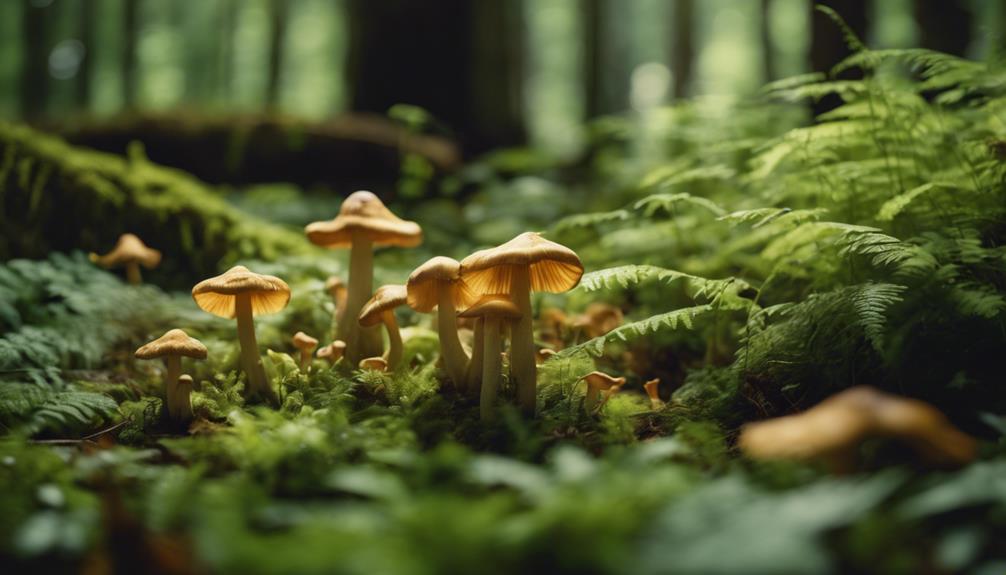
Hawthorn berries are small, bright red fruits that grow in clusters along thorny branches. They are apple-shaped, about the size of a cherry, with a smooth or slightly bumpy surface. Proper identification involves noting their shape, color, and the presence of lobed leaves. These berries are valued for their medicinal properties and culinary uses, from making jams to flavoring liqueurs. To learn more about identifying and using hawthorn berries, keep exploring the details below.
Key Takeaways
- Ripe hawthorn berries are small, bright red, and apple-shaped, growing in clusters on thorny branches with lobed leaves.
- Proper identification involves ensuring berries are fully ripe and from the correct hawthorn species to ensure safety.
- Berries can be eaten fresh, dried, or processed into extracts, with dried forms maximizing flavor and health benefits.
- They have a mildly tart flavor, suitable for jams, jellies, syrups, or infused spirits, often combined with sweeteners.
- Known for supporting heart health, hawthorn berries contain bioactive compounds like flavonoids and oligomeric procyanidins.
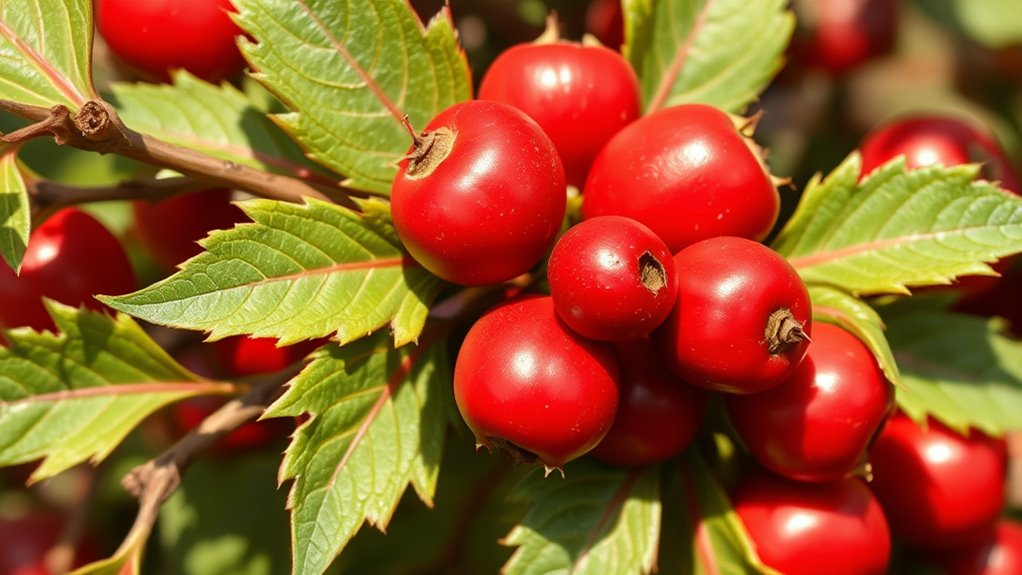
Have you ever wondered why hawthorn berries have been valued for centuries? These small, red fruits have a rich history of use in traditional medicine and culinary delights, making them truly versatile. Their popularity isn’t just based on tradition; modern research supports their medicinal properties, which include benefits for heart health, circulation, and overall well-being. When you explore hawthorn berries, you’ll find that their medicinal properties stem from compounds like flavonoids, oligomeric procyanidins, and triterpenoids. These natural elements help improve blood flow, reduce blood pressure, and strengthen the cardiovascular system. Because of this, hawthorn berries are frequently incorporated into herbal teas, tinctures, and supplements aimed at supporting heart health. Additionally, understanding the bioactive compounds present in hawthorn berries can help you better appreciate their health-promoting potential. Beyond their medicinal uses, hawthorn berries also lend themselves well to culinary applications. Their mildly tart flavor makes them a delightful addition to jams, jellies, and syrups. You might enjoy making hawthorn berry preserves or mixing them into desserts for a hint of their tangy taste. Some people even use fresh berries to flavor liqueurs or create infused spirits. When using hawthorn berries in cooking, it’s often best to combine them with sweeteners or other fruits to balance their natural tartness. Their vibrant color and distinctive flavor can elevate a variety of recipes, adding both visual appeal and nutritional value. Whether you’re making a simple compote or an elaborate pastry filling, hawthorn berries bring a unique touch to your culinary creations. If you’re foraging or buying hawthorn berries, it’s important to identify the correct species, as some look similar to other berries that might be less safe to consume. Typically, hawthorn trees produce small, apple-shaped berries that are bright red when ripe, often clustered along thorny branches with lobed leaves. The berries are usually about the size of a cherry and have a smooth or slightly bumpy surface. When harvesting, make sure the berries are fully ripe, as unripe ones can be bitter and less beneficial. Proper identification guarantees you’re getting the right berries for your medicinal or culinary pursuits. You can enjoy fresh hawthorn berries, but they’re most often dried or processed into extracts to maximize their health benefits and flavor.
Frequently Asked Questions
Are Hawthorn Berries Safe for Children to Consume?
Hawthorn berries aren’t generally safe for children to consume without medical guidance, as child safety is a top concern. While the berries have health benefits, their potential side effects and proper dosage can vary. You should avoid giving them to kids for berry consumption unless a healthcare professional recommends it. Always prioritize child safety and consult a doctor before introducing new herbs or berries into your child’s diet.
How Long Do Hawthorn Berries Take to Mature?
Imagine walking through a blooming hawthorn hedge in late summer; that’s when berry ripening reaches its peak. Hawthorn berries usually take about 2 to 3 years to fully mature, with harvest timing ideally in late autumn after the berries turn deep red. Keep an eye on the color change, as it signals peak ripeness, ensuring you gather them at just the right moment for use or preservation.
Can Hawthorn Berries Be Cultivated Indoors?
Yes, you can cultivate hawthorn berries indoors. To succeed, provide the right growing conditions: a sunny spot with plenty of light, well-draining soil, and consistent watering. Use a large pot to allow root growth and guarantee good airflow. Keep the temperature moderate, avoiding extreme cold or heat. With patience and proper care, your hawthorn tree can thrive indoors, eventually producing berries.
What Are the Most Effective Methods for Harvesting Hawthorn Berries?
You should use gentle berry picking techniques, such as hand-picking, to avoid damaging the branches. Harvest timing strategies involve picking hawthorn berries when they’re fully ripe, usually in late fall, when they turn deep red. Keep an eye on the berries’ color and firmness, and harvest on dry days to prevent mold. Carefully gather berries into a basket, and handle them gently to preserve their quality.
Do Hawthorn Berries Have Any Known Drug Interactions?
Hawthorn berries might just be a tiny fruit, but they can cause significant drug interactions if you’re not careful, so always check herbal supplement safety. They can amplify effects of blood pressure and heart medications, leading to dangerous fluctuations. If you’re on any medication, it’s essential to consult with your healthcare provider before adding hawthorn berries to your routine to avoid risking harmful interactions. Safety first, always.
Conclusion
Now that you know how to identify and use hawthorn berries, you’re ready to enjoy their health benefits. Remember, “An ounce of prevention is worth a pound of cure,” so incorporating these berries into your routine can support your heart and overall wellness. Whether in teas, jams, or supplements, these berries are a natural gift. So go ahead, explore the delights of hawthorn—nature’s remedy, waiting to be discovered.