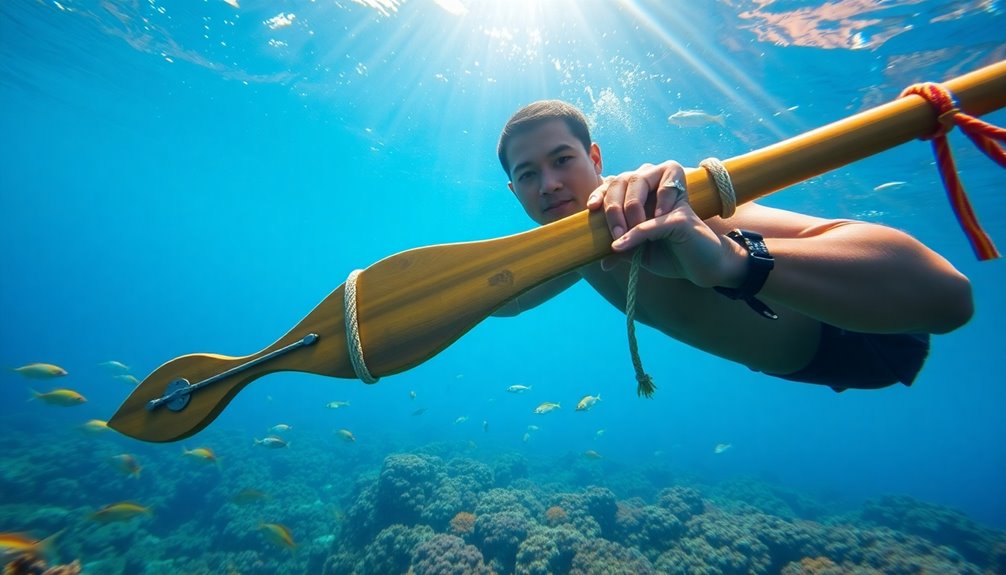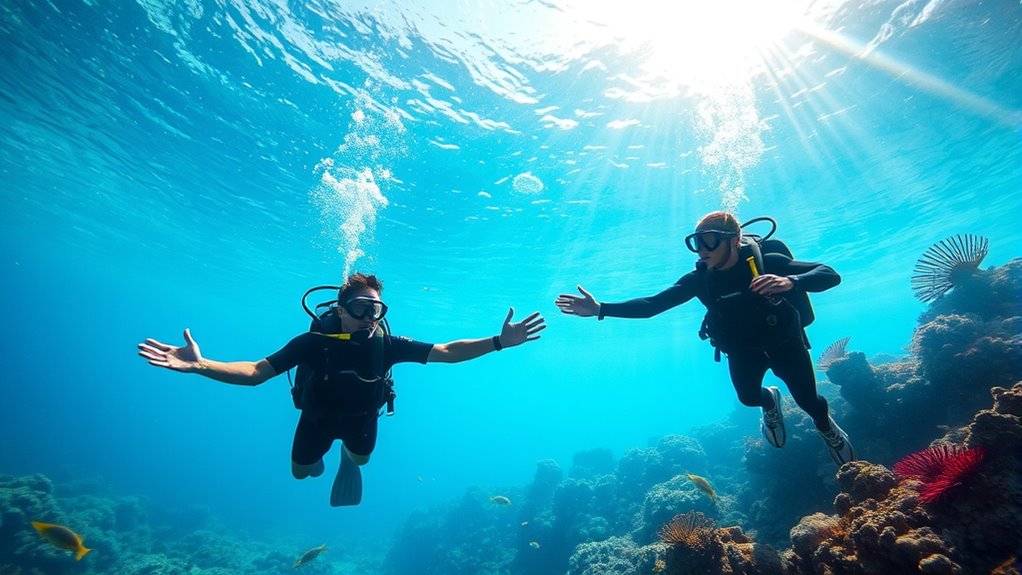

In freediving, using the buddy system is essential for safety. Always dive with a knowledgeable partner who can monitor your condition and communicate clearly through established signals. Knowing rescue techniques, like assisting a tired or unconscious diver, is critical to prevent accidents. Maintain constant visual contact, stay alert, and be prepared to respond quickly. Mastering these safety measures helps you enjoy freediving responsibly—continue exploring to learn more about staying safe underwater.

Get garden gear delivered free with Prime
- Fast, free delivery on millions of items
- Prime Video, Amazon Music and more included
- Member-only deals all year
Key Takeaways
- Always dive with a trained buddy to monitor safety and provide immediate assistance if needed.
- Establish clear communication signals and emergency procedures before the dive.
- Continuously observe each other’s breathing, movement, and signs of distress during dives.
- Practice rescue techniques regularly, including assist and recovery methods for blackout scenarios.
- Maintain close proximity and stay within sight and reach of your buddy throughout the dive.
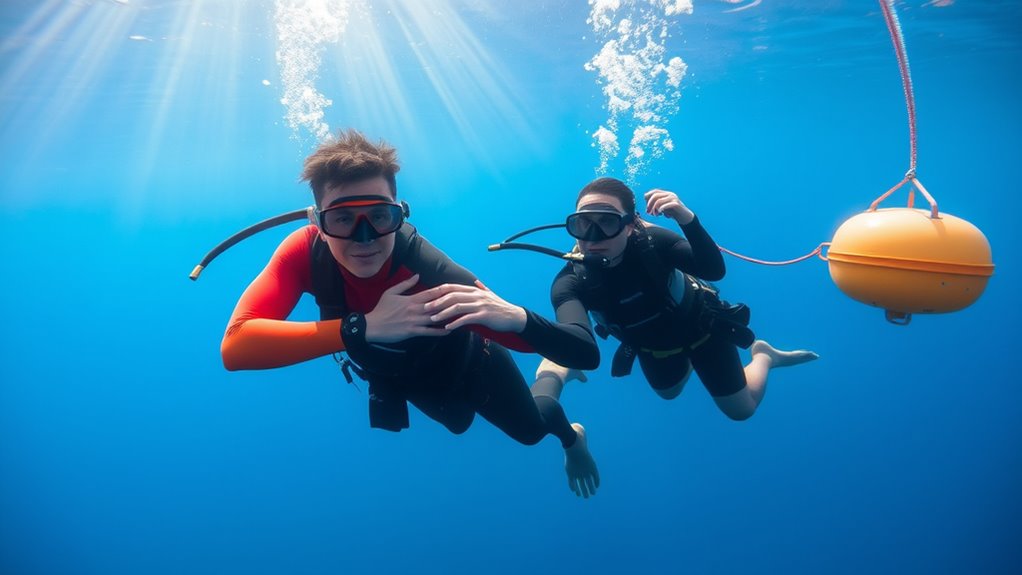
Freediving can be an exhilarating experience, but it also carries inherent risks that require proper safety measures. One of the most important aspects of safe freediving is understanding how to effectively use breath hold techniques. These techniques are essential because they help you conserve oxygen, prevent shallow water blackout, and extend your dive times safely. Before every dive, take the time to practice controlled breathing exercises, such as diaphragmatic breathing, to improve your lung capacity and relaxation. Proper breath hold techniques also involve equalizing your ears and sinuses efficiently, which minimizes discomfort and prevents barotrauma. Remember, never push your limits too far; always stay within your comfort zone and listen to your body’s signals.
Master breath control and equalization to dive safely and enjoy freediving responsibly.
Equally *indispensable* is equipment maintenance. Your gear, including masks, fins, wetsuits, and snorkels, must be in top condition to *guarantee* safety and performance. Regularly inspect your equipment for signs of wear, damage, or deterioration. A faulty mask can impair your vision or leak water, while damaged fins might reduce propulsion or cause fatigue. Wetsuits should fit snugly but comfortably, providing insulation without restricting movement. Properly maintained equipment not only enhances your experience but also reduces the risk of malfunctions that could lead to accidents underwater. Keep your gear clean and dry after each use, and store it in a cool, dry place to prevent mold or material degradation. Additionally, understanding the importance of buddy system practices can significantly improve safety during your dives.
When it comes to breath hold techniques, it’s also *imperative* to practice with the right equipment and environment. Use a stopwatch or dive computer to monitor your breath-hold times and gradually increase your ability through consistent training. Avoid hyperventilation, which can cause dizziness or blackouts, and instead focus on slow, controlled breaths before diving. As you become more confident, incorporate relaxation methods like visualization and meditation to help you stay calm and conserve oxygen during your dives. Remember, mastering these techniques takes time and patience, and never attempt to increase your dive depth or duration without proper guidance.
Having a solid understanding of your gear and breath control is the foundation of safe freediving. When combined with a buddy system, where you and a partner look out for each other’s safety, your risk of accidents decreases *notably*. Always communicate clearly with your buddy, establish signals, and agree on emergency procedures. Keeping your equipment well-maintained and honing your breath hold techniques ensures you’re prepared for both the dive and any unforeseen situations. Freediving is about respecting the ocean and your own limits, and these safety fundamentals help you enjoy the sport while minimizing danger.
Frequently Asked Questions
What Are the Signs of a Diver in Distress?
If you notice a diver showing panic signs or distress indicators, act quickly. Look for frantic movements, irregular breathing, or a lack of response. They might struggle to stay at the surface or appear disoriented. Recognizing these signs early helps you intervene safely. Stay calm, keep your buddy within sight, and prepare to assist with rescue techniques if necessary. Your prompt action can prevent accidents and ensure their safety.
How Should I Communicate Underwater With My Buddy?
You should use clear underwater signaling and maintain consistent buddy contact to communicate effectively. Use established signals like thumbs up for “okay,” flat hand for “stop,” and pointing for direction. Keep physical contact when possible, such as holding hands or touching your buddy’s arm, to make sure you stay connected. Always observe your buddy’s responses carefully and repeat signals to confirm understanding, enhancing safety during your freedive.
What Are Common Rescue Techniques for Freediving Emergencies?
When facing freediving emergencies, focus on fundamental rescue techniques like freeing the diver’s airway, providing buoyancy, and summoning swift assistance. Master emergency procedures such as secure support, signal for help, and perform gentle rescue breaths if needed. Your quick, calm response can make all the difference—so stay alert, act decisively, and remember that effective rescue techniques involve clear communication, careful coordination, and compassionate care to guarantee safety and swift recovery.
How Do I Prevent Panic During a Freediving Session?
To prevent panic during a freediving session, focus on breath control and mental focus. Stay calm by taking slow, deep breaths, and remind yourself to relax if you start feeling anxious. Maintain mental focus on your breathing and technique, avoiding distractions. Trust your training, stay within your limits, and keep a positive mindset. This helps you stay composed, reducing the risk of panic and ensuring a safe, enjoyable dive.
What Equipment Is Essential for Safe Freediving Rescues?
Think of it as having the right tools in your toolbox. For safe freediving rescues, you need essential diving gear like a surface marker buoy, rescue line, and a whistle for signaling. Emergency preparedness also means carrying a first aid kit and knowing CPR. These items help you act quickly and effectively, turning a potentially dangerous situation into a manageable one. Always be ready to spring into action when needed.
Conclusion
Think of freediving safety as the anchor that keeps you grounded in the vast ocean. Your buddy system and rescue skills are the sturdy ropes that prevent you from drifting away into danger. By staying vigilant and practicing these fundamentals, you create a safety net beneath you—allowing you to explore the depths with confidence. Remember, in the ocean of freediving, safety isn’t just a rule; it’s the lifeline that keeps your adventure afloat.
Halloween Picks
halloween
As an affiliate, we earn on qualifying purchases.