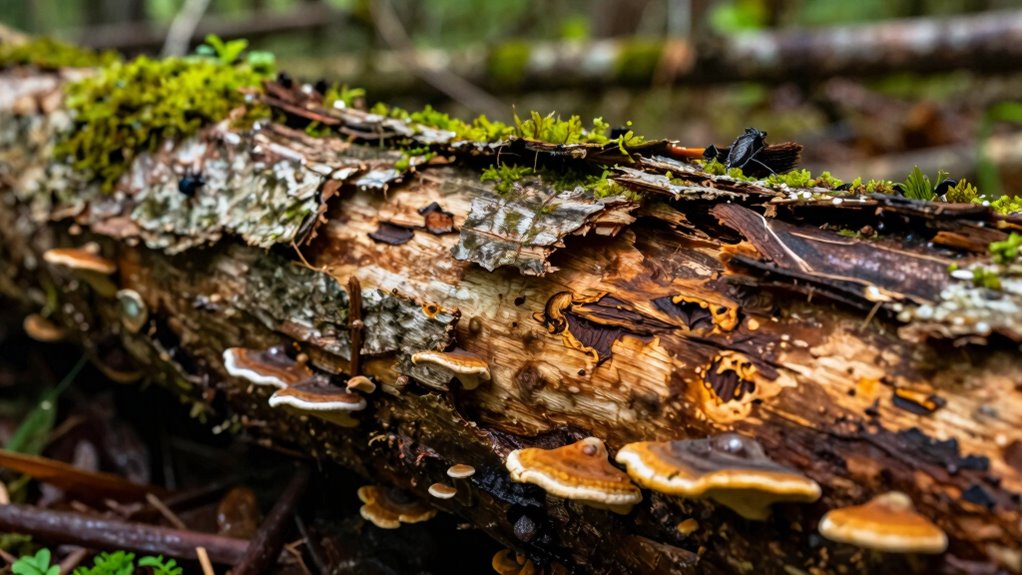
Rotted wood is essential for foragers because it hosts crucial signs of ecosystem health like fungi, insects, and decomposition stages. You’ll find edible fungi and other resources growing on or near decaying logs, which also provide habitats that support biodiversity. Recognizing the signs of decay helps you identify promising foraging spots. The more you understand about deadfall’s role, the better you’ll see how it connects to forest vitality—there’s more to discover if you keep exploring.

Get garden gear delivered free with Prime
- Fast, free delivery on millions of items
- Prime Video, Amazon Music and more included
- Member-only deals all year
Key Takeaways
- Rotting wood hosts fungi and insects that signal the presence of edible fungi and other resources.
- Decaying wood provides vital habitats for insects, indicating ecosystem health and biodiversity.
- Recognizing decay stages helps foragers identify promising spots for mushroom hunting.
- Fungal growth on deadfall reveals active decomposition and potential edible mushroom sources.
- Deadfall’s ecological role supports forest vitality, making it a key indicator for sustainable foraging.
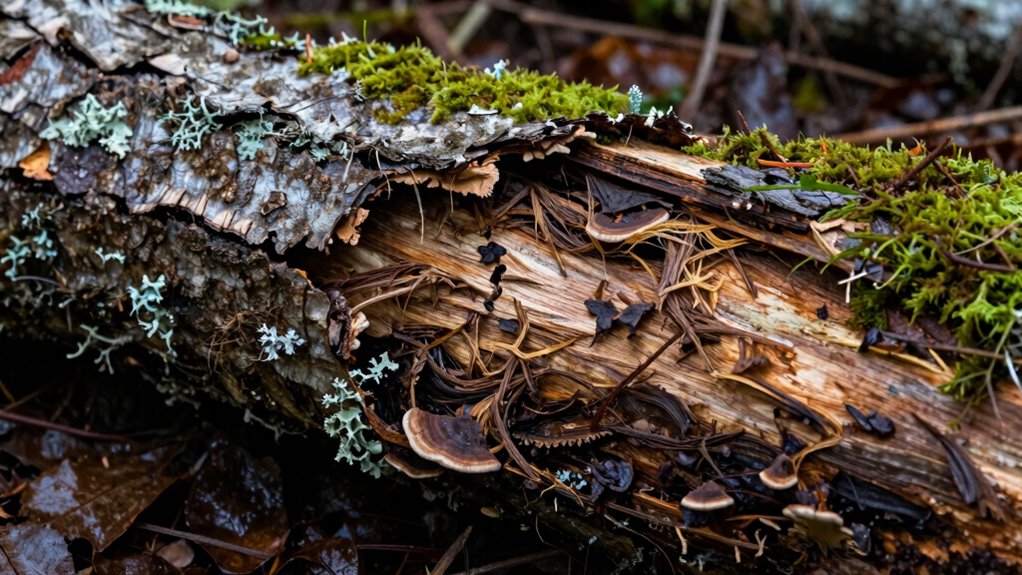
Rotting wood might not look like much, but for foragers, it’s a treasure trove of life and nutrients. As wood decays, it becomes a hub of activity, teeming with fungal growth and insect habitats. These elements transform deadfall into an essential resource in the forest ecosystem, offering more than just a place for fungi and bugs to thrive. Instead, they create a complex web that supports a diverse range of species, including those you’re after.
Rotting wood is a vital habitat that fuels forest health and supports diverse life forms.
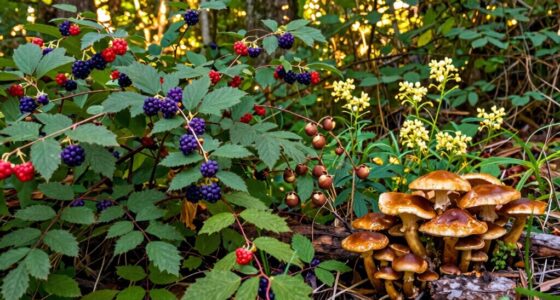
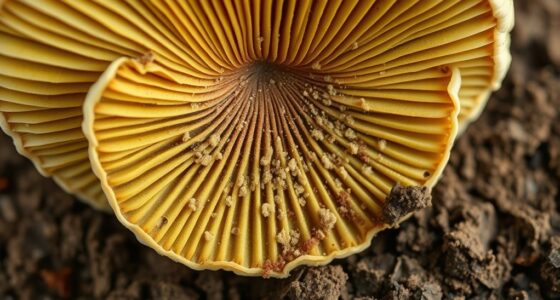
Fungal growth is one of the first signs that wood is breaking down. You’ll notice a variety of mushrooms, mold, or other fungal colonies sprouting on the surface. These fungi are crucial because they help decompose the wood, breaking down cellulose and lignin, which are difficult to digest. For you, fungi can be a sign of health and activity within the decay process, hinting at the presence of other creatures drawn to the habitat. Some edible mushrooms grow in these environments, making rotting wood a potential source of nutrition if you know what to look for, but always exercise caution. Recognizing the role of decomposition in the ecosystem can help you identify promising foraging sites. Additionally, understanding the decay process can assist in predicting where nutritious fungi might appear. Observing the microbial activity can further reveal the speed and stage of decay, guiding your search.
Insect habitats are another key aspect of decaying wood. As fungi weaken the wood’s structure, insects move in, creating tunnels and chambers. Beetles, ants, termites, and other insects find these cavities perfect for nesting and feeding. Their presence indicates ongoing decay and a vibrant ecosystem at work. You might observe wood-boring beetles, whose larvae burrow deeply into the wood, or ants that establish colonies within the soft, rotting material. Their activity is also a sign of ecosystem health, highlighting the importance of decaying wood as a habitat. These insects not only thrive in these habitats but also serve as prey for larger animals, weaving a food web that supports the entire forest.
The combination of fungal growth and insect activity accelerates the decomposition process, turning deadwood into rich, organic matter that nourishes the forest floor. As a forager, understanding this process helps you recognize prime spots to find edible fungi or observe the insects that are often indicators of other edible or useful resources nearby. Plus, by appreciating the importance of rotting wood, you gain insight into the health of the ecosystem—deadfall isn’t just debris; it’s a thriving habitat that sustains many life forms. So next time you spot a fallen log, remember it’s more than just decayed wood—it’s a bustling hub of fungal and insect activity, essential for the forest’s vitality. Recognizing decaying wood as an indicator of ecosystem health can enhance your understanding of the forest environment.
As an affiliate, we earn on qualifying purchases.
Frequently Asked Questions
How Can I Identify if Rotting Wood Is Safe to Forage?
You can identify if rotting wood is safe to forage by examining fungal growth, which often indicates active decay but isn’t necessarily harmful. Check moisture levels; if the wood feels damp but not overly wet, it’s more likely to harbor beneficial fungi. Avoid wood with mold or a foul smell. Trust your senses and knowledge, and when in doubt, steer clear to guarantee safety while foraging.
Does All Rotting Wood Support Edible Fungi?
Like Pandora’s box, not all rotting wood holds edible fungi. Fungal diversity varies across decay stages; early decay may host different species than advanced rot. You can’t assume all rotting wood supports edible fungi—some are poisonous, others harmless. To forage safely, observe the decay stage carefully. Only certain stages provide the right environment for edible fungi, so identify your target species and avoid risking your health by collecting from questionable wood.
How Does Rotting Wood Affect Forest Ecosystems?
Rotting wood plays a essential role in forest ecosystems by fueling the decomposition process, breaking down complex organic materials into simpler nutrients. You benefit from this nutrient recycling, as it enriches the soil, promoting healthy plant growth. As fungi and other decomposers break down deadfall, they create habitats for various organisms. This natural cycle maintains the forest’s health, supporting biodiversity and ensuring sustainability in the ecosystem.
Can Rotting Wood Indicate the Presence of Specific Wildlife?
Yes, rotting wood can indicate the presence of specific wildlife. You’ll notice insect habitats like beetles and termites thriving in decayed logs, which signals their activity. Additionally, fungal indicators on the wood reveal certain fungi that are hosts to particular wildlife, such as fungi-loving insects and fungi-dependent animals. By observing these signs, you can identify areas rich in specific wildlife relying on decayed wood for shelter and food.
What Tools Are Best for Inspecting Decayed Wood?
You should focus on tool selection that helps you closely examine decay patterns in rotting wood. A sturdy knife or a small pry bar allows you to peel back bark and check for insects or fungi. A flashlight helps reveal hidden details, while a hand lens magnifies decay patterns, making it easier to identify signs of wildlife activity or decomposition stages. These tools give you a clearer understanding of the wood’s condition.
As an affiliate, we earn on qualifying purchases.
Conclusion
Next time you spot that fallen log, remember it’s more than just decaying wood—it’s a treasure trove for foragers. Think of it as nature’s pantry, where every rotting piece hides secrets waiting to be uncovered. I once found a cluster of chanterelles sprouting from a damp log, like buried gems in a treasure chest. By appreciating decay’s role, you reveal a world of wild edibles, turning decay into your greatest ally in the hunt.
decaying wood identification guide
As an affiliate, we earn on qualifying purchases.
As an affiliate, we earn on qualifying purchases.
As an affiliate, we earn on qualifying purchases.
Fall yard work Picks
leaf blowers
As an affiliate, we earn on qualifying purchases.