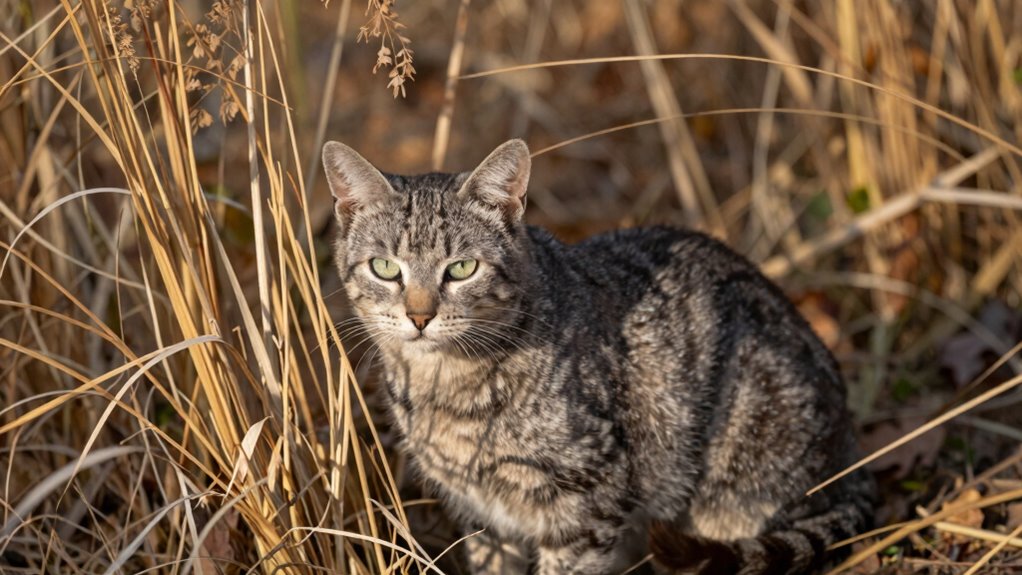

When your cat goes missing, it’s natural for it to hide as a key survival instinct, especially in busy urban areas filled with noise, traffic, and unfamiliar sights. Hiding helps your cat stay safe from perceived threats and helps it cope with stress. This behavior isn’t abandonment but a way for your cat to feel secure. If you keep exploring these natural responses, you’ll better understand how to find and comfort your furry friend.

Get garden gear delivered free with Prime
- Fast, free delivery on millions of items
- Prime Video, Amazon Music and more included
- Member-only deals all year
Key Takeaways
- Hiding is a natural survival instinct for cats to avoid threats and unfamiliar environments.
- Urban hazards and loud noises reinforce cats’ tendency to seek safe, concealed spots.
- Cats communicate through body language and scent, often hiding silently when scared.
- Patience and gentle approaches increase chances of a hidden cat feeling safe enough to emerge.
- Recognizing that hiding indicates safety needs, not abandonment, guides effective search strategies.
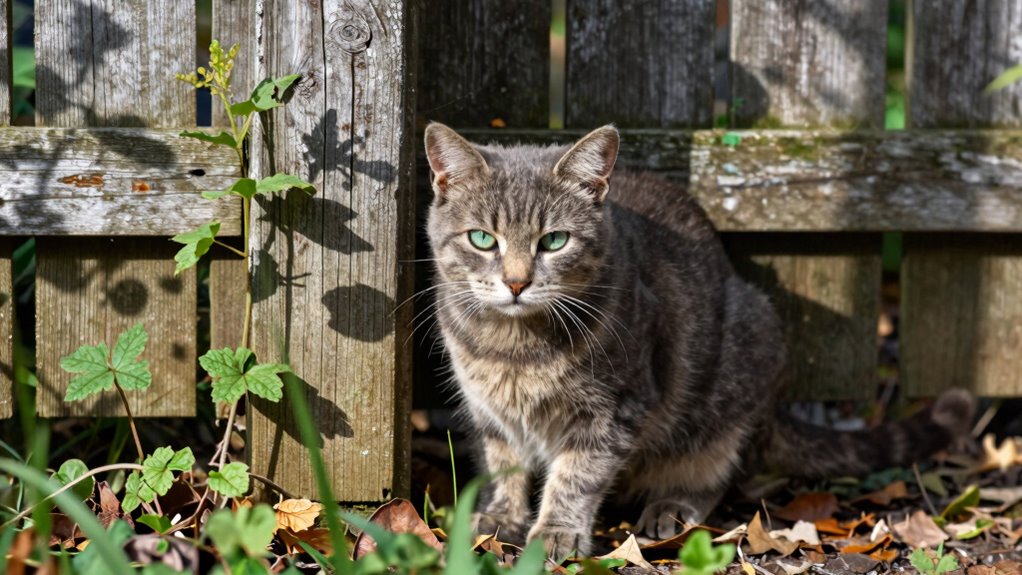
When a cat goes missing, understanding its survival behaviors can make all the difference in helping you find it. Cats are naturally cautious creatures, and when faced with unfamiliar or stressful situations, they often resort to hiding as their primary defense. This instinctual hiding is a key part of their survival strategy, especially in an urban environment where dangers seem constant and unpredictable. Recognizing that hiding doesn’t mean your cat is lost forever can help you stay patient and persistent in your search.
Feline communication is subtle yet effective. Cats use body language, scent marking, and vocalizations to communicate with each other and establish territory. When your cat disappears, it’s often trying to avoid threats or unfamiliar sounds by retreating into a safe hiding spot. Knowing how cats communicate under stress can help you interpret their behavior. For instance, if your cat is silent but visible, it might be nearby but cautious. Conversely, a nervous or quiet cat that’s hiding is likely frightened or overwhelmed. Understanding these cues can guide you to areas where your cat might be hiding, such as under decks, inside sheds, or behind fences.
Cats hide when stressed, using body language and silence to communicate their need for safety and concealment.
In an urban environment, cats face a variety of hazards—traffic, loud noises, unfamiliar people, and other animals. Their adaptation to this environment involves heightened alertness and a preference for concealment. Their natural instinct to hide is reinforced by the chaotic sounds and sights of city life, which can easily overwhelm or scare them. This behavior is a natural response, not a sign that they’ve abandoned their territory. Your cat’s instinct to hide is part of their survival strategy, helping them endure stressful situations. Additionally, animals in urban settings often develop specific hiding behaviors in response to environmental dangers, which can vary depending on the surroundings. Observing how your cat reacts to different stimuli can provide insight into their stress signals and help you plan more effective search strategies. To help your cat reemerge, it’s important to respect their need for safety and avoid rushing your search.
Patience is crucial. Instead of calling loudly or rushing around, spend time near potential hiding spots, speak softly, and leave familiar scents or food nearby. Cats are keen at detecting scent cues, so placing an item with your smell or their favorite treats can encourage them to come out. Remember, they may remain hidden for hours or even days until they feel safe enough to emerge. During this time, understanding their natural behaviors and communication patterns will help you remain calm and strategic. Keep in mind that hiding is often the most common survival pattern for lost cats, and patience, combined with a gentle approach, is your best strategy to bring them back safely. Additionally, recognizing that urban hazards can influence their hiding behaviors can help you better plan your search and recovery efforts.
As an affiliate, we earn on qualifying purchases.
Frequently Asked Questions
How Long Should I Wait Before Searching for My Lost Cat?
You should start searching immediately, but wait at least 24 hours before a thorough hunt. During this time, observe your cat’s behavioral cues—such as hiding spots or vocalizations—to guide your rescue strategies. Cats often hide for safety, so patience is key. Check their favorite hiding spots regularly and leave familiar items outside. Prompt, calm efforts increase your chances of finding your cat safe and sound.
What Scents Can Attract a Lost Cat Back Home?
You can attract your lost cat back home using scent trails and attractant sprays. Place familiar items with your cat’s scent, like bedding or toys, outside to create a scent trail leading back to your house. You might also try using attractant sprays designed for cats, which mimic their natural scents and encourage them to follow the trail. Consistent use of these methods improves your chances of reuniting.
Should I Place My Cat’s Litter Box Outside?
A stitch in time saves nine, so you might consider placing your cat’s litter box outside. It can help attract your cat and guide them home. But keep in mind, outdoor risks and indoor safety are essential; outdoor exposure exposes your cat to hazards like traffic and predators. If you choose this route, supervise the area and check regularly, ensuring safety while giving your cat a familiar scent to find their way back.
How Can I Tell if My Cat Is Hiding or Truly Lost?
You can tell if your cat is hiding or truly lost by observing behavior cues. If your cat stays in one spot, crouches, or hides under furniture, it’s likely hiding rather than wandering. Look for signs like reduced activity, minimal vocalization, and hiding spots. If you notice your cat is repeatedly returning to the same hiding place, it indicates hiding behavior. Wandering usually involves more movement and exploring.
Are There Specific Times When Cats Are More Likely to Come Out of Hiding?
Around dusk and dawn, your cat is more likely to come out of hiding, as these times offer better thermal comfort and fewer predators. Cats follow their territorial instincts, feeling safer when the environment is calm and temperatures are moderate. Knowing this, you can increase your chances of spotting your cat, especially during these quiet hours, when their natural instincts and comfort levels align, prompting them to explore or seek attention.
As an affiliate, we earn on qualifying purchases.
Conclusion
When your cat goes missing, remember they often hide to survive, not because they’ve given up. Imagine a tabby named Bella who disappeared for three days, only to be found tucked safely behind a shed. Her instinct to hide kept her safe from dangers until she was ready to come out. Understanding this behavior helps you stay patient and vigilant, knowing your feline friend’s hiding spot is just their way of surviving until they’re ready to be found.
As an affiliate, we earn on qualifying purchases.
As an affiliate, we earn on qualifying purchases.
Fall yard work Picks
leaf blowers
As an affiliate, we earn on qualifying purchases.