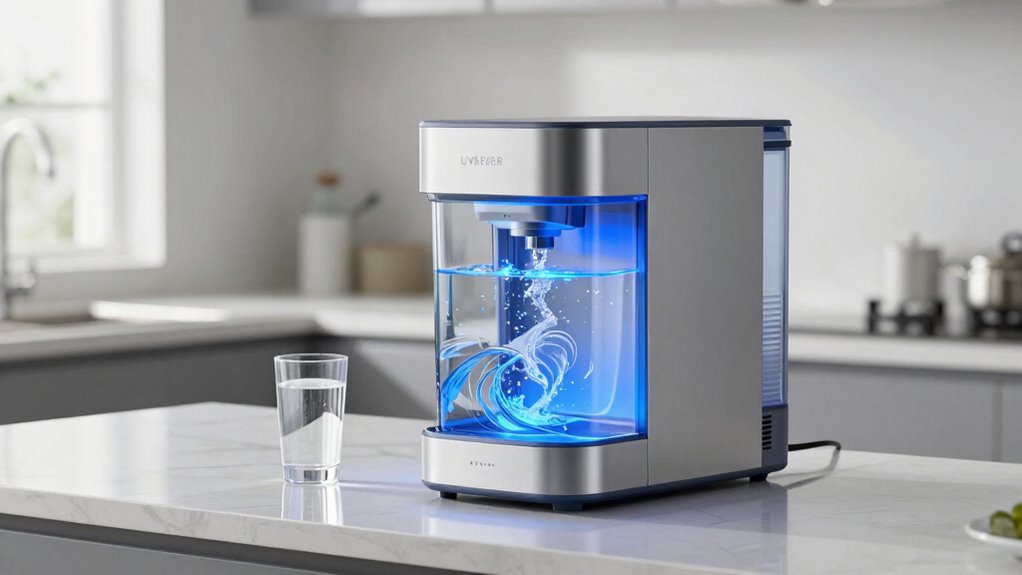
UV water purifiers effectively inactivate bacteria, viruses, and microorganisms, providing safe drinking water without chemicals. However, they don’t remove physical impurities like dirt or sediment, nor do they eliminate chemical contaminants such as heavy metals or pesticides unless combined with other filters. For best results, pre-treat your water to guarantee clarity and add filters for chemical pollutants. Want to discover how to maximize their efficiency and what else they can do? Keep going to find out more.

Get garden gear delivered free — and shop member deals
- Fast, free delivery on millions of items
- Access to Prime Big Deal Days deals on October 6–7
- Prime Video, Amazon Music and more included
Key Takeaways
- UV water purifiers effectively inactivate bacteria, viruses, and microorganisms, ensuring microbiological safety.
- They do not remove physical impurities like dirt or sediment from water.
- UV purifiers cannot eliminate chemical contaminants such as heavy metals or pesticides.
- Pre-treatment, like filtration, is necessary for turbid or chemically contaminated water.
- Regular maintenance of the UV system is essential to sustain its effectiveness.
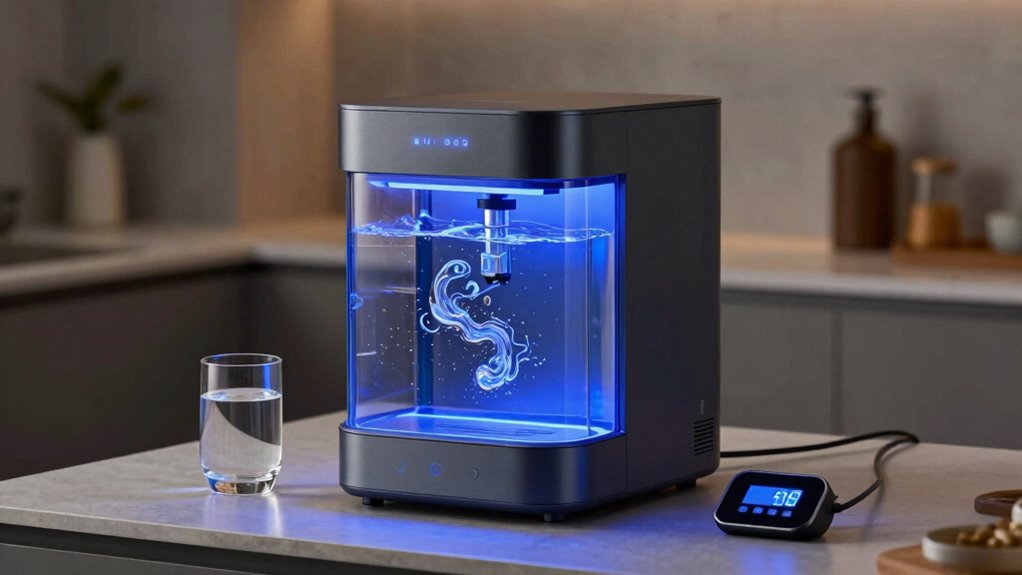
Are you concerned about the safety of your drinking water? If so, UV water purifiers might be a solution worth considering. These devices use UV sterilization, a process that exposes water to ultraviolet light to kill or inactivate waterborne pathogens. When water passes through the purifier, the UV light penetrates the cells of bacteria, viruses, and other microorganisms, rendering them harmless. This method is quick, chemical-free, and effective against a wide range of pathogens, making it an attractive option for guaranteeing that your water is safe to drink. UV sterilization doesn’t just improve taste and clarity; it considerably reduces health risks associated with contaminated water.
However, it’s vital to understand what UV water purifiers can and cannot do. While they are excellent at eliminating waterborne pathogens, they don’t remove physical impurities like dirt, sediment, or chemical contaminants such as heavy metals or pesticides. If your water source contains these pollutants, a UV purifier alone won’t suffice, and you’ll need to incorporate additional filtration systems. For example, if your tap water has a high sediment load, a pre-filter is necessary to prevent the UV light from being obstructed or damaged. Similarly, if chemical contaminants are a concern, activated carbon filters or other specialized purifiers are needed to address those issues.
Another point to remember is that UV sterilization relies on clear water. If your water is cloudy or turbid, the UV light may not penetrate effectively, reducing its ability to neutralize pathogens. In such cases, pre-treatment steps like filtration to clarify the water are essential before running it through a UV purifier. Pre-treatment can significantly improve the efficiency of UV sterilization and protect your device from damage. Additionally, understanding the limitations of UV sterilization can help set realistic expectations about its capabilities. Regular maintenance, such as cleaning the quartz sleeve and replacing the UV bulb, is crucial to ensure ongoing effectiveness and avoid performance issues that can arise from neglect.
UV water purifier with pre-filter
As an affiliate, we earn on qualifying purchases.
As an affiliate, we earn on qualifying purchases.
Frequently Asked Questions
How Long Do UV Water Purifiers Typically Last?
UV water purifiers typically last around 9 to 12 months, depending on usage and maintenance. UV longevity hinges on regular bulb replacement, usually once a year, to guarantee effective purification. The purifier’s lifespan also depends on water quality and filter care. You should monitor the UV bulb’s performance and replace it as recommended by the manufacturer to maintain peak purification and extend your purifier’s overall lifespan.
Are UV Purifiers Effective Against Chemical Contaminants?
UV purifiers aren’t effective against chemical contaminants or toxic residues, as they target only microorganisms like bacteria and viruses. To remove chemicals, you need chemical filtration systems such as activated carbon filters, which absorb or neutralize harmful substances. Relying solely on UV purification leaves chemical residues in your water, so it’s best to combine UV with chemical filtration to guarantee thorough purification and safe drinking water.
What Maintenance Is Required for UV Water Purifiers?
You need to regularly clean and replace the UV lamp to maintain its effectiveness, as UV lamp durability varies but typically lasts about a year. Check the manufacturer’s guidelines for specific timelines. Additionally, replace filters as recommended, usually every 6-12 months, to prevent bacterial growth and guarantee clean water. Regular maintenance keeps your UV water purifier functioning efficiently and extends its lifespan.
Can UV Purifiers Remove Heavy Metals From Water?
Think of a UV water purifier like a superhero cape—it’s great at fighting germs, but it’s not equipped to handle heavy metals. UV purifiers don’t remove heavy metals like lead or mercury; they mainly target microorganisms. For heavy metal filtration, you need specialized filters that offer chemical resistance. So, while UV purifiers are excellent for sterilization, they won’t tackle heavy metal contamination effectively.
Are UV Water Purifiers Safe for All Water Sources?
UV water purifiers are generally safe for most water sources, but UV safety depends on water source compatibility. You should guarantee the water is clear because sediments can shield microbes from UV light. For turbid or contaminated water, pre-filtration is necessary. Always test your water first, and follow manufacturer guidelines to prevent issues like UV exposure. When used correctly, UV purifiers are a safe, effective way to disinfect your water source.
UV water sterilizer for tap water
As an affiliate, we earn on qualifying purchases.
As an affiliate, we earn on qualifying purchases.
Conclusion
So, next time you’re tempted to rely solely on your UV water purifier, remember it’s not a magic wand. It’ll zap germs, sure, but leave you vulnerable to chemical contaminants and unseen pollutants. Don’t be that person confidently sipping crystal-clear water only to find out too late that your purifier’s got a blind spot. Stay smart—use UV as part of a broader water safety plan, or risk drinking water that’s almost as deceptive as a snake oil salesman.
UV water purifier replacement bulb
As an affiliate, we earn on qualifying purchases.
As an affiliate, we earn on qualifying purchases.
UV water purifier with activated carbon filter
As an affiliate, we earn on qualifying purchases.
As an affiliate, we earn on qualifying purchases.
Fall yard work Picks
leaf blowers
As an affiliate, we earn on qualifying purchases.