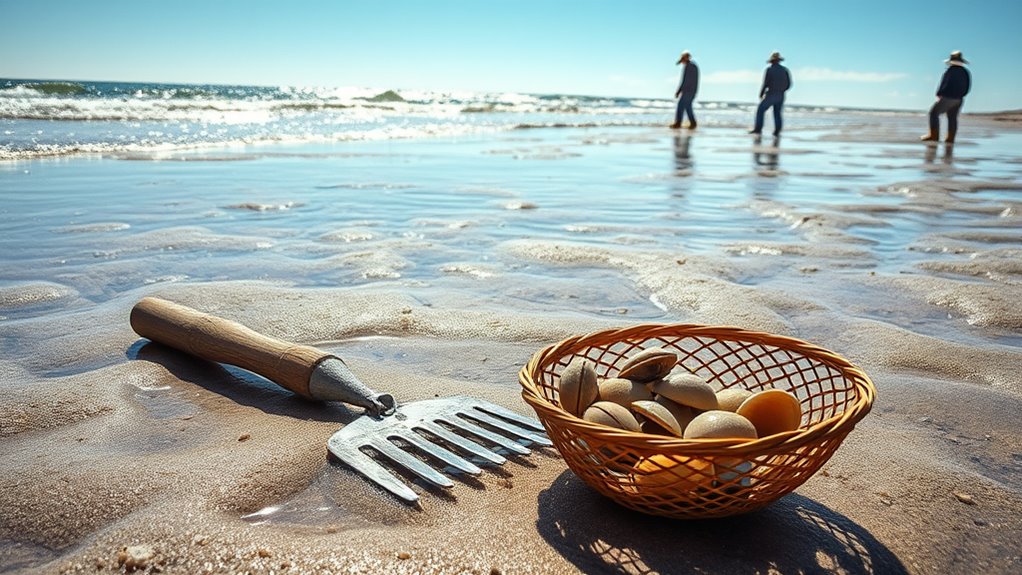

To master clam digging, start by planning around the tides, aiming for low tide when sand or mudflats are exposed. Use sturdy tools like a clam rake or trowel to dig gently in the sediment, and bring along a bucket for your catch. Wear waterproof boots and be mindful of safety hazards like sharp shells or strong currents. To improve your success, understanding tide patterns and techniques is key—keep exploring for more tips and insights.
Key Takeaways
- Clam digging is best during low tides, especially at their lowest point, to access exposed sand or mudflats.
- Use sturdy tools like clam rakes or trowels, with long-handled options for deeper digging and handheld for precision.
- Check local regulations and seasonal openings to ensure sustainable harvesting and avoid penalties.
- Wear waterproof boots or waders, and carry buckets, gloves, and good lighting for safety and efficiency.
- Plan around tide charts and avoid hazards like strong currents, sharp shells, and private property for a safe, successful dig.

Clam digging is a rewarding activity that anyone can enjoy with a little preparation and know-how. To get started, it’s essential to understand the best times to go, which depends heavily on clamming seasons. These seasons vary by location, but generally, they’re during specific months when clams are most abundant and sustainable to harvest. Before heading out, check local regulations and seasonal closures to guarantee you’re compliant. Some areas restrict clamming during spawning periods to protect the populations, so being aware of these restrictions helps you stay within the law and contributes to healthy clam beds.
Timing your trip around the tides is vital. The best clamming often occurs during low tide, especially when the tide is at its lowest point, exposing the sand or mudflats where clams burrow. Keep an eye on tide charts and plan your outing accordingly; arriving early or staying late during low tide gives you better access and increases your chances of a successful harvest. Also, note that different types of clams may be more accessible during certain tides, so doing a bit of research beforehand can improve your results.
Timing your trip during low tide maximizes clam harvesting opportunities and access to burrowing clams.
When it comes to tools, having the right equipment makes all the difference. A sturdy clam rake or trowel is essential for digging into the sand or mud without causing unnecessary disturbance. Some diggers prefer a long-handled rake to reach deeper clams, while others use a handheld trowel for more precise work. Don’t forget to bring a bucket or basket to collect your catch and a pair of gloves to protect your hands. Wearing waterproof boots or waders helps keep you dry and comfortable as you work along the shoreline. Investing in a good quality light source, like a headlamp or flashlight, can be useful if you plan to dig during early mornings or late evenings.
Safety precautions are just as important as knowing the right tools and timing. Always check local regulations for safety advisories, such as weather conditions and potential hazards like strong currents or sharp shells. Be cautious of tides and never turn your back on rising water. Wear appropriate gear, including life jackets if you’re near deep or swift-moving water. Additionally, be mindful of other shoreline users and respect private property. It’s wise to carry a small first aid kit for minor cuts or scrapes. Familiarize yourself with local wildlife and avoid disturbing protected habitats. Following these safety precautions not only protects you but also preserves the environment for future clammers. Understanding tide patterns can significantly improve your success rate and safety during your outings. With the right knowledge, respect for safety, and a bit of patience, clam digging can become a highly enjoyable and sustainable outdoor activity.
Frequently Asked Questions
Are There Any Legal Restrictions on Clam Digging in Specific Areas?
Yes, there are legal restrictions on clam digging in specific areas. You need to check local regulations to guarantee you’re in permitted areas, as some locations may have seasonal closures or size limits. Always verify with local agencies or shoreline authorities before digging, and obtain any necessary permits. Following these rules helps protect clam populations and keeps your activity legal and sustainable.
How Do Weather Conditions Affect Clam Digging Safety?
Weather conditions considerably impact your clam digging safety. Stormy weather and high winds can create dangerous waves and slippery surfaces, increasing your risk of accidents. Always check the weather forecast before heading out and avoid digging during storms or heavy rain. Follow storm precautions like wearing proper footwear and staying close to shore. Prioritizing weather safety helps you stay safe and enjoy clam digging without unnecessary hazards.
What Are the Most Eco-Friendly Clam Digging Practices?
You can make a real difference by practicing eco-friendly clam digging. Focus on sustainable harvesting—only take what you need and follow local regulations. Avoid disturbing the habitat by staying clear of sensitive areas and using gentle techniques. Protect the environment and guarantee future harvests by respecting habitat preservation. Your mindful approach helps keep clam beds healthy, so everyone can enjoy this activity for years to come.
Can Children Participate in Clam Digging Activities?
Yes, children can participate in clam digging activities, but you should prioritize child safety and family participation. Always supervise kids closely, make sure they wear appropriate gear, and teach them proper techniques. Choose calm, safe environments away from strong currents or rocky areas. Engaging children in clam digging promotes family bonding and teaches environmental respect, making it a fun, educational experience for all ages.
How Do I Identify Different Clam Species?
Ever wondered how to tell different clam species apart? To identify clams, focus on key features like shell shape, size, and coloration. Look for differences in the shell’s texture and pattern, which aid in species differentiation. Clam identification requires careful examination of these traits, so you can confidently distinguish species. Have you considered using a field guide or consulting local experts to improve your clam identification skills?
Conclusion
Now that you know the tides to watch, the tools to use, and the techniques to master, you’re ready to hit the shoreline with confidence. With patience, practice, and respect for the environment, you’ll improve your skills and enjoy every moment of clam digging. Embrace the rhythm of the ocean, trust your instincts, and keep learning. Because every dig, every find, and every adventure makes you a better clam digger—ready for whatever the tide brings your way.