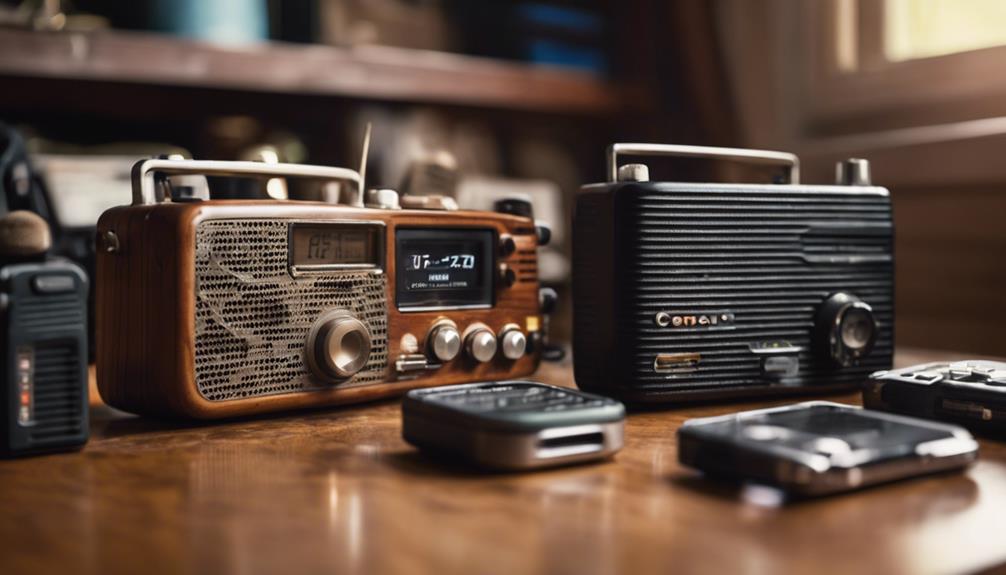

A radio for preppers should match the information you need in an outage: one-way weather updates, broader broadcast reception, or two-way communication. My best overall pick is the Midland ER310, a focused emergency radio with multiple charging options and NOAA weather access. The Kaito KA500IP stands out for its shortwave reception, while the Sangean ToughBox is the rugged choice for regular listening rather than emergency charging features. The main tradeoff is between a radio built for alerts and backup power and one that adds reception range or durability but may serve a narrower role. Read on for the full breakdown, selection criteria, and guidance on choosing a radio that fits your preparedness plan.

Get garden gear delivered free — and shop member deals
- Fast, free delivery on millions of items
- Access to Prime Big Deal Days deals on October 6–7
- Prime Video, Amazon Music and more included
Complete the kit



Key Takeaways
- The Midland ER310 is my best overall pick for a dedicated emergency-radio role; the ToughBox is a sturdier everyday listener but does not offer the same emergency-focused feature set.
- The Kaito KA500IP is the standout for reception variety, adding shortwave to AM/FM and NOAA, though extra bands are useful only if you know what you want to monitor.
- Battery capacity is not a substitute for a power plan. The 12,000mAh and 20,000mAh models may suit device charging needs, but hand-crank and solar input should be treated as backup charging methods.
- The Baofeng UV-5R fills a different job: it is a two-way handheld, not a replacement for a broadcast weather radio, and radio-use rules and operating knowledge matter.
- Many radios in the lineup share the same emergency basics—NOAA access, solar input, and a hand crank—so usability, alert behavior, charging details, and a clear intended role separate the stronger choices.
| Tenergy Emergency Hand Crank Weather Radio, AM FM NOAA Solar Cell Charger |  | Best for Broad Radio Coverage | Radio bands: AM, FM, NOAA, shortwave | Power sources: Hand crank, solar panel, micro-USB, AAA batteries | Lighting: 120-lumen LED flashlight | VIEW ON AMAZON | See Our Full Breakdown |
| Sangean TB-100 ToughBox FM/AM/Aux Ultra-Rugged Digital Rechargeable Radio, Green |  | Best for Rugged Base Camps | Tuner: Digital PLL | Bands: FM and AM | Speaker: 5.25-inch full range, water-resistant | VIEW ON AMAZON | See Our Full Breakdown |
| 12000mAh Emergency NOAA Weather Radio with Hand Crank and Solar Charging |  | Best for High-Capacity Backup Power | Battery capacity: 12,000mAh | Radio bands: AM, FM, seven NOAA weather channels | Power options: USB-C, solar, hand crank, three AAA batteries | VIEW ON AMAZON | See Our Full Breakdown |
| Leaton Hand-Crank Emergency Radio with NOAA, AM/FM, and 10,000mAh Battery |  | Best Compact, Lightweight Pick | Battery capacity: 10,000mAh | Radio bands: AM 520–1710kHz; FM 87–108MHz; NOAA 162.400–162.550MHz | Charging methods: USB-C, solar, hand crank | VIEW ON AMAZON | See Our Full Breakdown |
| NITIGO Emergency Weather Radio with 4000mAh Battery, NOAA, Solar Charging, and Hand Crank |  | Best for Headphone Listening | Battery capacity: 4,000mAh / 14,800mWh | Radio bands: AM, FM, WB, NOAA | Power sources: Rechargeable battery, hand crank, solar, USB | VIEW ON AMAZON | See Our Full Breakdown |
| RunningSnail Hand Crank Emergency Radio with Flashlight |  | Best Compact Backup Radio | Radio bands: AM/FM/NOAA | Battery capacity: 2000mAh (7400mWh) | Power sources: Hand crank, solar panel, rechargeable battery | VIEW ON AMAZON | See Our Full Breakdown |
| QAUYYW Solar Hand Crank Emergency Weather Radio, 20,000 mAh |  | Best High-Capacity Emergency Radio | Battery capacity: 20,000mAh | Radio bands: AM/FM/SW/NOAA | Charging methods: USB-C, hand crank, solar | VIEW ON AMAZON | See Our Full Breakdown |
| Kaito KA500IP-RED Voyager Solar/Dynamo AM/FM/Shortwave NOAA Weather Radio with Alert and Cell Phone Charger, Red |  | Best for Flexible Power Sources | Power sources: Solar, hand crank, 3 AA batteries, AC | Radio bands: AM/FM/shortwave | NOAA weather channels: 7 with alert | VIEW ON AMAZON | See Our Full Breakdown |
| Midland ER310 Emergency Crank Weather AM/FM Radio |  | Best for NOAA Weather Alerts | Model: ER310-MFN | Radio bands: AM/FM | Power sources: Solar, hand crank, 6 AA batteries | VIEW ON AMAZON | See Our Full Breakdown |
| Baofeng UV-5R Dual-Band Handheld Two-Way Radio |  | Best for Two-Way Communications | Frequency range: VHF 144–148 MHz; UHF 420–450 MHz | Channels: 128 | Battery: 7.4 V, 1800 mAh lithium-ion, included | VIEW ON AMAZON | See Our Full Breakdown |
| Solar Emergency Hand Crank Radio with 12000mAh Power Bank and LED Lights |  | Best for Extended Backup Power | Radio bands: NOAA, FM, AM | Frequency: 162 MHz | Battery: 12,000mAh lithium battery | VIEW ON AMAZON | See Our Full Breakdown |
| Eoxsmile Emergency Radio with NOAA Weather Alerts, Solar and Hand Crank |  | Best for Broadcast Range and Weather Alerts | Radio bands: AM, FM, shortwave, and 7 NOAA weather bands | AM frequency range: 520–1710 kHz | FM frequency range: 88–108 MHz | VIEW ON AMAZON | See Our Full Breakdown |
| FosPower A1 NOAA Emergency Weather Radio with Solar and Hand Crank, Orange |  | Best Compact, Simple Backup | Model: FOSPWB-2376 | Radio bands: AM, FM, NOAA Weather Band | Power sources: Solar, hand crank, AAA batteries, and USB | VIEW ON AMAZON | See Our Full Breakdown |
| radio for prepper | Radio bands | Water resistance | Power sources |
|---|---|---|---|
| Tenergy Emergency Hand Crank W | AM, FM, NOAA, shortwave | Not specified | Hand crank, solar panel, micro-USB, AAA batteries |
| Sangean TB-100 ToughBox FM/AM/ | — | — | — |
| 12000mAh Emergency NOAA Weathe | AM, FM, seven NOAA weather channels | Described as waterproof; rating not specified | — |
| Leaton Hand-Crank Emergency Ra | AM 520–1710kHz; FM 87–108MHz; NOAA 162.400–162.550MHz | IPX6; splash protection, not immersion | — |
| NITIGO Emergency Weather Radio | AM, FM, WB, NOAA | Described as waterproof; rating not specified | Rechargeable battery, hand crank, solar, USB |
| RunningSnail Hand Crank Emerge | AM/FM/NOAA | Water repellent | Hand crank, solar panel, rechargeable battery |
| QAUYYW Solar Hand Crank Emerge | AM/FM/SW/NOAA | IPX6 | — |
| Kaito KA500IP-RED Voyager Sola | AM/FM/shortwave | — | Solar, hand crank, 3 AA batteries, AC |
| Midland ER310 Emergency Crank | AM/FM | Not water resistant | Solar, hand crank, 6 AA batteries |
| Baofeng UV-5R Dual-Band Handhe | — | Not water resistant | — |
| Solar Emergency Hand Crank Rad | NOAA, FM, AM | Water resistant; rating not specified | Solar panel, hand crank, USB-C input, or 3 AAA batteries |
| Eoxsmile Emergency Radio with | AM, FM, shortwave, and 7 NOAA weather bands | — | — |
| FosPower A1 NOAA Emergency Wea | AM, FM, NOAA Weather Band | — | Solar, hand crank, AAA batteries, and USB |
More Details on Our Top Picks
Tenergy Emergency Hand Crank Weather Radio, AM FM NOAA Solar Cell Charger
I’d choose the Tenergy for a prep kit where access to more than local weather and music broadcasts matters: it receives AM, FM, NOAA, and shortwave. That shortwave band gives it a different role from the Sangean TB-100, which is built around rugged AM/FM listening rather than emergency-band breadth. Hand-crank, solar, micro-USB, and AAA power options also give me several ways to keep it operating when one charging method is unavailable.
The 120-lumen flashlight and SOS alarm add useful light and signaling without needing separate gear. The tradeoff is that the product data does not specify water resistance, so I would protect it from rain rather than treat it like the weather-ready Sangean. AAA batteries may also need replenishing for longer deployments, and no battery runtime is listed.
Pros:- Receives AM, FM, NOAA, and shortwave broadcasts
- Hand crank, solar, micro-USB, and AAA power options
- Built-in 120-lumen flashlight and SOS alarm
- Can use replaceable AAA batteries when rechargeable power is unavailable
Cons:- No water-resistance rating is provided
- Extended use may require carrying extra AAA batteries
- Battery runtime and shortwave reception details are not specified
Best for: Preppers who want shortwave reception, NOAA access, and several backup power methods in one kit radio.
Not ideal for: People who need a radio for exposed, wet conditions or want a documented long-duration battery setup.
- Radio bands:AM, FM, NOAA, shortwave
- Power sources:Hand crank, solar panel, micro-USB, AAA batteries
- Lighting:120-lumen LED flashlight
- Emergency signal:SOS alarm
- Certifications:CE, PSE, RoHS
- Water resistance:Not specified
Our verdict“Choose the Tenergy if shortwave coverage and flexible power options matter more than a documented weather-resistant build.”
Sangean TB-100 ToughBox FM/AM/Aux Ultra-Rugged Digital Rechargeable Radio, Green
The Sangean TB-100 ToughBox is the lineup’s durability-first choice, suited to a shelter, work area, or base camp where a radio may take knocks and encounter dust or rain. Its JIS4 dust, shock, and rain resistance and roll-cage construction give it a tougher profile than the Tenergy, whose water resistance is not specified. A large 5.25-inch speaker and digital tuner favor straightforward shared listening, while 10 presets make familiar stations quicker to reach.
This is not the pick for keeping in a small go-bag: it is heavier and bulkier than the Leaton, and it lacks NOAA reception, a hand crank, and solar charging in the supplied specs. I’d treat its rechargeable, alkaline, and AC power options as useful at a supplied-power site, but the batteries are not included. The controls may also take more attention than a simple emergency radio.
Pros:- Dust-, shock-, and rain-resistant JIS4-rated construction
- Roll cage and water-resistant 5.25-inch full-range speaker
- Digital tuner with 10 station presets
- Rechargeable battery, alkaline, and AC power options
Cons:- Does not list NOAA weather reception or automatic alerts
- Batteries are not included
- Heavy and bulky compared with compact emergency radios
Best for: Preppers setting up a durable radio station in a garage, workshop, cabin, or sheltered emergency base.
Not ideal for: Go-bag users who need NOAA weather broadcasts, hand-crank or solar power, and a lightweight radio.
- Tuner:Digital PLL
- Bands:FM and AM
- Speaker:5.25-inch full range, water-resistant
- Weatherproofing:Dust-, shock-, and rain-resistant to JIS4 standard
- Power:Rechargeable battery, alkaline batteries, AC power
- Presets:10 total: 5 FM and 5 AM
- Inputs:Aux-in for MP3, CD player, iPod, or iPhone
- Display and enclosure:Amber backlit LCD; ABS plastic with roll cage
Our verdict“Pick the Sangean for a tough, shared-listening base radio, not as your only alert-capable radio in a portable kit.”
12000mAh Emergency NOAA Weather Radio with Hand Crank and Solar Charging
I rank this model highest for preppers who want an emergency radio to double as a substantial 12,000mAh power bank. USB-C, solar, hand crank, and three AAA batteries provide multiple ways to replenish or run it, while the listed FM listening time—up to 60 hours at 50% volume—offers a useful reference point that the NITIGO’s product data does not provide. It also combines AM/FM and seven NOAA channels with a 300-lumen flashlight, reading light, and loud SOS siren.
Compared with the compact Leaton, this radio puts more emphasis on battery capacity and lighting than on a simple, lightweight carry. Its waterproof claim is useful for wet-weather kits, but no rating is supplied. NOAA alerts require the radio to be on and tuned to a weather channel, so it is not a set-and-forget alert device. A wall adapter is not included.
Pros:- 12,000mAh rechargeable battery with USB-C, solar, crank, and AAA power options
- Receives AM/FM broadcasts and seven NOAA weather channels
- Combines a 300-lumen flashlight, 250-lumen reading light, and 115dB siren
- Lists up to 60 hours of FM listening at 50% volume
Cons:- NOAA alerts require the radio to be on and tuned to a weather channel
- Wall adapter is not included
- Waterproof rating and charging times are not specified
Best for: Preppers who want a large battery reserve for radio use, lighting, and occasional emergency phone charging.
Not ideal for: Buyers prioritizing verified automatic weather alerts, a compact loadout, or a documented waterproof rating.
- Battery capacity:12,000mAh
- Radio bands:AM, FM, seven NOAA weather channels
- Power options:USB-C, solar, hand crank, three AAA batteries
- Flashlight:300 lumens; range up to 70 meters
- Reading light:250 lumens
- SOS siren:115dB
- FM listening time:Up to 60 hours at 50% volume
- Dimensions:4.7 × 2.9 × 6.8 inches
- Water resistance:Described as waterproof; rating not specified
Our verdict“Choose this model when battery capacity and built-in lighting take priority over automatic alert standby and compact size.”
Leaton Hand-Crank Emergency Radio with NOAA, AM/FM, and 10,000mAh Battery
The Leaton makes the most sense when I want emergency radio functions without adding much weight: it is listed at 1.1 pounds and measures 6.3 × 3.5 × 3.1 inches. Its 10,000mAh battery, USB-C, solar, and hand-crank charging cover common off-grid needs, with a USB output for topping up a phone in a pinch. Compared with the higher-capacity 12,000mAh model in this batch, it gives up battery reserve and brighter listed lighting in exchange for a clearly specified compact form.
It receives NOAA, AM, and FM, but weather broadcasts require manual tuning; there are no automatic alerts or SAME functions. That limitation matters if the radio will sit unattended overnight. IPX6 protection covers strong splashes, not immersion, and the hand crank provides limited runtime. For a compact kit radio, it is a practical tradeoff—just not a substitute for an alerting receiver.
Pros:- Compact 1.1-pound design for portable emergency kits
- 10,000mAh battery with USB-C, solar, and hand-crank charging
- Receives NOAA, AM, and FM broadcasts
- Includes flashlight, reading lamp, compass, and 5V/1A USB output
Cons:- Weather broadcasts require manual tuning; no automatic alerts or SAME
- IPX6 is splash protection, not immersion protection
- Hand-crank charging provides limited runtime and no headphone jack is included
Best for: Backpackers and household kit planners who want a lightweight crank-and-solar radio with phone-output capability.
Not ideal for: People who need automatic NOAA alerts, SAME notifications, headphone listening, or protection for immersion.
- Battery capacity:10,000mAh
- Radio bands:AM 520–1710kHz; FM 87–108MHz; NOAA 162.400–162.550MHz
- Charging methods:USB-C, solar, hand crank
- USB output:5V/1A
- Water resistance:IPX6; splash protection, not immersion
- Dimensions and weight:6.3 × 3.5 × 3.1 inches; 1.1 pounds (500g)
- Lighting:Flashlight with high, low, and SOS modes; 1.3W reading lamp
- Weather alerts:Manual tuning; no automatic alerts or SAME
- Included:USB-C cable and user manual
Our verdict“Choose the Leaton for a lightweight, multi-purpose kit radio if manual NOAA tuning is acceptable.”
NITIGO Emergency Weather Radio with 4000mAh Battery, NOAA, Solar Charging, and Hand Crank
The NITIGO earns a distinct place for personal listening: its 3.5 mm headphone jack is a practical advantage when quiet matters in a shared shelter or when I want to conserve power by listening privately. It covers AM, FM, and NOAA, and its rechargeable battery, hand crank, solar panel, and USB charging offer more flexibility than the Sangean TB-100, which is better suited to durable group listening but does not list those emergency charging methods.
Its 4,000mAh battery is smaller than the Leaton’s 10,000mAh and the 12,000mAh model’s reserve, so I would not choose it for frequent phone charging or long periods of lighting use. The radio includes a flashlight, rotating reading lamp, SOS alarm, and flashing light, but the product data gives no battery runtime or charging times. It is described as waterproof without a rating, leaving less clarity than the Leaton’s IPX6 specification.
Pros:- 3.5 mm headphone jack supports private listening
- Receives AM, FM, and NOAA broadcasts
- Rechargeable battery, hand crank, solar, and USB power options
- Includes flashlight, rotating reading lamp, SOS alarm, and flashing light
Cons:- 4,000mAh capacity is smaller than the Leaton and 12,000mAh alternatives
- Battery runtime and charging times are not specified
- Waterproof claim has no rating provided
Best for: Preppers who want a compact emergency radio with a headphone jack for quiet, private listening.
Not ideal for: Buyers who need a large power-bank reserve, stated runtime, or a specific water-resistance rating.
- Battery capacity:4,000mAh / 14,800mWh
- Radio bands:AM, FM, WB, NOAA
- Power sources:Rechargeable battery, hand crank, solar, USB
- Emergency charging:USB device charging
- Lighting and alerts:LED flashlight, rotating reading lamp, SOS alarm, flashing light
- Headphone jack:3.5 mm
- Water resistance:Described as waterproof; rating not specified
- Enclosure:ABS
- Included batteries:Two lithium-ion batteries
Our verdict“Pick the NITIGO if headphone listening is a priority and a modest battery reserve fits your emergency plan.”
RunningSnail Hand Crank Emergency Radio with Flashlight
The RunningSnail is a straightforward choice for a small emergency kit: at 5 × 1.8 × 2.4 inches and half a pound, it takes little room while covering AM, FM, and NOAA broadcasts. Its crank, solar panel, and rechargeable battery give you several ways to keep the radio running when normal power is unavailable. Compared with the larger Midland ER310, it is easier to stash in a daypack, but it lacks the Midland’s listed NOAA scan-and-alert feature and SOS signal. The USB charging port can help with a brief phone emergency, though a 2000mAh battery is limited for that job. Its water-repellent build offers some protection, not the confidence of a waterproof rating, so I would keep it sheltered in heavy rain.
Pros:- Receives AM, FM, and NOAA weather broadcasts
- Hand crank, solar panel, and rechargeable battery offer multiple power options
- Compact, half-pound design with a 1W LED flashlight
- USB port can provide limited emergency phone charging
Cons:- The 2000mAh battery offers limited capacity for charging a phone
- Water repellent, but not described as fully waterproof
Best for: Preppers assembling a compact car or daypack kit who want weather broadcasts, a flashlight, and backup charging in one lightweight unit.
Not ideal for: Buyers who need a larger phone-charging reserve, hands-free NOAA alerts, or a radio rated for wet conditions.
- Radio bands:AM/FM/NOAA
- Battery capacity:2000mAh (7400mWh)
- Power sources:Hand crank, solar panel, rechargeable battery
- Flashlight:1W LED
- Connectivity:USB
- Dimensions:5 × 1.8 × 2.4 inches
- Weight:0.5 lb
- Water resistance:Water repellent
Our verdict“Choose the RunningSnail for a lightweight emergency kit where compact size matters more than extended phone charging or advanced alert functions.”
QAUYYW Solar Hand Crank Emergency Weather Radio, 20,000 mAh
The QAUYYW pairs AM, FM, shortwave, and NOAA reception with a listed 20,000mAh battery, making it the capacity-focused choice in this group. Its USB-C input is a convenient alternative to the hand crank and solar panel, while the flashlight, reading light, and SOS alarm add useful camp and outage functions. Compared with the RunningSnail, it offers far more stated battery capacity and shortwave reception, but it is larger and its phone charging is still described as brief backup rather than a dependable power-bank replacement. The 52cm antenna supports reception, though NOAA alerts require you to turn the radio on and manually tune to a local station; it does not provide an automatic alert standby function. The manufacturer lists IPX6 water resistance, but I would still protect its ports and controls from prolonged exposure.
Pros:- AM, FM, shortwave, and NOAA band coverage
- 20,000mAh battery with USB-C, hand-crank, and solar charging options
- Includes an SOS alarm, 3W flashlight, and 3.5W reading lamp
- Manufacturer lists IPX6 water resistance
Cons:- NOAA broadcasts must be tuned manually, and alerts require the radio to be on
- Phone charging is intended for brief calls or texts, not sustained use
Best for: Campers and household emergency planners who want broad band coverage, several lighting options, and a larger built-in battery in one portable radio.
Not ideal for: People who want automatic NOAA alert monitoring or dependable phone charging for extended outages.
- Battery capacity:20,000mAh
- Radio bands:AM/FM/SW/NOAA
- Charging methods:USB-C, hand crank, solar
- Flashlight output:3W
- Reading lamp output:3.5W
- Speaker output:5W
- Antenna length:52cm
- Water resistance:IPX6
- Warranty:12 months
Our verdict“Pick the QAUYYW if battery capacity and shortwave reception matter more than automatic NOAA alerts or robust phone charging.”
Kaito KA500IP-RED Voyager Solar/Dynamo AM/FM/Shortwave NOAA Weather Radio with Alert and Cell Phone Charger, Red
The Kaito KA500IP-RED earns its place for the number of ways it can run: solar, hand crank, three AA batteries, or AC power. That flexibility helps preppers build around supplies they already keep, rather than relying on one charging method. It receives AM, FM, and shortwave, and its seven NOAA weather channels with alert offer a useful step beyond the RunningSnail’s listed weather reception. The back-lit frequency display and adjustable solar panel make tuning and panel placement more manageable. Compared with the QAUYYW, the Kaito has a more varied set of power sources, including AC and replaceable AAs, but its feature set is more basic and its plastic enclosure has no stated water-resistance rating. The USB port is useful as emergency backup, not a substitute for a dedicated power bank.
Pros:- Four power options: solar, hand crank, three AA batteries, and AC
- Receives AM, FM, and shortwave broadcasts
- Seven NOAA weather channels with alert
- Back-lit frequency display and adjustable solar panel
Cons:- Requires three AA batteries when using battery power, so replacements must be stocked
- Plastic enclosure has no stated water-resistance rating
- USB phone charging is a basic emergency feature rather than a high-capacity power source
Best for: Preppers who want a radio that can use household AC, replaceable AA batteries, solar power, or a hand crank as circumstances change.
Not ideal for: Buyers seeking a water-resistant radio, a large built-in battery, or several dedicated lighting and signaling features.
- Power sources:Solar, hand crank, 3 AA batteries, AC
- Radio bands:AM/FM/shortwave
- NOAA weather channels:7 with alert
- Display:Back-lit frequency display
- Additional features:LED reading lamp, USB charging port, 180-degree adjustable solar panel
- Antenna:Telescopic
- Material:Plastic
Our verdict“Choose the Kaito if you value power-source flexibility and NOAA alerts more than a large battery or a rugged, weather-rated enclosure.”
Midland ER310 Emergency Crank Weather AM/FM Radio
For a prepper whose first concern is receiving local weather warnings, the Midland ER310 has a clear advantage: its NOAA weather scan and alert feature is more purposeful than a radio that only receives weather stations when manually tuned. Solar, hand-crank, and six-AA power options also give you several ways to keep it operating. It adds a flashlight, SOS signal, USB charging, and an ultrasonic dog whistle, though the latter is a specialized feature rather than a core reason to choose it. Compared with the compact RunningSnail, the Midland is larger at nearly ten inches long and weighs a pound, but it provides a more developed alert setup. Its main weakness for field use is straightforward: it is not water resistant, so rain protection needs to be part of your kit.
Pros:- NOAA weather scan and alert functions
- Solar, hand-crank, and six-AA power options
- Includes a flashlight, SOS signal, and USB charging
- LED display and one-year limited warranty
Cons:- Not water resistant, limiting use in rain or wet outdoor settings
- Six AA batteries are needed for battery-powered operation
- Larger than compact options such as the RunningSnail
Best for: Households that prioritize NOAA weather scanning and alert functions, and can store the radio somewhere protected from rain.
Not ideal for: Backpackers needing a small radio or anyone likely to operate it in wet conditions without a protective enclosure.
- Model:ER310-MFN
- Radio bands:AM/FM
- Power sources:Solar, hand crank, 6 AA batteries
- Connectivity:USB
- Display:LED
- Built-in features:Flashlight, SOS signal, ultrasonic dog whistle, NOAA weather scan and alert
- Dimensions:9.61 × 2.95 × 6.85 inches
- Weight:16 oz
- Water resistance:Not water resistant
Our verdict“The Midland ER310 suits home emergency kits that need NOAA alert scanning, provided you can keep it dry.”
Baofeng UV-5R Dual-Band Handheld Two-Way Radio
The Baofeng UV-5R serves a different prepper need from the emergency receivers here: it is a two-way VHF/UHF radio, designed for communicating with compatible radios rather than listening to AM, FM, or NOAA broadcasts. Its 128 channels, selectable transmit power, and support for PC or CHIRP programming give a group more room to organize channels than a basic weather radio such as the Midland ER310. The included rechargeable battery and accessories make it a ready-to-configure kit, but the stated 5km maximum talking range should not be treated as guaranteed in every location. This is not a self-sufficient emergency receiver: it has no solar or hand-crank charging, and operation depends on compatible frequencies and proper setup. It is also not water resistant, so it suits prepared users who can keep it dry and learn its controls in advance.
Pros:- VHF and UHF support with 128 channels
- Selectable transmit power, dual standby, and keypad lock
- Includes a rechargeable battery, antenna, headset, and charger
- Supports PC or CHIRP programming
Cons:- Does not receive AM, FM, or NOAA weather broadcasts
- No solar or hand-crank charging option
- Not water resistant, and communication depends on compatible frequencies and setup
Best for: Prepared groups with compatible handheld radios who want configurable VHF/UHF communication and are willing to learn programming and operating requirements.
Not ideal for: Beginners seeking a simple NOAA alert radio, or buyers who need solar charging, hand-crank power, or water resistance.
- Frequency range:VHF 144–148 MHz; UHF 420–450 MHz
- Channels:128
- Battery:7.4 V, 1800 mAh lithium-ion, included
- Battery average life:72 hours
- Maximum talking range:5 km
- Water resistance:Not water resistant
- Features:Dual-band display, dual standby, keypad lock, VOX, LED flashlight, selectable transmit power
- Included accessories:Antenna, headset, belt clip, hand strap, manual, adapter, desktop charger
Our verdict“Choose the UV-5R as a configurable group-communications tool, not as a replacement for a crank-powered NOAA weather radio.”
Solar Emergency Hand Crank Radio with 12000mAh Power Bank and LED Lights
For preppers who want a radio that can also serve as a sizable emergency power reserve, this model pairs NOAA, AM, and FM reception with a listed 12,000mAh battery. That capacity is its main distinction from the Eoxsmile Emergency Radio, which adds shortwave reception and alert signaling but lists a smaller 5,000mAh battery. Solar, hand-crank, USB-C input, and optional AAA batteries offer several ways to keep it running, while the flashlight and reading light cover basic camp or outage tasks. The tradeoff is that a large battery does not remove dependence on charging: cranking and solar can be slow, particularly in poor conditions. I’d also treat its water resistance cautiously because no rating or protection details are supplied, and check the battery level before relying on it.
Pros:- Listed 12,000mAh battery offers more reserve capacity than the Eoxsmile’s 5,000mAh battery.
- Solar, hand-crank, USB-C, and AAA power options provide flexibility.
- Receives NOAA, AM, and FM broadcasts.
- Includes both a flashlight and a reading light.
Cons:- Solar and hand-crank charging may be slow, especially in low sunlight.
- Water resistance details are not specified.
- Battery level should be checked before an emergency.
Best for: Preppers who want a portable NOAA radio with a larger listed battery for backup phone charging and lighting during outages.
Not ideal for: Buyers who need documented water protection or dependable rapid recharging when sunlight and grid power are unavailable.
- Radio bands:NOAA, FM, AM
- Frequency:162 MHz
- Battery:12,000mAh lithium battery
- Power sources:Solar panel, hand crank, USB-C input, or 3 AAA batteries
- USB-C input:5V/2A
- Maximum output power:5 watts
- Dimensions:6.8 × 2.9 × 4.7 inches
- Weight:1.6 pounds
- Water resistance:Water resistant; rating not specified
Our verdict“Choose this model if battery capacity matters more than shortwave reception or clearly documented weather protection.”
Eoxsmile Emergency Radio with NOAA Weather Alerts, Solar and Hand Crank
The Eoxsmile is the most broadcast-flexible choice among these three: alongside AM, FM, and seven NOAA weather bands, it receives shortwave, which can broaden listening options when local stations are unavailable. Its weather-alert alarm and flashing light are especially relevant to a prepper who may not be watching the radio continuously. Compared with the Solar Emergency Hand Crank Radio with 12000mAh Power Bank, though, its 5,000mAh battery is substantially smaller, and its stated 13-hour runtime applies only to FM playback. Solar, crank, USB, and AAA power give it useful fallback options, but AAA batteries and a power adapter are not included. The built-in flashlight, reading lamp, phone-charging output, and compass add utility, though buyers prioritizing battery reserve over alert features may prefer the 12,000mAh model.
Pros:- Receives AM, FM, shortwave, and seven NOAA weather bands.
- Weather alerts can trigger an audible alarm and flashing light.
- Offers solar, hand-crank, USB, rechargeable-battery, and AAA power options.
- Includes a flashlight, two-level reading lamp, USB phone output, and compass.
Cons:- The 5,000mAh battery is smaller than the 12,000mAh battery in the Solar Emergency Hand Crank Radio.
- AAA batteries and the power adapter are not included.
- The stated runtime covers FM playback only.
Best for: Preppers who want shortwave listening and a dedicated audible and visual NOAA alert, with multiple backup power methods.
Not ideal for: Buyers whose main priority is a large phone-charging reserve or a clearly stated runtime across different radio bands.
- Radio bands:AM, FM, shortwave, and 7 NOAA weather bands
- AM frequency range:520–1710 kHz
- FM frequency range:88–108 MHz
- Shortwave frequency range:7–19 MHz
- Battery:5,000mAh rechargeable; accepts 3 AAA batteries, not included
- Charging methods:Solar, hand crank, USB, and 5V/2A power input
- FM playback runtime:Up to 13 hours when fully charged
- Dimensions and weight:6.77 × 3.7 × 2.91 inches; 14.88 ounces
- Lighting and connectivity:3W flashlight, 2.5W reading lamp, USB output, and 3.5mm headphone jack
Our verdict“Pick the Eoxsmile if shortwave access and active weather alerts matter more to your preparedness plan than maximum battery capacity.”
FosPower A1 NOAA Emergency Weather Radio with Solar and Hand Crank, Orange
The FosPower A1 makes the most sense for a prepper who wants a compact, straightforward emergency radio rather than a feature-heavy unit. At 310g and 6.2 inches long, it is easier to fit into a go-bag than the 1.6-pound Solar Emergency Hand Crank Radio with 12000mAh Power Bank. It still covers AM, FM, and NOAA, and its solar, hand-crank, USB, and AAA options give buyers several ways to power it. The built-in SOS alarm, flashlight, and reading light add basic outage utility. Its limits are just as clear: the power bank is only 2,000mAh, and the radio needs four AAA batteries for battery operation. Unlike the Eoxsmile, it lacks shortwave reception and a described weather-alert alarm with flashing signal, so I’d favor it for compact carry, not maximum information gathering.
Pros:- At 310g, it is lighter than the 1.6-pound Solar Emergency Hand Crank Radio.
- Solar, hand-crank, AAA, and USB power options support different backup plans.
- Includes NOAA reception, an SOS alarm, flashlight, and reading light.
- The listed 2,000mAh power bank can provide emergency power to phones and small tablets.
Cons:- The 2,000mAh power bank is much smaller than the 12,000mAh battery in the Solar Emergency Hand Crank Radio.
- Battery operation requires four AAA batteries.
- It does not list shortwave reception, unlike the Eoxsmile Emergency Radio.
Best for: Go-bag builders and car-kit owners who want a lightweight AM/FM/NOAA radio with basic lighting and emergency signaling.
Not ideal for: Preppers who need shortwave broadcasts, a large phone-charging reserve, or a weather-alert alarm with flashing light.
- Model:FOSPWB-2376
- Radio bands:AM, FM, NOAA Weather Band
- Power sources:Solar, hand crank, AAA batteries, and USB
- Power bank capacity:7,400mWh (2,000mAh)
- Flashlight:1W
- Reading light:4 LED lights
- Maximum speaker output:2W
- Dimensions and weight:6.2 × 2.1 × 2.9 inches; 310g
- Water resistance and warranty:Water resistant; limited lifetime warranty
Our verdict“Choose the FosPower A1 for a lighter, simpler emergency kit, but select another model if battery reserve or shortwave listening is a priority.”
How We Picked
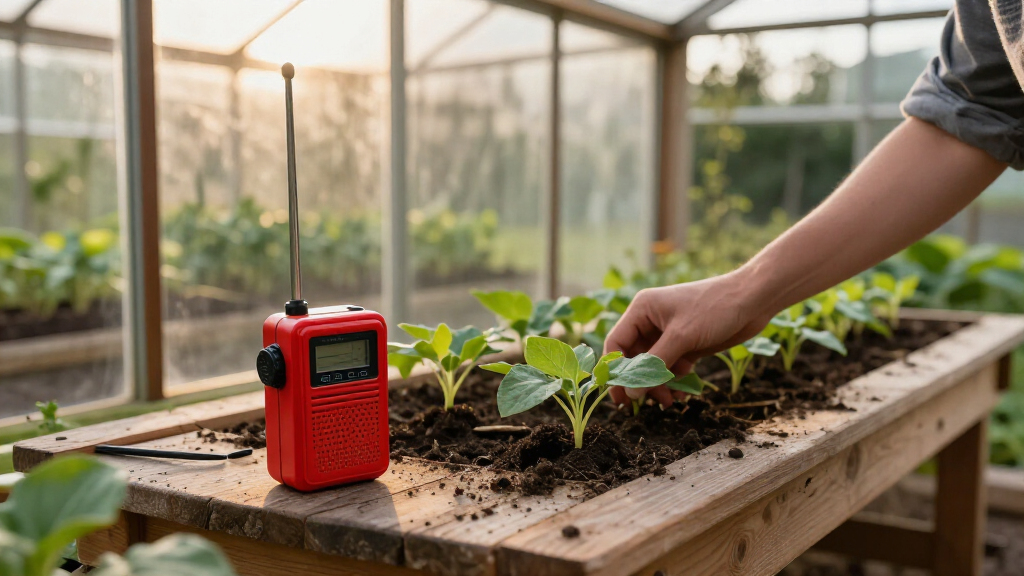
I compared these 13 products by how well each fits a prepper’s real communication needs: receiving local weather information, staying powered during an outage, and, where applicable, communicating with another person. I gave more weight to a clear emergency-radio purpose, practical power options, and useful reception features than to a long feature list alone. I also separated broadcast receivers from the Baofeng UV-5R, which transmits and receives on two-way radio frequencies and serves a different role.
The order reflects those differences. The Midland ER310 leads as a focused emergency choice, while the Kaito KA500IP earns a distinct place for shortwave reception and the Sangean ToughBox for rugged everyday listening. High-capacity power-bank models may be a better fit for shoppers who prioritize charging devices, but listed capacity alone does not establish radio runtime or real-world charging performance. For models with limited detail in their supplied product names, I avoid treating unlisted capabilities as verified and rank them by their stated features and intended use.
Factors to Consider When Choosing Radio For Preppers
Before choosing a radio, decide what information and communication you need when normal services are unavailable. A weather receiver, an all-band listening radio, a device-charging backup, and a two-way handheld solve different problems, even when product listings group them under emergency use. These broader checks can help you avoid buying overlapping features while missing the capability your plan actually depends on.
Choose Between Receiving and Transmitting
Most emergency weather radios in this roundup are designed to receive broadcasts; they do not let you call another person. A two-way handheld such as the Baofeng UV-5R can send and receive, but it requires compatible radios on the other end and some understanding of channels and operating rules. A common mistake is buying a handheld and assuming it will provide NOAA alerts like a dedicated weather receiver. If your household needs both updates and contact, plan for two complementary devices or verify that a specific model supports both jobs. Decide who you need to reach before paying for transmission features.
Plan Power Around Realistic Charging
Built-in batteries, replaceable batteries, solar panels, and cranks each behave differently during a long outage. A listed power-bank capacity can help with small-device charging, but it does not tell you how long the radio will run at a particular volume or how much usable energy reaches a phone. Solar charging depends on daylight and panel exposure; crank charging takes effort and is usually best treated as an emergency reserve. Keep the radio charged before severe weather and consider a separate power source rather than expecting a small panel to replenish everything. Check the manual for battery replacement, charging times, and whether the radio can operate while charging.
Match Reception Features to Your Area
NOAA weather access is useful only when the radio can receive a suitable signal where you live or travel. Terrain, buildings, distance from transmitters, and antenna position can affect reception, so extra bands do not automatically mean better local alerts. Shortwave, as found on the Kaito KA500IP, can broaden listening options for buyers who have a reason to monitor those broadcasts. For many households, reliable access to local weather information matters more than collecting every band. Check coverage maps and test reception from the locations where you expect to rely on the radio.
Evaluate Alerts Before You Need Them
A weather alert feature can help when you are asleep or occupied, but the label alone does not explain how alerts work. Look for details on alert standby, supported alert types, volume controls, and whether the radio can remain ready without draining its battery quickly. A radio that must be tuned and listened to continuously may not serve the same role as one that can monitor alerts while idle. Read the instructions and test settings during calm weather, rather than waiting for an emergency to learn the controls. Keep a second way to receive warnings if local conditions make radio reception uncertain.
Prioritize Controls You Can Use Under Stress
Preparedness equipment should be understandable to everyone who might use it, not only the person who bought it. Small labels, unfamiliar tuning steps, or a complicated alert setup can slow down access to information when visibility or concentration is poor. Compare the control layout, display readability, antenna handling, and how easy it is to switch bands. Rugged construction matters if a radio will travel in a vehicle or kit, while a simpler interface may matter more for a shared household device. Store a short instruction card with the radio and practice the key steps before an outage.
Build a Communication Plan, Not Just a Radio Kit
A radio is most useful when paired with a plan for where to listen, when to check updates, and how family members will reconnect. Two-way radios need compatible equipment, agreed channels, and realistic expectations about range; buildings and terrain can sharply limit handheld communication. Broadcast radios do not depend on another household member owning the same model, but they cannot send a message back. Avoid treating advertised range as a guarantee for your location. Write down local broadcast sources, meeting points, and backup contacts, then keep the plan with the equipment.
Frequently Asked Questions
Is a NOAA emergency radio enough for a prepper communication plan?
A NOAA radio can deliver weather information, but it is generally a receive-only device and cannot contact family or neighbors. It may also lack shortwave reception or the alert behavior you want, depending on the model. If you need two-way contact, add compatible handheld radios and agree on how and when to use them. Check local weather coverage rather than assuming every radio will receive alerts equally well. A layered plan can pair broadcast updates with a separate way to communicate.
Should I choose a large power-bank radio or one with more reception bands?
Choose based on the task you are trying to solve: a high-capacity battery listing points toward device-charging needs, while extra bands broaden listening options. Neither feature guarantees stronger NOAA reception or longer radio runtime. The Kaito KA500IP is the clearest choice here for shortwave access, while several listed models emphasize larger batteries. Check verified battery and charging details in the manufacturer’s documentation before comparing capacity figures. If local weather updates are your priority, put alert and reception performance ahead of unrelated extras.
Can I rely on a hand crank or solar panel as my only backup power?
I would treat both as reserve charging methods rather than the main power plan. Cranking takes time and effort, and solar input depends on usable daylight and panel placement. Neither method alone tells you how quickly a radio or connected phone will recharge. Start with a charged battery and keep another compatible power source available if extended outages are a concern. Confirm the model’s charging instructions and test its controls before storing it for emergencies.
Is the Baofeng UV-5R a substitute for an emergency weather radio?
No: it serves a different role from the broadcast receivers in this roundup. The UV-5R is a two-way handheld, which means communication depends on another compatible radio and the ability to use permitted frequencies. Do not assume it offers the same dedicated NOAA alert features as a weather radio; verify its functions and applicable rules before relying on it. For weather broadcasts, a dedicated receiver is the more direct choice. Buyers who need both updates and contact should plan for both capabilities.
What should I check before buying a radio for use away from home?
Start with the places you expect to use it: a vehicle, campsite, shelter, or remote property may each have different reception and charging conditions. Check whether the radio’s power options suit those settings and whether its size, controls, and antenna are practical to carry and operate. Research local broadcast coverage, then test the radio from your intended locations when possible. If you need to contact someone, verify that person has compatible equipment and agree on a communication plan in advance. A compact or rugged radio is only useful if it can perform the job you expect in that setting.
Conclusion
For most buyers seeking one dedicated emergency receiver, I recommend the Midland ER310 as best overall, with the Kaito KA500IP as best premium-style pick for shortwave and broader listening. The lineup does not provide enough verified comparative pricing or long-term performance data to name a dependable best-value model, so I would choose among the hand-crank options only after checking their charging and alert details. For beginners, the FosPower A1 is a straightforward candidate to compare with other basic NOAA, solar, and crank radios, with the final choice resting on control simplicity and documented alert behavior. Choose the Sangean ToughBox for rugged everyday listening, or the Baofeng UV-5R when your specific need is two-way communication and you are prepared to learn the operating requirements. Match the radio to its job, then test it before you depend on it.
Halloween Picks
halloween
As an affiliate, we earn on qualifying purchases.