This checklist is for gardeners setting up or improving climate control in a greenhouse, whether you’re protecting seedlings, extending the growing season, or managing heat and humidity. The product names provide starting points for reviewing several key parts of a setup, while the thermometer section offers advice without a specific pick. Check each item against your greenhouse before deciding it fits your needs.

Get garden gear delivered free with Prime
- Fast, free delivery on millions of items
- Prime Video, Amazon Music and more included
- Member-only deals all year
The sections follow the main climate-control jobs: adding heat, moving air, limiting sun, monitoring temperature, opening vents, and managing humidity. These pieces work together, but each serves a different purpose. Match the tool to the problem you’re trying to solve, such as temperature swings, stagnant air, or excess direct sun.
Use the look-for lists as a prompt to confirm dimensions, mounting requirements, controls, and compatibility in the product details. A product name alone does not establish that an item suits your structure or growing conditions. Verify fit before buying, especially for heaters, fans, vent hardware, and controllers that need a particular installation or connection.
Greenhouse Heaters
A heater can help maintain warmth when outside temperatures drop, but the right choice depends on the greenhouse’s size, insulation, and power setup. The listed pick is the lesotc 1500W Greenhouse Heater with Thermostat and WiFi App Control. Its name identifies a thermostat and app control, but confirm how those controls operate and whether they suit your routine. Start with the space and power requirements, then check the heater’s placement and operating instructions.
A common mistake is choosing a heater by its wattage alone or assuming a greenhouse heater can safely be used in any damp environment. Check the manufacturer’s guidance for indoor greenhouse use, clearance, moisture exposure, and electrical connection. Consider how air circulates around the unit and whether its controls can be accessed after installation. Keep clearance and electrical compatibility in view, and follow the product’s safety directions. A thermostat can support temperature management, but it does not remove the need to monitor conditions inside the greenhouse.
What to look for:
- Confirm the stated 1500W rating fits your electrical circuit and intended space.
- Check approved use, moisture guidance, and required clearance.
- Review thermostat settings and how temperature is sensed.
- Confirm WiFi app compatibility and connectivity requirements.
- Plan a stable placement that will not obstruct pathways or airflow.
lesotc 1500W Greenhouse Heater with Thermostat and WiFi App Control

This 1500W PTC ceramic heater provides forced-air heat for covered greenhouses up to 150 sq. ft., with thermostat settings from 41–113°F and 70° oscillation.
Pros:
- WiFi app enables remote temperature and timer control with alerts.
- Oscillation and fan mode support air distribution and circulation.
- Includes tip-over and overheat protection.
Cons:
- Coverage depends on greenhouse insulation, ceiling height, air leakage, and outdoor temperature.
- Designed for covered greenhouse use.
Best for: Growers who want thermostat and WiFi app controls
Not ideal for: Setups where power, connectivity, or safe clearance cannot be confirmed
Bottom line: Check the greenhouse’s power, placement, and safety requirements before choosing this heater.
Exhaust Fans
Air exchange helps manage heat and stagnant conditions, but the listed product name is Backyard Discovery Bellerose 9′ x 6′ Cedar Wood and Polycarbonate Walk. It describes a walk, not an exhaust fan, so it does not identify a fan pick for this section. Do not treat the listed structure as ventilation equipment; look for a fan specified for greenhouse air movement and confirm that it fits your building.
When comparing exhaust fans, begin with greenhouse dimensions and the intended airflow path. Check the fan’s stated capacity, opening size, mounting method, power needs, and compatibility with any shutters or controls. A common mistake is buying a fan based on a general “greenhouse” label without checking whether its airflow and installation match the actual structure. Also consider where replacement air will enter so the fan can move air through the space. Match the fan and opening to the greenhouse, and use manufacturer guidance to plan placement and wiring. If the structure’s specifications are unclear, measure before selecting hardware.
What to look for:
- Choose a product explicitly identified as an exhaust or greenhouse ventilation fan.
- Match stated airflow capacity to greenhouse dimensions and conditions.
- Measure the opening and confirm mounting compatibility.
- Check power requirements, controls, and any included shutter or guard.
- Plan a suitable path for replacement air to enter the greenhouse.
Backyard Discovery Bellerose 9′ x 6′ Cedar Wood and Polycarbonate Walk-in Greenh
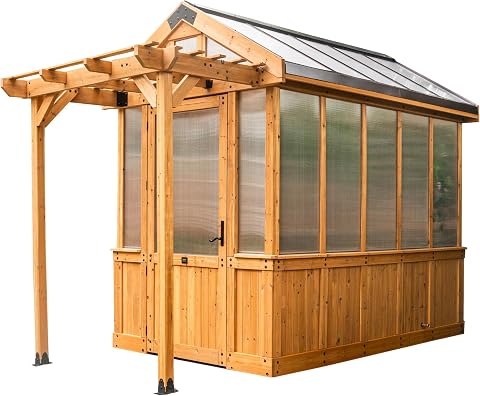
The Backyard Discovery Bellerose Greenhouse offers a spacious 54 square feet of interior space, constructed from cedar wood and commercial-grade polycarbonate panels for durability and insulation. It features integrated ventilation, electrical outlets, hose hook-ups, and a charming pergola, making it ideal for year-round gardening and outdoor enjoyment.
Pros:
- Durable cedar wood construction with excellent insulation
- Integrated ventilation and electrical outlets for optimal plant care
- Stylish pergola adds aesthetic appeal and outdoor ambiance
- Pro-Tect tested for snow and wind resistance
Cons:
- Assembly may require time and effort despite guided instructions
- PowerPort requires an external power source (not included)
- Stain saturation may vary, affecting appearance
Best for: Gardeners comparing ventilation options for their structure
Not ideal for: Anyone expecting the named walk to provide powered exhaust
Bottom line: The listed product is a walk, so select a separately specified greenhouse exhaust fan.
Shade Cloth
Shade cloth can reduce direct sun exposure, but the appropriate coverage depends on the plants, season, and greenhouse orientation. The listed pick is Coolaroo 50% UV Block Garden Shade Cloth for Plants – Tear-Resistant B. Its name states 50% UV block and tear-resistant construction; confirm the product details for dimensions and installation. Choose coverage for the plants and conditions, rather than relying on the product name alone.
A frequent mistake is covering every panel without considering changing light needs or how the cloth will attach to the structure. Measure the area you intend to shade and check whether the listed dimensions cover it with your chosen mounting approach. Confirm whether fasteners or other installation components are included, and whether the material can be secured without damaging the greenhouse. Think about access for adjusting or removing the cloth as conditions change. Plan the attachment and coverage first, and check product guidance for suitable use and care. The stated percentage is a useful comparison point, not a substitute for observing how your specific plants respond.
What to look for:
- Confirm the cloth’s dimensions cover the intended greenhouse area.
- Check what the stated 50% UV block means in the product details.
- Review included hardware and compatible attachment methods.
- Ensure the material can be secured to your greenhouse structure.
- Consider whether coverage can be adjusted or removed as conditions change.
Coolaroo 50% UV Block Garden Shade Cloth for Plants – Tear-Resistant Breathable
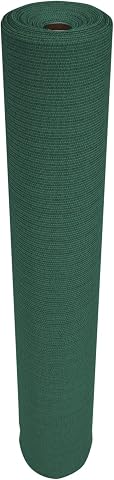
This durable, breathable shade cloth provides 50% UV protection, shielding seedlings and plants from harsh sunlight, pests, and weather. Made from tear-resistant HDPE, it promotes healthy plant growth while allowing airflow, making it ideal for greenhouses, garden beds, and hoop houses.
Pros:
- Provides effective 50% UV protection for plants
- Tear- and fray-resistant for long-term durability
- Breathable design reduces heat and humidity buildup
- Easy to cut, install, and reuse year after year
Cons:
- Not water resistant, may require additional coverage in rain
- Large size may be cumbersome to handle for some users
Best for: Gardeners seeking a shade cloth labeled for plants
Not ideal for: Setups needing dimensions or mounting details not confirmed
Bottom line: Verify coverage and attachment details before installing this shade cloth.
Greenhouse Thermometers
A thermometer helps you understand the conditions plants experience and whether heating or ventilation changes are having the intended effect. No product is specified for this section, so compare instruments based on the readings and placement information they provide. Prioritize readings you can use consistently: a clear display, a suitable measurement range, and instructions that explain how to position the sensor.
A common mistake is relying on a single reading from a spot that does not represent the growing area. Temperature can vary with sunlight, height, and distance from a heater or vent. Check whether the instrument measures only temperature or also offers other readings you need, and determine whether it requires batteries, a power source, or a separate sensor. For a larger greenhouse, consider whether multiple measuring points would help you notice uneven conditions. Place the sensor near the plants you monitor, away from direct contact with heating equipment or strong drafts, following the device instructions. Record readings at consistent times so you can compare changes and adjust your routine.
What to look for:
- Check the temperature range and units shown.
- Confirm whether a separate sensor or remote reading is available if needed.
- Review power requirements and display visibility in the greenhouse.
- Choose a sensor placement representative of the plants’ growing area.
- Consider multiple monitoring points for spaces with uneven conditions.
Automatic Vent Openers
An automatic vent opener can help operate a greenhouse vent as conditions change, reducing the need to adjust it manually. The listed pick is the Amylove 4-Piece Dual-Spring Automatic Greenhouse Vent Opener. The name indicates a four-piece set and dual-spring design, but confirm which components are included and how the opener mounts. Check compatibility with your actual vent before selecting hardware.
A common mistake is assuming that a vent opener fits every greenhouse window or can lift any vent. Measure the vent and review the manufacturer’s requirements for mounting, opening travel, and supported load. Confirm that the window moves freely and that the opener’s attachment points align with the frame. Consider whether the vent’s location allows it to open without hitting nearby structures or equipment. Match the opener to the vent’s dimensions and movement, and follow the installation directions. If the greenhouse has multiple vents, check whether one set covers your intended openings or whether additional hardware is needed.
What to look for:
- Confirm the package contents for the four-piece set.
- Check vent dimensions, mounting points, and opening travel.
- Review supported load and compatibility with the vent material.
- Ensure the vent moves freely and has room to open.
- Follow installation guidance and confirm how many vents the set can operate.
Amylove 4-Piece Dual-Spring Automatic Greenhouse Vent Opener
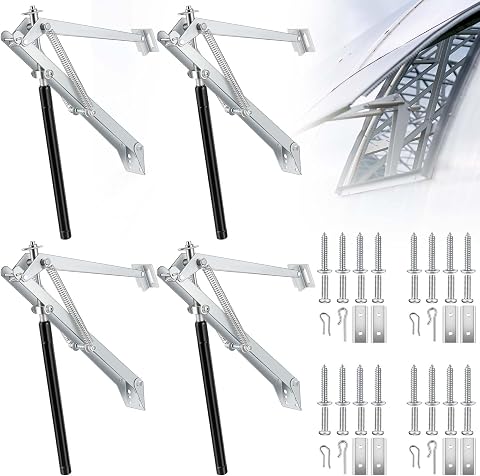
This set includes four aluminum alloy greenhouse vent openers with accessories for installation. Solar heat-sensitive operation opens vents above 25°C and closes them as temperatures fall to 15–18°C, without batteries or electrical power.
Pros:
- Operates without batteries or electrical power
- Dual springs provide stronger thrust
- Designed for windy areas
- Set includes four openers and installation accessories
Cons:
- The listed product dimensions of 1 x 1 x 1 inches may be incomplete or inaccurate
Best for: Greenhouse owners with a compatible manual vent
Not ideal for: Vents whose dimensions or supported load are unknown
Bottom line: Measure the vent and verify the opener’s mounting and load requirements first.
Humidity Controllers
Humidity management is part of keeping a greenhouse environment within the conditions your plants need. The listed pick is the AC Infinity Controller 69 PRO+ Environmental Controller for Grow Tents. Its name identifies it as an environmental controller for grow tents, so check carefully whether its supported equipment and installation suit a greenhouse. Confirm the intended environment and connections before relying on it for greenhouse control.
A common mistake is assuming a controller can operate any humidifier, fan, or sensor without checking its compatibility. Review the product details for supported devices, ports, sensors, control functions, and power requirements. Consider where the sensor would sit relative to plants, vents, and moisture sources, and whether its cable or connection method works in your layout. If you need humidity readings and automatic responses, verify that the exact functions are supported by the controller and any required accessories. Plan the sensor and device connections together, then follow the manufacturer’s installation and use guidance. A controller’s label alone does not establish greenhouse suitability.
What to look for:
- Confirm greenhouse suitability despite the product’s grow-tent designation.
- Check supported sensors, ports, and connected equipment.
- Verify which humidity readings and control actions are available.
- Review power, cable, and placement requirements for your setup.
- Confirm whether accessories are needed for the functions you want.
AC Infinity Controller 69 PRO+ Environmental Controller for Grow Tents

The AC Infinity Controller 69 PRO+ is a smart environmental controller designed for grow tents, allowing users to automate and monitor devices such as fans, grow lights, humidifiers, and heaters. It offers independent programming, Bluetooth and WiFi connectivity, and data insights to optimize climate conditions.
Pros:
- Allows control of multiple devices with independent programming
- Supports automation based on temperature, humidity, and VPD
- Wireless connectivity for remote monitoring and control
- Provides detailed climate data and alerts
Cons:
- Complex setup may be challenging for beginners
- Limited information on compatibility with non-AC Infinity devices
- Price may be high for casual users
Best for: Growers whose equipment matches the controller specifications
Not ideal for: Greenhouse setups needing unsupported sensors or devices
Bottom line: Verify greenhouse suitability and device compatibility before selecting this controller.
Build your setup in a practical order: first identify the climate issue and measure the space, then address essential heating or ventilation, add shade where the plants need it, and choose monitoring and automation that work with the installed equipment. Confirm fit and compatibility at each step so the pieces can function together safely.
Climate control is easier to manage when you observe conditions, make measured adjustments, and revisit your setup as plants and seasons change. Use the checklist to compare product details with your greenhouse’s dimensions and needs. A few well-matched tools can make routine care clearer; start with the conditions you need to manage and build from there.
Halloween Picks

ELAMAS 11ft Animatronic Flying Witch Halloween Decoration

Haunted Hill Farm 2-Ft. Zombie Raccoon Halloween Animatronic

DomKom 6-Foot Halloween Inflatable Ghosts Roasting Marshmallows
As an affiliate, we earn on qualifying purchases.