TL;DR

Get garden gear delivered free with Prime
- Fast, free delivery on millions of items
- Prime Video, Amazon Music and more included
- Member-only deals all year
Garden experts say wet leaves left on patios can create slippery surfaces and may stain porous paving or encourage moss and algae. They recommend clearing leaves regularly, particularly after heavy rain, and reusing collected leaves in compost or leaf mould.
A gardening report from Ideal Home, citing two outdoor and garden experts, warns that wet fallen leaves left on patios can create slip hazards and may contribute to staining, moss and algae on paving. The advice is to sweep leaves up regularly, especially after heavy rain, while the extent of any damage depends on the paving and conditions.
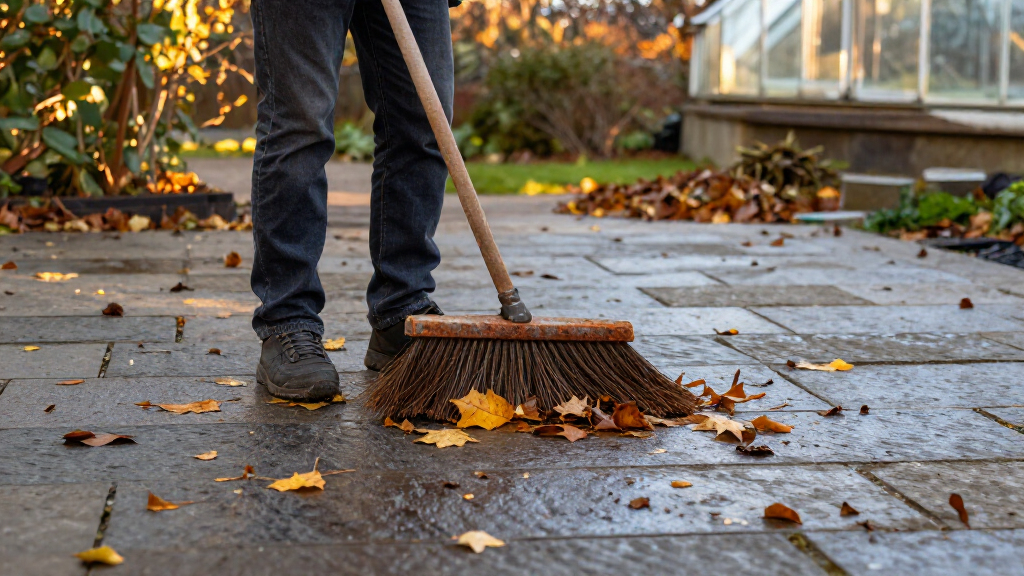
Amber Tunney, a plant buyer at Cherry Lane Garden Centres, told Ideal Home that wet leaves can make patios slippery. She recommended sweeping them up regularly, with particular attention after heavy rain. The report describes paths and pavers as areas to check after storms, when wind and rain may leave fallen leaves on walking surfaces.
Andrew White, an outdoor expert at Harbour Lifestyle, said leaves can trap moisture as they break down. According to White, that process can stain porous paving and encourage moss and algae to develop. The report does not say that every patio will be stained or develop growth; the potential depends on factors such as the paving and how long leaves remain there.
Removing wet leaves can be more difficult than clearing dry ones with a blower or vacuum, according to the report. It mentions a high-powered garden vacuum as one possible tool and suggests a leaf rake or long-handled collector for manual clearing. These are examples, not requirements: the central recommendation from the experts is to keep patio surfaces clear of wet leaves.
Keeping Patio Surfaces Safer
The immediate concern is traction underfoot. A layer of wet leaves can make a patio or path slippery, presenting a fall risk to people walking across it. Sweeping after rainfall reduces the amount of time leaves remain on frequently used surfaces, though the report gives no measurements of how much the risk changes.
There is also a maintenance concern. Moisture held against paving while leaves decompose may contribute to surface staining or biological growth, White said. Clearing leaves can help limit that exposure, but the source does not establish that leaf removal will prevent all moss, algae or staining, or that such growth always causes structural damage.
For readers, the advice is practical and seasonal: check patios and paths after wet or windy weather, clear leaves before they build up, and consider how the surface material may respond to prolonged dampness. The report frames this as a precaution for safety and appearance, rather than evidence of inevitable or permanent damage.
Popular right now

Roborock F25 BX Cordless Wet Dry Vacuum Mop

Roborock F25 GT Set Cordless Wet Dry Vacuum Cleaner and Mop with 2 Brushes

Dyson Car+Boat Cordless Handheld Vacuum
As an affiliate, we earn on qualifying purchases.
Autumn Leaves on Paving
The report focuses on the combination of fallen leaves, wind and rain during autumn. It distinguishes patio care from the broader question of whether every fallen leaf in a garden should be removed: leaves elsewhere can be useful, while leaves on a walking surface may become slippery or hold moisture against paving.
It also offers a way to reuse collected leaves. Tunney said they can be added to a compost heap or gathered to make leaf mould, which she described as useful for improving garden soil. That advice means clearing a patio does not necessarily require throwing the leaves away.
“Wet leaves can make patios very slippery, so it’s best to sweep them up regularly, especially after heavy rain.”
— Amber Tunney, plant buyer at Cherry Lane Garden Centres, as quoted by Ideal Home
How Much Damage Leaves Cause
The report provides expert guidance but no test results, measurements or estimate of risk. It does not quantify how quickly leaves can make a surface slippery, how long they need to remain before staining occurs, or how likely moss and algae are to develop.
The specific effects may vary with paving material, weather and the time leaves are left in place. The source warns about possible staining on porous paving but does not make the same claim about every patio surface. It also does not describe structural damage in detail or establish that leaves alone cause it. No publication date is provided, and the source does not report a new study or official safety guidance.
Clear Leaves After Wet Weather
The practical next step is to check patios and paths after rain or storms and sweep away leaves that have collected there. Gardeners can use a rake or leaf collector for manual removal, or a suitable blower-vacuum; the report notes that wet leaves may be harder to clear with powered tools than dry ones.
Collected leaves can be put into compost or used to make leaf mould, according to Tunney. The report sets out no formal follow-up, deadline or product evaluation, so readers should treat the recommendations as general garden advice and choose a clearing method suited to their paving and conditions.
Key Questions
Why should wet leaves be cleared from a patio?
Experts quoted by Ideal Home say wet leaves can make patio surfaces slippery. Leaves breaking down may also trap moisture and contribute to staining on porous paving or encourage moss and algae.
When should patio leaves be swept up?
Amber Tunney recommends sweeping regularly, especially after heavy rain. The report also advises checking paths and paving after storms.
Can fallen leaves be reused after clearing them?
Yes. Tunney suggests adding collected leaves to a compost heap or using them to make leaf mould for garden soil.
Will wet leaves damage every type of patio?
The report does not say that all patios will be damaged. White specifically notes possible staining on porous paving; the likelihood and extent of effects are not quantified and may depend on the surface and conditions.
Source: idealhome.co.uk