TL;DR

Get garden gear delivered free with Prime
- Fast, free delivery on millions of items
- Prime Video, Amazon Music and more included
- Member-only deals all year
Heavy rain does not automatically ruin newly sown grass seed: it may germinate if the soil stays moist but is not waterlogged. If seed has shifted or water is pooling, wait until the ground is workable, then redistribute seed, aerate affected areas lightly or add a thin protective covering. Germination commonly takes seven to 21 days, according to Johnson’s Lawn Seed consumer manager Guy Jenkins.
Heavy rain does not necessarily prevent grass seed from growing, but standing water can leave seed short of oxygen, cause it to rot or wash it into uneven patches, according to lawn-care specialists quoted by Ideal Home. Their advice is to check whether water has drained and, if the ground is workable, redistribute displaced seed, aerate waterlogged areas lightly or cover seed with a thin layer of topsoil or compost.
The outcome depends on what happens after the downpour. Moist, well-drained soil can support germination, while seed sitting in pooled water may fail. Jonathan Davis, a lawn-care expert at Lawnsmith, told Ideal Home that seed can also be washed away or pushed into clumps, leaving thick tufts in some places and bare soil in others.
For seed that has shifted, Guy Jenkins, consumer manager at Johnson’s Lawn Seed, advises waiting until the ground is workable before using a rake to spread seed back across bare areas. Jenkins says germination typically starts within seven to 21 days. If the lawn remains visibly patchy after that period, he recommends overseeding affected spots.
Where water is pooling, light aeration can create channels for drainage. Davis recommends focusing on waterlogged areas and avoiding aggressive work that could disturb the seed or stress existing grass. A thin layer of topsoil or compost can also help hold seed in place; a light natural covering may reduce the risk of seed washing away and being eaten by birds.
How Rain Affects New Lawns
For people who have recently sown a lawn, the distinction between damp soil and waterlogging determines whether immediate repair may be needed. Moisture supports germination, but water left standing over seed can impede growth, while runoff can move seed away from the intended area.
That can mean uneven results rather than a total loss: some parts may grow densely while other areas stay bare. Checking the lawn after rainfall and waiting for the surface to become workable before raking or aerating can help avoid disturbing seed that is still in place.
Popular right now

Dyson Car+Boat Cordless Handheld Vacuum

KitchenAid Classic Series 4.5 Quart Tilt-Head Stand Mixer K45SS, Onyx Black

Roborock F25 GT Set Cordless Wet Dry Vacuum Cleaner and Mop with 2 Brushes
As an affiliate, we earn on qualifying purchases.
What Seed Needs After Sowing
Autumn is a common time to sow grass seed, and the Ideal Home report notes that seed needs moisture to germinate. Heavy rainfall is not, by itself, proof that a newly seeded lawn has failed. The key condition described by Davis is whether the rain drains away or soaks into the soil without leaving it saturated.
The report draws on comments from Jenkins of Johnson’s Lawn Seed and Davis of Lawnsmith. Their recommendations concern lawns affected by heavy rain; they do not provide a guarantee that a particular patch will recover, since the result depends on drainage and how much seed has moved or remained submerged.
Whether Your Seed Will Recover
Recovery cannot be predicted from rainfall alone. The source does not give a rainfall threshold, soil-specific guidance or a way to estimate how much seed remains viable after flooding. Results depend on whether water pooled, how long it stayed, how well the soil drains and whether the seed was washed into clumps or away from the lawn.
The seven-to-21-day germination timeframe is a general estimate from Jenkins, not a guarantee for every lawn or seed type. The report does not quantify how much seed is typically lost to standing water, nor does it provide a confirmed outcome for any specific waterlogged lawn.
Check Growth Before Overseeding
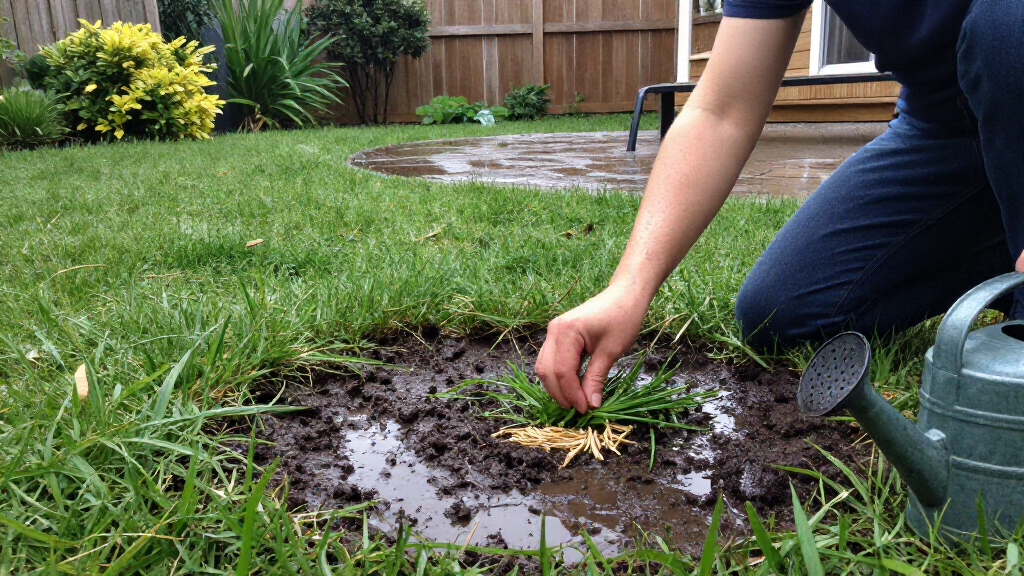
Once the ground is no longer saturated and can be worked without damaging it, inspect for bare areas and visible seed clumps. Rake displaced seed across bare patches, and use light aeration only where water has pooled. A thin topsoil or compost covering is another option to help keep seed in place.
Allow time for germination before judging the result. Jenkins says growth typically begins within seven to 21 days; if the lawn is still noticeably patchy after that period, overseed the affected areas. The source does not specify how long to wait after a particular storm, so the condition of the ground should guide when repair work begins.
Key Questions
Will grass seed grow after heavy rain?
It can. The Ideal Home report says seed may germinate if rain drains away and the soil remains moist rather than waterlogged. Seed left in standing water may rot or lack oxygen.
What should I do if rain washed seed into patches?
Wait until the ground is workable, then rake seed from clumped areas across bare spots, following advice from Johnson’s Lawn Seed consumer manager Guy Jenkins. If the lawn remains noticeably patchy after the expected germination period, overseed those areas.
Should I aerate a lawn after heavy rain?
Light aeration may help water drain through soil where it has pooled. Lawn-care expert Jonathan Davis advises concentrating on waterlogged areas and keeping the work light so seed and existing grass are not disturbed.
How long does grass seed take to germinate?
Jenkins says germination typically begins within seven to 21 days. This is a general timeframe, and the source does not guarantee the same result for every lawn.
Can I cover grass seed after rain?
A thin layer of topsoil or compost can help hold seed in place, Davis told Ideal Home. The report also describes using a light natural covering to reduce the chance that seed will wash away or be eaten by birds.
Source: idealhome.co.uk