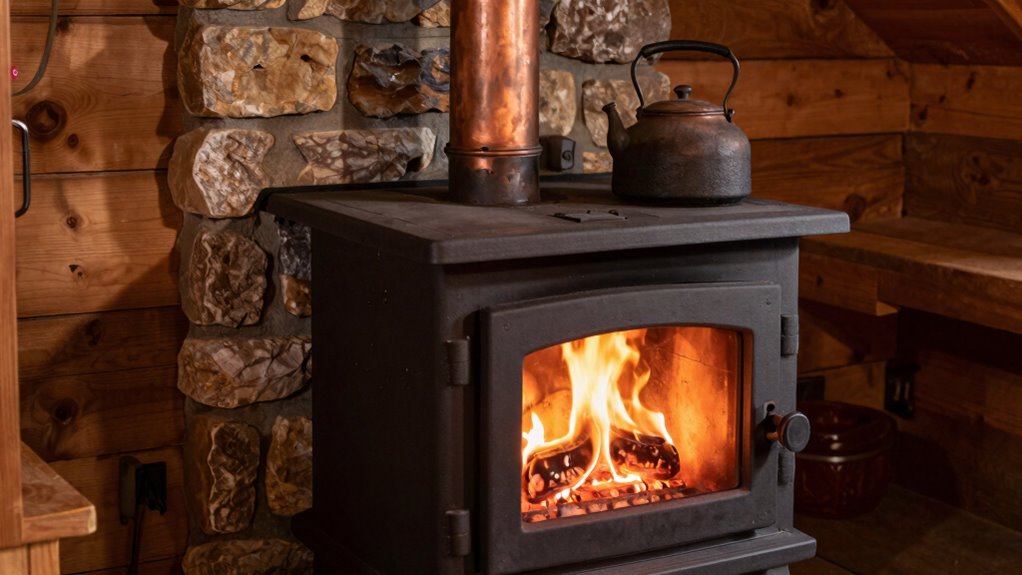

To operate your off-grid wood stove safely and efficiently, ensure it has the right heat output for your space, avoiding under- or overheating. Proper chimney setup is vital—extend it above the roofline, keep it free of obstructions, and inspect for creosote buildup regularly. Maintain safe clearances by keeping at least 36 inches in front and 18 inches on sides, using non-combustible materials around the stove. Learning more about these basics will help you stay warm and fire-safe.
Key Takeaways
- Ensure proper stove sizing and installation to match your space’s heat needs and follow manufacturer guidelines.
- Maintain at least 36 inches clearance in front and 18 inches on sides of the stove for safe operation.
- Extend the chimney above the roofline and keep it free of obstructions for optimal draft and safety.
- Regularly clean ashes, check door seals, and inspect the chimney for creosote buildup to prevent hazards.
- Use non-combustible materials around the stove and chimney to reduce fire risk in an off-grid setting.
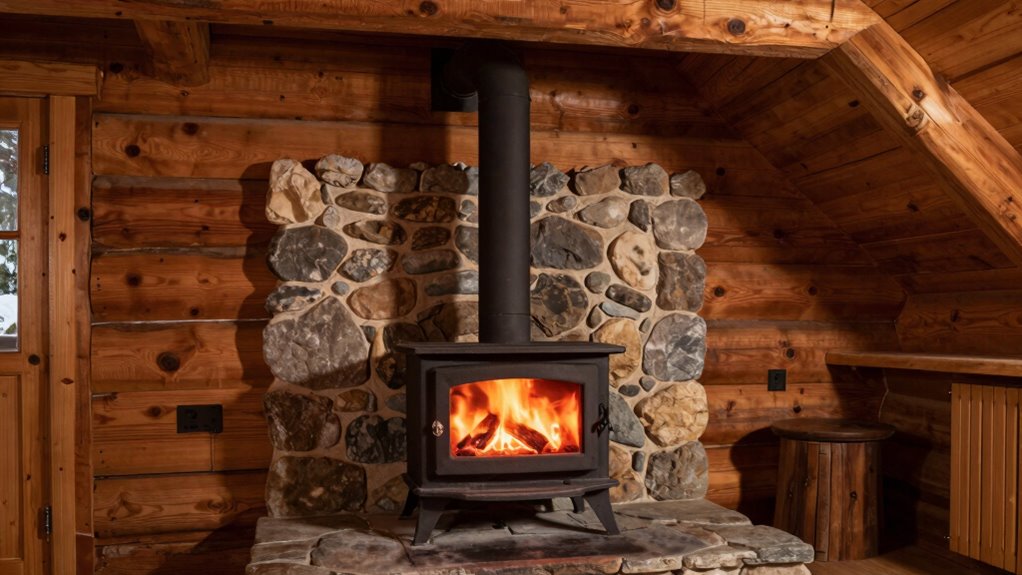
Living off-grid means relying on simple, sustainable solutions for your daily needs, and a wood stove is one of the most reliable choices for heating and cooking. To get the most out of your stove, you need to understand how to operate it safely and maintain it properly. Fire safety is essential when using a wood stove, as improper handling can lead to house fires or carbon monoxide buildup. Always ensure your stove is installed correctly, following manufacturer guidelines and local building codes. Keep combustible materials like paper, furniture, and curtains at a safe distance—generally at least three feet away from the stove. Regularly inspect the stove, chimney, and surrounding area for signs of wear or damage, and never leave a burning fire unattended. Installing smoke and carbon monoxide detectors nearby adds an extra layer of safety, alerting you to potential hazards early.
Stove maintenance is indispensable for safety and efficiency. Regularly cleaning out ashes prevents buildup, which can obstruct airflow and reduce heating effectiveness. When cleaning, be sure the ashes are completely cool before disposal—hot ashes can ignite nearby combustibles. Check the stove’s door seals and gaskets to ensure they’re intact; worn seals can cause smoke leaks and decrease heat efficiency. Additionally, inspect the chimney or flue for creosote buildup, which is highly flammable. A professional chimney sweep should do a thorough cleaning at least once a year, especially if you burn wood frequently. Proper ventilation is essential to prevent dangerous gases from accumulating inside your home, so ensure your chimney and stovepipe are properly connected and free of obstructions.
Understanding safe clearances is another key aspect. Your stove must be installed with adequate space around it to prevent heat transfer to nearby walls or furniture. The exact clearance distance varies depending on the stove model, but a general rule is at least 36 inches in front and 18 inches on the sides. Non-combustible materials such as brick, tile, or metal should surround the stove and chimney areas to minimize fire risk. When installing the chimney, ensure it extends above the roofline for proper draft and safety, and avoid sharp bends or leaks that can cause smoke or carbon monoxide to escape into your living space. Regularly reviewing your stove’s operation, maintaining all components, and adhering to clearances will keep your off-grid home safe, warm, and efficient.
As an affiliate, we earn on qualifying purchases.
Frequently Asked Questions
How Often Should I Inspect My Wood Stove for Safety?
You should inspect your wood stove for safety checks at least once a month during regular use. Look for signs of soot buildup, cracks, or corrosion, and make certain the door seals properly. Additionally, schedule a professional inspection annually to verify chimney integrity and overall safety. Regular inspections help prevent fire hazards and ensure your stove operates efficiently, keeping your off-grid setup safe and reliable.
Can I Burn Treated or Painted Wood in My Stove?
You shouldn’t burn treated or painted wood in your stove, as the chemical treatments can produce harmful fumes. These fumes aren’t just unpleasant—they compromise fire safety by increasing the risk of dangerous buildup and toxic smoke. Instead, opt for dry, seasoned hardwoods to guarantee efficient heat output and maintain a safe environment around your stove. Sticking to clean, natural wood helps keep your off-grid setup safe and effective.
What Is the Best Way to Store Firewood Safely?
You should store firewood safely by keeping it in a dry, well-ventilated area. Focus on reducing firewood moisture by stacking it properly—use techniques like cross-stacking or creating a crisscross pattern to promote airflow. Keep the wood off the ground on pallets or concrete to prevent moisture absorption. Cover the top with a tarp, but leave the sides open to make certain of proper ventilation and avoid mold or decay.
How Do I Troubleshoot Poor Heat Output?
Did you know poor drafting accounts for over 60% of heat loss in wood stoves? To troubleshoot, check for blockages or leaks in your chimney and make sure proper clearances are maintained. Improve heat efficiency by cleaning the stove and flue regularly, and verify that your stove’s air vents are unobstructed. Adjusting damper settings can also enhance drafting, helping your stove produce better heat output and keep your space cozy.
Are There Eco-Friendly Options for Wood Stove Fuels?
Yes, you can choose eco-friendly fuels like biomass fuels, which are made from organic materials like pellets, chips, or logs from sustainable sources. These options burn cleaner, produce less emissions, and are renewable, making them a greener choice for your wood stove. Opting for sustainably harvested wood or certified biomass fuels helps reduce your environmental impact while keeping your home warm efficiently.
chimney cleaning brush for wood stove
As an affiliate, we earn on qualifying purchases.
As an affiliate, we earn on qualifying purchases.
Conclusion
So, next time you’re marveling at how a simple wood stove keeps your off-grid life cozy, remember—it’s not just about the heat. It’s about respecting chimneys, clearances, and safety. Ironically, what keeps you warm can also be your biggest risk if overlooked. So, enjoy your off-grid haven, but don’t forget: a little caution now keeps the comfort rolling later. After all, staying safe is the hottest trend in off-grid living.
As an affiliate, we earn on qualifying purchases.
non-combustible stove surround materials
As an affiliate, we earn on qualifying purchases.
As an affiliate, we earn on qualifying purchases.