
To purify water, you can boil it, use a filter, or apply chemical treatments. Boiling kills germs quickly and reliably, while filters remove sediments and contaminants. Chemical methods like chlorine or chloramine disinfect water at a large scale or in emergencies. Combining these methods often provides the best results. If you’re interested in knowing more about each approach and how they work together, you’ll find useful details ahead.

Get garden gear delivered free with Prime
- Fast, free delivery on millions of items
- Prime Video, Amazon Music and more included
- Member-only deals all year
Key Takeaways
- Boiling kills pathogens by heating water to a rolling boil for at least one minute.
- Filtration removes sediments, debris, and some microorganisms through physical barriers like activated carbon or ceramic filters.
- Chemical treatment with disinfectants like chlorine or chloramine disinfects water by destroying bacteria and viruses.
- UV sterilization inactivates microorganisms by disrupting their DNA using ultraviolet light, offering a chemical-free option.
- Combining filtration, chemical disinfection, and UV treatment enhances overall water safety and quality.
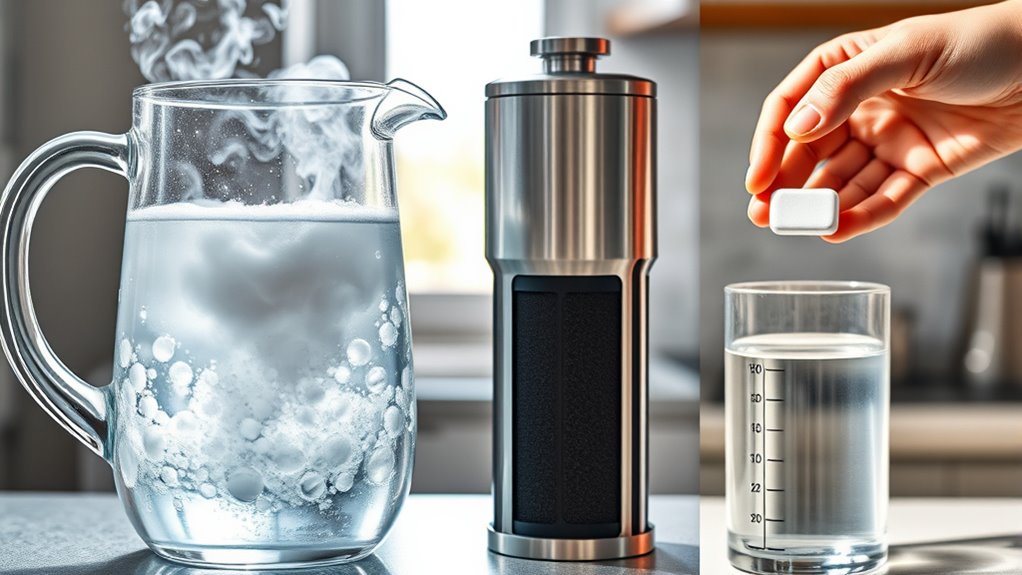
Ever wondered how we guarantee our water is safe to drink? It’s a process that involves multiple methods to eliminate harmful pathogens and impurities. Among these, chemical disinfection and UV sterilization stand out as effective ways to treat water without boiling or filtering. Chemical disinfection uses chemicals like chlorine or chloramine to kill bacteria, viruses, and other microorganisms. When you add these chemicals to water, they break down the cell walls of germs, rendering them inactive. This method is popular because it’s simple, inexpensive, and can treat large quantities of water quickly. However, it’s important to use the right amount, as too much can leave an unpleasant taste or pose health risks. UV sterilization, on the other hand, involves exposing water to ultraviolet light. You might find UV systems installed in homes or community treatment plants. The UV light penetrates the cells of microorganisms, disrupting their DNA and preventing reproduction. This method is chemical-free, leaves no residual taste or odor, and works rapidly—often within seconds. It’s especially useful in areas where chemical additives are undesirable or where waterborne pathogens are a concern. Both chemical disinfection and UV sterilization are effective at guaranteeing water safety when used properly and combined with other treatment methods. For instance, you might start with a physical filter to remove sediments and larger particles, then apply chemical disinfection to handle bacteria and viruses, and finally use UV sterilization for a chemical-free sterilization process. This layered approach offers thorough protection against contaminants. While boiling is a traditional and reliable method, these alternative treatments are gaining popularity because they’re faster and more convenient, especially in emergency or outdoor situations. Chemical disinfection requires careful handling and adherence to guidelines to avoid overuse, but it’s excellent for large-scale or long-term water treatment. UV sterilization is highly effective and environmentally friendly since it doesn’t introduce chemicals into the water. It’s essential to keep UV systems well-maintained to ensure the light bulbs are functioning properly and delivering the necessary dose of UV energy. Combining these methods with proper filtration can greatly improve water quality, making it safe for drinking and cooking. Additionally, understanding water treatment methods helps you make informed decisions about water safety. Regardless of which method you choose, understanding how each works helps you make informed decisions about water safety. So, whether you’re treating water at home, in a community setting, or in an emergency, knowing about chemical disinfection and UV sterilization can help you ensure your water is clean, safe, and ready for consumption.
Frequently Asked Questions
How Long Should I Boil Water to Ensure Safety?
You should boil water for at least one minute to guarantee safety assurance, especially at altitudes below 6,500 feet. If you’re above this elevation, boil for three minutes to effectively kill harmful pathogens. The boiling duration ensures that bacteria, viruses, and parasites are destroyed. Make sure the water reaches a rolling boil, and maintain that temperature for the recommended time to keep your water safe for drinking.
What Types of Filters Are Most Effective for Bacteria Removal?
You should use filters with activated carbon or reverse osmosis systems for effective bacteria removal. Activated carbon filters excel at removing chemicals and improving taste, while reverse osmosis systems are highly effective at eliminating bacteria, viruses, and other contaminants. Combining these filters offers thorough purification, ensuring your water is safe to drink. Make sure your filter system is certified and maintained regularly for optimal performance and safety.
Can Boiling Water Remove Chemical Contaminants?
Boiling water isn’t effective at removing chemical contaminants, as it mainly kills bacteria and viruses. Boiling effectiveness is limited to biological impurities, so chemicals like pesticides or heavy metals stay in the water. If you’re concerned about chemical contamination, consider using activated carbon filters or specialized treatment options. Boiling alone won’t guarantee safe drinking water when chemical pollutants are present, so combine methods for better purification.
How Often Should Water Filters Be Replaced?
You should replace your water filter based on its filter lifespan and recommended replacement frequency, typically every 2 to 6 months. Regularly check the manufacturer’s guidelines, as filter lifespan varies by model and usage. If you notice a reduced flow rate, bad taste, or odor, it’s time to replace the filter sooner. Staying consistent with replacement guarantees peak filtration and safe, clean water.
Are There Natural Water Purification Methods I Can Use?
Sure, you can try natural purification and DIY methods, but don’t expect miracles. Sunlight, for instance, can help clear some bacteria, and charcoal can absorb impurities—if you’re willing to get creative. Boiling water remains king for safety, but natural methods can supplement your efforts. Just remember, these DIY tricks might not save you from all pathogens, so use them wisely and with caution.
Conclusion
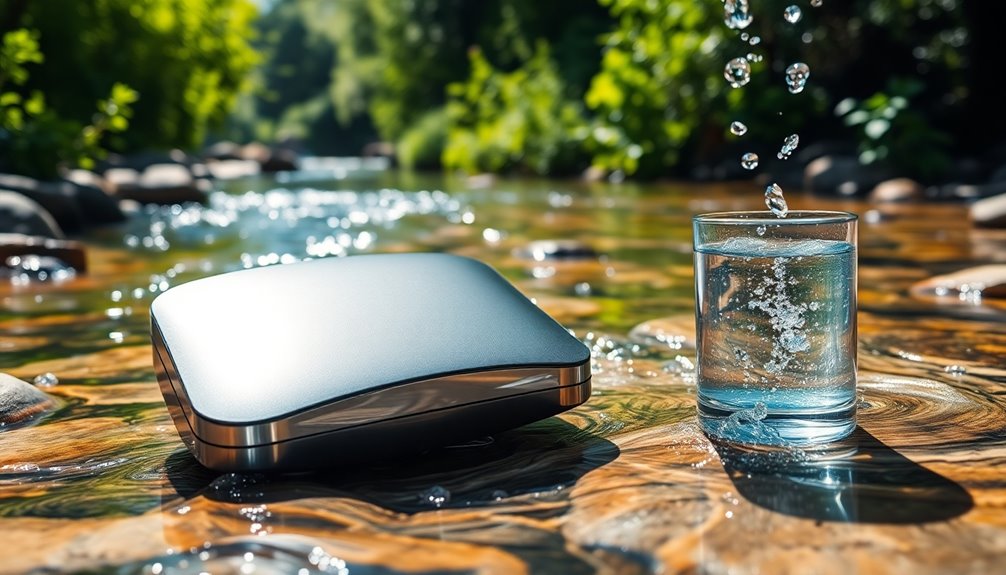
Imagine standing beside a clear stream, knowing that boiling, filtering, or treating can transform murky water into safe, drinkable liquid. These methods act like invisible guardians, battling unseen contaminants and ensuring your health. When you choose to purify water, you’re not just making it safe—you’re creating a barrier against invisible threats. Trust these simple techniques to turn uncertain water into a life-sustaining source, like turning a cloudy river into pure, revitalizing life.
Fall yard work Picks
leaf blowers
As an affiliate, we earn on qualifying purchases.