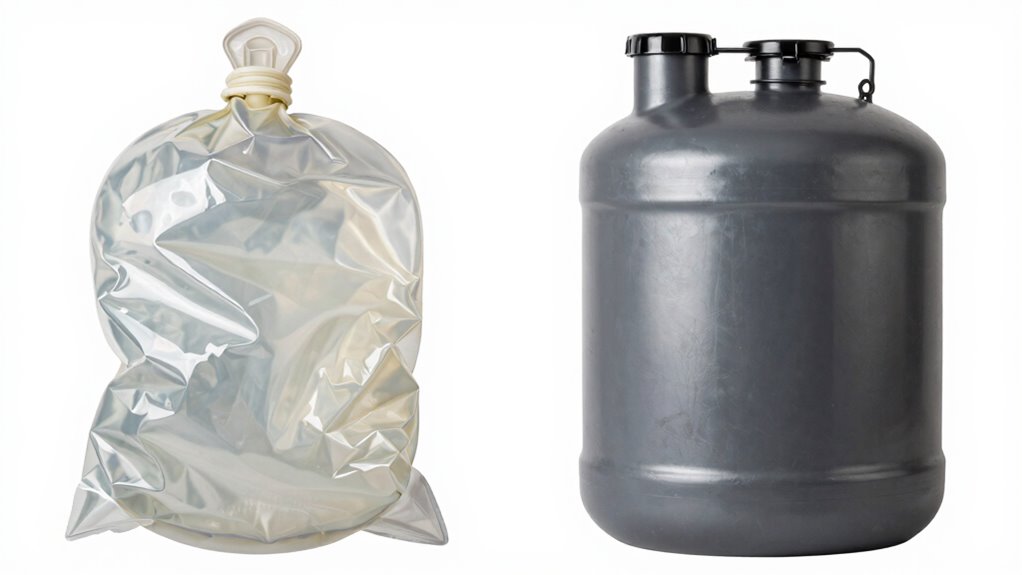

If you need flexible, lightweight storage in remote or sensitive areas, water bladders are ideal because they’re easy to transport and install. However, if durability and long-term stability matter most, rigid tanks are better despite higher initial costs—they last longer and require less maintenance. Flexibility helps when space is limited or quick setup is needed, but can hurt if you require a robust, permanent solution. Keep exploring to discover which option truly fits your needs.

Get garden gear delivered free with Prime
- Fast, free delivery on millions of items
- Prime Video, Amazon Music and more included
- Member-only deals all year
Key Takeaways
- Flexibility of water bladders excels in remote or temporary setups, enabling easy transport and quick installation.
- Rigid tanks provide stability and long-term durability, making them suitable for permanent, stable water storage needs.
- Water bladders’ lightweight design reduces transportation costs and environmental impact in sensitive or hard-to-access areas.
- Rigid tanks’ robustness and longevity justify their higher initial environmental and financial costs in long-term applications.
- Flexibility benefits diminish in environments requiring high stability, where rigid tanks ensure secure, reliable water storage.
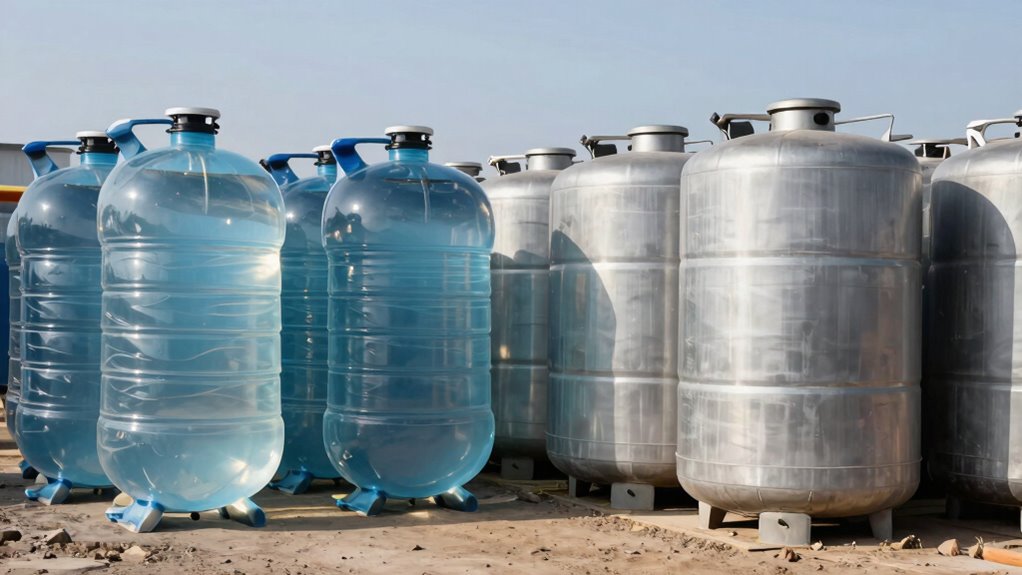
Have you ever wondered which water storage option is best for your needs—water bladders or rigid tanks? When weighing these options, it’s essential to contemplate their environmental impact and cost efficiency. Water bladders, with their flexible design, often have a smaller environmental footprint during manufacturing because they use fewer materials. They’re lightweight and easier to transport, which means less fuel consumption and reduced carbon emissions during installation. If minimizing your environmental impact is a priority, especially in remote or sensitive areas, water bladders might be the better choice. They can be compactly stored when empty, reducing transportation and storage space, which further cuts down on resource use. On the other hand, rigid tanks, typically made of durable plastics or metals, tend to have a higher initial environmental cost because of their manufacturing process. However, their longevity can offset this over time, especially if you need a long-term, stable solution. Additionally, the durability of rigid tanks can contribute to sustainable infrastructure, making them a reliable option for long-term water storage. Considering the environmental impact of each option can help you make a more informed decision aligned with your sustainability goals. When evaluating these options, it’s also important to consider material sustainability, which impacts the overall eco-friendliness of your choice. Moreover, understanding the manufacturing footprint of each type can further guide eco-conscious decisions. Choosing between water bladders and rigid tanks also involves assessing their adaptability to different environments, which can influence ease of installation and use in various settings.
water bladder water storage tank
As an affiliate, we earn on qualifying purchases.
As an affiliate, we earn on qualifying purchases.
Frequently Asked Questions
How Long Do Water Bladders Typically Last Before Replacement?
Water bladders typically last 5 to 10 years before needing replacement, depending on material durability and usage conditions. You might face installation challenges that can affect their lifespan, such as exposure to extreme temperatures or UV rays. Proper maintenance, avoiding sharp objects, and selecting high-quality materials can extend their life. Regular inspections help identify wear early, ensuring you get the most out of your water bladder investment.
Are Water Bladders More Resistant to Punctures Than Rigid Tanks?
Water bladders are generally less resistant to punctures than rigid tanks due to their flexible material. However, their flexibility provides advantages in adapting to tight or irregular spaces, making them ideal in certain situations. The durability comparison shows rigid tanks withstand impacts better, but water bladders offer easier handling and installation. Your choice depends on your needs for durability versus flexibility benefits.
What Is the Maintenance Process for Water Bladders?
Your water bladder maintenance is straightforward but essential. Start by inspecting for punctures or leaks regularly—think of it as guarding against an impending disaster! Clean the interior with mild solutions to prevent mold, and guarantee proper drying to avoid bacteria buildup. Durability concerns hinge on material selection; choose high-quality, flexible fabrics for longevity. Proper care keeps your bladder resilient, making sure it performs flawlessly through countless adventures.
Can Water Bladders Be Used for Hot Water Storage?
Yes, water bladders can be used for hot water storage, but you need to take into account hot water compatibility and insulation requirements. Make sure the bladder material withstands high temperatures, and insulate it properly to prevent heat loss. Using a bladder designed specifically for hot water helps ensure safety and durability. Proper insulation and material selection are key to maintaining hot water temperature efficiently and avoiding damage.
How Do Transportation Costs Compare Between the Two Options?
You’ll find water bladders usually cut transportation costs by up to 40% compared to rigid tanks. Their lightweight, flexible design means easier, cheaper shipping logistics, especially over long distances or rough terrains. Imagine a single truck carrying twice the volume of water with less space needed. This cost efficiency makes water bladders ideal for quick, flexible deployments, whereas rigid tanks often incur higher freight expenses due to their weight and bulk.
As an affiliate, we earn on qualifying purchases.
Conclusion
Imagine you’re packing for a camping trip; a water bladder molds easily to your backpack, saving space, much like a flexible tank adapts to tight spots. But when you need durability, a rigid tank stands firm, like a sturdy trunk protecting valuables. Choosing between them depends on your needs—flexibility for convenience or rigidity for strength. Remember, just like packing, selecting the right tank type makes your water storage smarter and more suited to your journey.
As an affiliate, we earn on qualifying purchases.
As an affiliate, we earn on qualifying purchases.
Halloween Picks
halloween
As an affiliate, we earn on qualifying purchases.