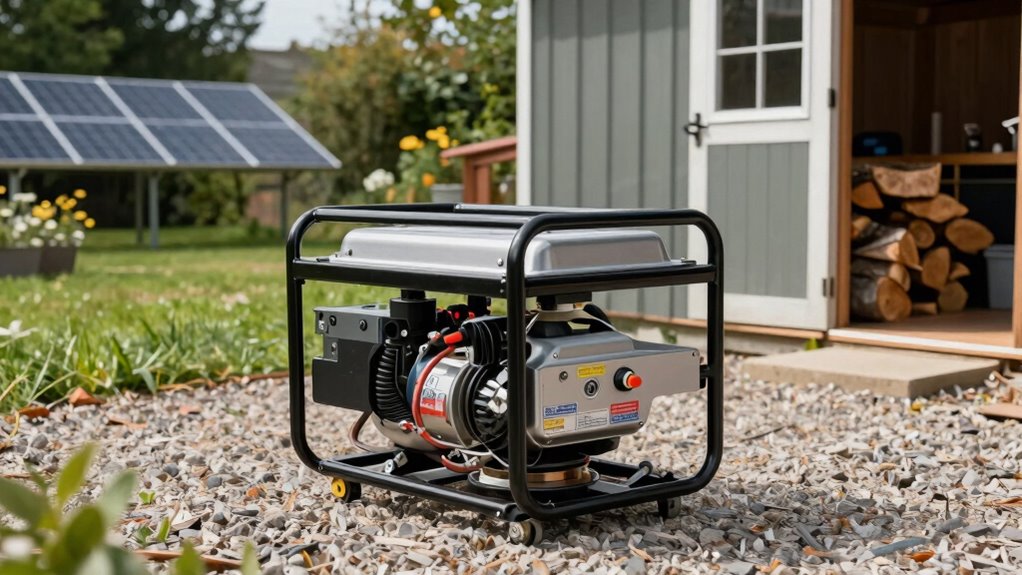

Tri-fuel generators appeal to preparedness-minded homes because they offer unmatched fuel flexibility, allowing you to run on gasoline, propane, or natural gas. This guarantees you stay powered during fuel shortages or emergencies. They are designed for safety, durability, and dependability, reducing risks and providing peace of mind during storms or outages. If you want to discover how these features can boost your emergency plan, there’s more to explore.

Get garden gear delivered free — and shop member deals
- Fast, free delivery on millions of items
- Access to Prime Big Deal Days deals on October 6–7
- Prime Video, Amazon Music and more included
Key Takeaways
- Offers fuel flexibility, enabling seamless switching during shortages or emergencies for continuous power.
- Enhances reliability and dependability, reducing the risk of power loss in unpredictable situations.
- Supports emergency preparedness by providing versatile fuel options suitable for various disaster scenarios.
- Improves safety with less volatile fuels like propane and natural gas, minimizing fire and spill risks.
- Represents a practical, long-term investment for resilient, self-sufficient home power solutions.

When it comes to emergency preparedness, having a reliable power source is essential, especially if you want to stay comfortable and safe during outages. Tri-fuel generators are gaining popularity among preparedness-minded homes because they offer flexible and dependable emergency power solutions. Unlike traditional gasoline-powered generators, tri-fuel units can run on three different fuel sources—gasoline, propane, and natural gas—giving you more options when every minute counts. This versatility is especially valuable during emergencies when fuel availability can be unpredictable. Being able to switch between fuels means you’re less likely to be left without power, even if one fuel type becomes scarce or unavailable.
Tri-fuel generators provide versatile, reliable power options during emergencies, ensuring you stay safe and prepared when it matters most.
One of the main reasons tri-fuel generators appeal to preparedness-focused households is their ability to utilize alternative fuel sources. Propane and natural gas are often more accessible during a crisis, as they are stored in tanks or supplied through pipelines. These fuels tend to have longer shelf lives and are less prone to contamination, making them reliable choices in emergency situations. Gasoline, on the other hand, remains a quick and easy fuel option for short-term needs. Having multiple fuel options means you can adapt to changing circumstances, ensuring your home stays powered when traditional power grids go down.
Emergency power solutions like tri-fuel generators also provide peace of mind. You don’t have to worry about running out of fuel or being stranded without power. Instead, you can switch fuels seamlessly, prioritizing the most readily available or cost-effective option at the moment. This flexibility saves you time and stress, allowing you to focus on other aspects of your preparedness plan. Plus, tri-fuel generators are typically designed for efficiency and durability, making them a practical investment for long-term use. Additionally, understanding the fuel versatility of these generators can help you better plan for different types of emergencies and ensure a reliable power backup.
Another advantage of these generators is their ability to operate in diverse environments and fuel supply scenarios. Whether you’re in an area prone to hurricanes, winter storms, or other natural disasters, having a generator that can use multiple fuels ensures you’re prepared for various situations. From a safety perspective, using fuels like propane and natural gas reduces the risk of fuel spills and fires compared to gasoline, which can be volatile. This safety factor, combined with fuel flexibility, makes tri-fuel generators a smart choice for homes committed to resilience and self-sufficiency.
In essence, if you’re serious about preparedness, investing in a tri-fuel generator provides the peace of mind, flexibility, and reliability you need. It ensures you have multiple avenues for powering your home during emergencies, making it an invaluable addition to your emergency plan.
tri-fuel generator for home backup
As an affiliate, we earn on qualifying purchases.
As an affiliate, we earn on qualifying purchases.
Frequently Asked Questions
How Long Can Tri-Fuel Generators Run Continuously?
Tri-fuel generators can run continuously for about 8 to 12 hours, depending on fuel efficiency and load. Your ability to maintain operation relies on proper fuel storage and management. If you have ample fuel stored, you can extend runtime, making them ideal for preparedness. Always monitor fuel levels and confirm your storage is safe and sufficient, so your generator can provide reliable power during emergencies without interruption.
Are Tri-Fuel Generators Safe for Indoor Use?
Using a tri-fuel generator indoors is like walking a tightrope—you need to prioritize safety. They aren’t designed for indoor use because of potential carbon monoxide risks and the need for proper ventilation. To guarantee indoor safety, always operate them outside in well-ventilated areas, and never run them inside enclosed spaces. Ventilation requirements are strict, and following them helps prevent dangerous buildup of fumes.
What Is the Average Lifespan of a Tri-Fuel Generator?
A tri-fuel generator typically lasts around 10 to 20 years, depending on usage and maintenance. You’ll benefit from its fuel efficiency and power versatility, which extend its lifespan when properly cared for. Regular oil changes, clean filters, and correct fuel storage keep it running smoothly. Proper maintenance guarantees you get the most out of your investment, making it a reliable backup during emergencies or power outages.
How Noisy Are Tri-Fuel Generators During Operation?
Tri-fuel generators produce noise levels around 65-75 decibels, comparable to a vacuum or busy street. During operation, you might find the noise somewhat noticeable, but good sound insulation can considerably reduce the impact. Many models feature mufflers and soundproof enclosures to keep noise levels manageable, making them suitable for home use. You’ll appreciate the balance of power and quieter operation, especially during long periods of use.
Do Tri-Fuel Generators Require Regular Maintenance?
Yes, tri-fuel generators require regular maintenance to guarantee peak fuel efficiency and reliable operation. You should follow a consistent maintenance schedule, including oil changes, filter replacements, and inspecting fuel lines. Proper upkeep prevents issues and prolongs your generator’s lifespan. Staying on top of maintenance helps you avoid unexpected breakdowns, especially during emergencies when you rely on your generator most. Regular care keeps it ready whenever you need it.
best portable tri-fuel generator
As an affiliate, we earn on qualifying purchases.
As an affiliate, we earn on qualifying purchases.
Conclusion
You never know when a power outage might strike, but having a tri-fuel generator means you’re already prepared—just like how that unexpected storm knocked out power last winter. It’s a coincidence that your backup plan is ready when you need it most, ensuring your home stays powered no matter what. Investing in a tri-fuel generator isn’t just smart; it’s the kind of foresight that pays off when moments matter most.
emergency power generator natural gas propane gasoline
As an affiliate, we earn on qualifying purchases.
As an affiliate, we earn on qualifying purchases.
As an affiliate, we earn on qualifying purchases.
Halloween Picks
halloween
As an affiliate, we earn on qualifying purchases.