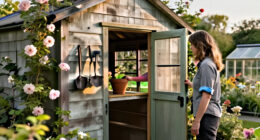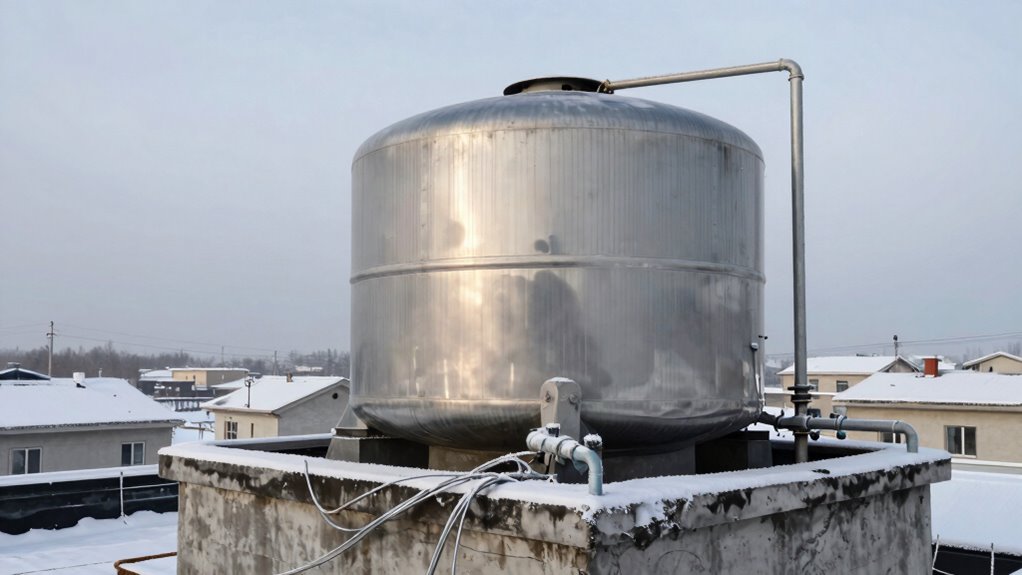
The most costly mistake you can make is placing your water tank in an open, exposed area away from shelter or heat sources. Unprotected locations like the middle of your yard or unheated ground risk your tank freezing, leading to expensive repairs. Instead, position it against building walls, inside garages, or sheds, where it’s shielded from cold drafts. Proper placement combined with insulation can save you money and prevent damage—discover more ways to protect your tank effectively.

Get garden gear delivered free with Prime
- Fast, free delivery on millions of items
- Prime Video, Amazon Music and more included
- Member-only deals all year
Key Takeaways
- Placing tanks in exposed, open areas increases freeze risk due to cold winds and lack of shelter.
- Positioning tanks away from natural heat sources like building walls or sheltered spots heightens freeze potential.
- Neglecting insulation in poorly chosen locations accelerates freezing and damages the tank.
- Installing tanks in unheated, unprotected ground without insulation or drainage elevates freeze failure risk.
- Failing to consider site warmth and shelter leads to costly repairs and tank failure during winter.
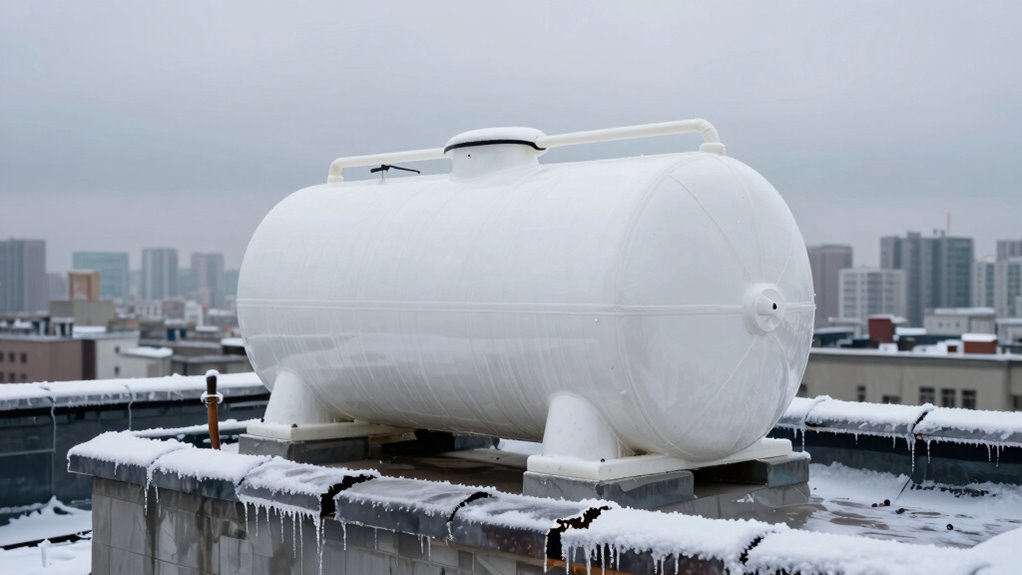
Placing your water tank in the right location is essential to prevent freezing during cold weather. If you ignore this, you’ll risk costly repairs and the inconvenience of a burst pipe or tank failure. The best spots are typically sheltered areas that stay warmer, such as against a building wall, inside a garage, or in a shed. Avoid placing the tank in open, exposed locations like the middle of your yard or on unprotected ground, where cold winds can cause rapid freezing. When choosing a site, consider natural heat sources like the sun or proximity to the building’s interior to help maintain a higher temperature around the tank.
Choose sheltered, heated locations like walls, garages, or sheds to prevent water tank freezing in winter.
Tank insulation plays a crucial role in preventing freezing. Proper insulation keeps the water temperature stable, especially during the coldest months. Wrap the tank with insulated blankets or foam insulation sleeves designed for water tanks. Adding insulation also helps reduce heat loss, which is vital if you can’t place the tank inside a heated space. Remember, insulation isn’t just about wrapping the tank; it also involves insulating pipes connected to it, especially those running through unheated areas. Proper tank insulation can buy you precious hours before freezing sets in. Additionally, selecting an appropriate tank placement is critical for ensuring consistent protection against cold weather. Using insulation techniques effectively can significantly extend the time before freezing occurs. Proper drain valve placement and maintenance are equally important to facilitate quick drainage during freezing conditions, helping to prevent internal damage. Ensuring proper drainage is also essential, as standing water can freeze and cause additional damage if not properly drained.
As an affiliate, we earn on qualifying purchases.
Frequently Asked Questions
How Can I Identify the Most Vulnerable Water Tank Locations?
You can identify vulnerable water tank locations by conducting a thorough location assessment, focusing on areas prone to cold. Look for tanks situated in uninsulated or poorly insulated spots, like unheated garages or exposed rooftops. Check for inadequate tank insulation, especially in colder months. Prioritize tanks in these spots for additional insulation or relocation to safer, warmer areas to prevent freezing and costly damage.
What Materials Best Prevent Freeze Damage in Water Tanks?
Did you know that using proper insulation can reduce freeze risk by up to 90%? You should choose insulation materials like foam, fiberglass, or spray foam to wrap your water tank, creating a vital barrier against the cold. Additionally, heating solutions such as tank wraps with heat tape or thermostatically controlled heaters can provide extra protection, ensuring your water stays unfrozen even during the harshest winter nights.
Are There Specific Signs Indicating a Water Tank Is at Risk?
Yes, you can spot signs that your water tank is at risk of freezing. Look for insulation issues, like exposed or damaged tank insulation, which indicates vulnerability. Install a freeze alarm to alert you early if temperatures drop dangerously low. Regularly check insulation integrity and guarantee your freeze alarm is functioning properly, so you can take immediate action before any damage occurs.
How Often Should I Inspect My Water Tank for Freeze Damage?
Think of your water tank as a fortress guarding your supply. You should inspect it regularly, especially during cold snaps—at least once a month. Check the tank insulation for gaps and verify freeze alarms are functioning properly. If temperatures drop unexpectedly, these alarms will alert you early, preventing costly freeze damage. Routine inspections help catch issues before they become costly problems, keeping your water supply safe and secure year-round.
What Are Quick Fixes if My Tank Freezes Unexpectedly?
If your water tank freezes unexpectedly, act quickly by applying insulation techniques like foam wraps or heated blankets to prevent further damage. You can also use portable heating solutions such as space heaters or heat lamps, but make certain safety precautions are in place. Keep a gentle flow of water running if possible, as moving water reduces the chance of freezing. Prompt action minimizes damage and keeps your tank functioning smoothly.
As an affiliate, we earn on qualifying purchases.
Conclusion
Choosing the right location for your water tank is essential to avoid costly freeze damage. Did you know that tanks placed in uninsulated areas have a 70% higher chance of freezing during winter? By placing your tank in a sheltered, heated spot, you greatly reduce this risk. Don’t overlook this simple step—your wallet will thank you. Proper placement isn’t just about convenience, it’s about protecting your investment from preventable damage.
As an affiliate, we earn on qualifying purchases.
As an affiliate, we earn on qualifying purchases.
Fall yard work Picks
leaf blowers
As an affiliate, we earn on qualifying purchases.