To signal for rescue, use a mirror to create bright flashes during daylight, aiming carefully towards rescuers in open areas. Build thick smoke with damp leaves or grass during the day, and guarantee fires are controlled to avoid forest fires. Blowing a whistle or shouting in repetitive patterns can attract attention over long distances, especially at night. Combining visual and sound signals boosts your chances, and mastering these methods can notably improve your safety—keep going to learn more effective techniques.
Key Takeaways
- Use sunlight reflection with mirrors during daylight to produce bright, visible flashes aimed at rescuers.
- Create dense, thick smoke from green leaves or damp materials for daytime visibility.
- Employ sound signals like whistles or horns in repetitive patterns to attract attention over distances.
- Combine visual (mirrors, smoke) and auditory (shouts, horns) signals for increased rescue chances.
- Ensure signals are clear, consistent, and adapted to environmental conditions for maximum effectiveness.
When you’re stranded or in danger, effective signaling can mean the difference between rescue and prolonged distress. Knowing how to send clear distress signals is a critical survival technique that could save your life. The key is to use simple, recognizable methods to attract attention and communicate your need for help. Mirrors, smoke, and sound devices are some of the most effective tools at your disposal, especially when other options are limited. Each method has its advantages and best-use scenarios, so understanding how and when to use them increases your chances of being rescued quickly.
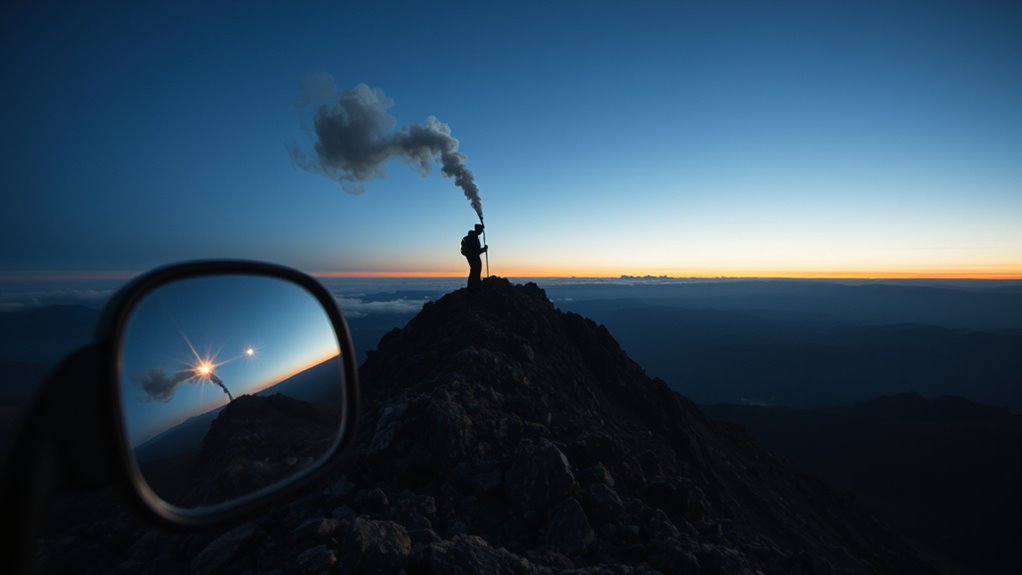
Using a mirror for signaling is one of the most dependable survival techniques. Its advantage lies in its ability to produce a bright, reflective flash that can be seen from a great distance, even in poor weather conditions. When you spot an aircraft or distant search party, position yourself in an open area with a clear line of sight. Aim the mirror toward the source of the potential rescuer and use quick, deliberate flashes to catch their attention. The key is to keep your signals brief but frequent, creating a pattern that stands out. Remember, the sun’s reflection is your best source for a bright, noticeable signal, so work during daylight hours when sunlight is strongest. Additionally, knowing how to properly clean and maintain your mirror ensures optimal performance when signaling.
Using a mirror to produce quick flashes can attract rescuers from great distances.
Smoke signals are another effective way to communicate your distress, especially in forested or open areas. Creating smoke involves gathering dry leaves, grass, or wood and lighting them carefully. As the smoke rises, it can be seen from afar, especially if you produce a steady, thick plume. During the day, smoke can be spotted from many miles away, making it a essential survival technique. To maximize visibility, try to produce dark, dense smoke by adding green leaves or damp materials if available. At night, smoke may not be visible, but fires can serve as a visual beacon or a heat source that attracts attention. Be cautious about your fire, ensuring it’s controlled and safe to prevent forest fires or injuries.
Sound signals are equally necessary and can be used in conjunction with visual cues. A whistle, horn, or even shouting at intervals can alert nearby rescuers to your location. Sound travels farther than you might think, especially in open terrain or over water. Use repetitive patterns, like three short blasts or yells at regular intervals, to increase the chances of being heard. If you have a whistle, blow it in a steady, rhythmic pattern—this is a universal distress signal recognized by rescue teams worldwide. Combining sound with visual signals, such as flashing a mirror or creating smoke, enhances your overall visibility and increases your chances of rescue. Remember that signal clarity is crucial, so always aim for consistent, easy-to-understand signals.
In any survival situation, the goal with distress signals is clarity and consistency. Whether you’re using a mirror to reflect sunlight, smoke to create a visible plume, or sound to attract attention, each survival technique plays a essential role. Mastering these methods ensures you’re prepared to communicate your need for help effectively, turning your ability to signal into your most valuable survival tool.
Frequently Asked Questions
How Long Should I Wait Before Signaling for Rescue?
You should wait at least 24 hours before signaling for rescue, considering timing considerations and signal visibility. If you haven’t been rescued after this period, it’s time to use your mirror, smoke, or sound signals to attract attention. Make certain your signals are visible from a distance and are used at ideal times, like during the day for mirrors and smoke, or when you hear rescuers nearby to maximize your chances of being spotted.
What Materials Are Best for Creating Signals?
Think of your signaling materials as your rescue toolkit’s shining stars. Use durable, reflective materials like a metal mirror or aluminum foil because they offer high reflectivity and signal durability. Brightly colored cloths or flags also work well—they catch attention easily. I once used a shiny foil blanket, and it reflected sunlight across a valley, attracting rescuers. Your goal is to choose signals that stand out and last under tough conditions.
How Effective Are Mirrors in Different Weather Conditions?
Mirrors are quite effective for signaling in clear conditions, but their visibility can decrease in fog and rain. In fog, mirrors may reflect limited light, making signals harder to see, while rain can distort reflections and cause water spots. To improve visibility, keep your mirror clean and angle it toward the sun or light source. Use additional signals like whistles or fire to increase your chances of being spotted in poor weather.
Can Animals Assist in Signaling for Rescue?
Animals can assist in signaling for rescue through their keen senses and animal communication skills. Dogs, for instance, can be trained in rescue training to locate and alert rescuers to your presence, while trained birds might signal with specific calls. Their natural instincts and responsiveness make them valuable allies, helping you stand out in the wilderness, alerting rescue teams, and increasing your chances of being found quickly.
What Should I Do if My Signals Go Unnoticed?
If your signals go unnoticed, stay calm and improve your emergency communication by increasing signal visibility. Use bright, contrasting materials or create larger signals on the ground. Try to move to a higher vantage point for better visibility and keep attempting to attract attention with mirror flashes, smoke, or sound. Continuously reassess your surroundings and be patient, as rescue teams will eventually spot your efforts.
Conclusion
So, next time you’re lost in the wild, remember that a mirror, smoke, or a loud shout could be your ticket back to civilization—or at least a good story. Who knew that flashing shiny objects or throwing up smoke signals would be your best chance at rescue? Just don’t forget, if all else fails, a good scream might catch someone’s attention—though it might also just scare away the wildlife. Happy signaling!