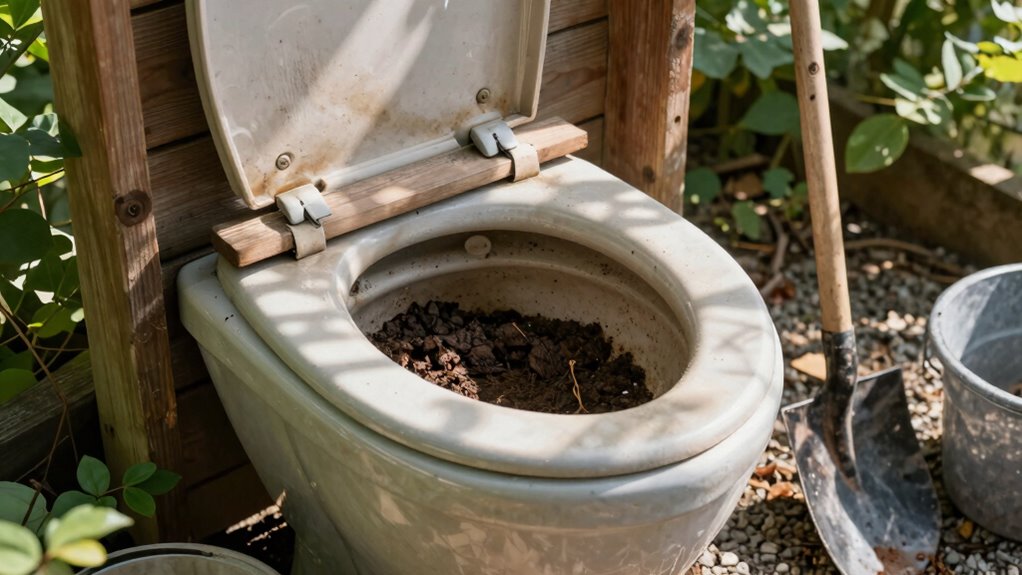

Each day, you’ll use your composting toilet normally but need to add a layer of carbon-rich materials like sawdust or peat moss after each use. Keep an eye on moisture levels and make certain good ventilation to control odors. Regularly check waste levels and top up cover materials to maintain efficient composting. Proper maintenance keeps the system odor-free and functioning smoothly. Want to know more about keeping your composting toilet in top shape?

Get garden gear delivered free with Prime
- Fast, free delivery on millions of items
- Prime Video, Amazon Music and more included
- Member-only deals all year
Key Takeaways
- Use the toilet as usual, then add a carbon-rich cover material like sawdust after each use.
- Regularly top up cover materials to control odors and promote composting.
- Monitor moisture levels and waste chamber fullness to maintain system efficiency.
- Ensure proper ventilation to direct odors outside and support microbial activity.
- Check waste levels periodically and transfer or empty the compost when full.
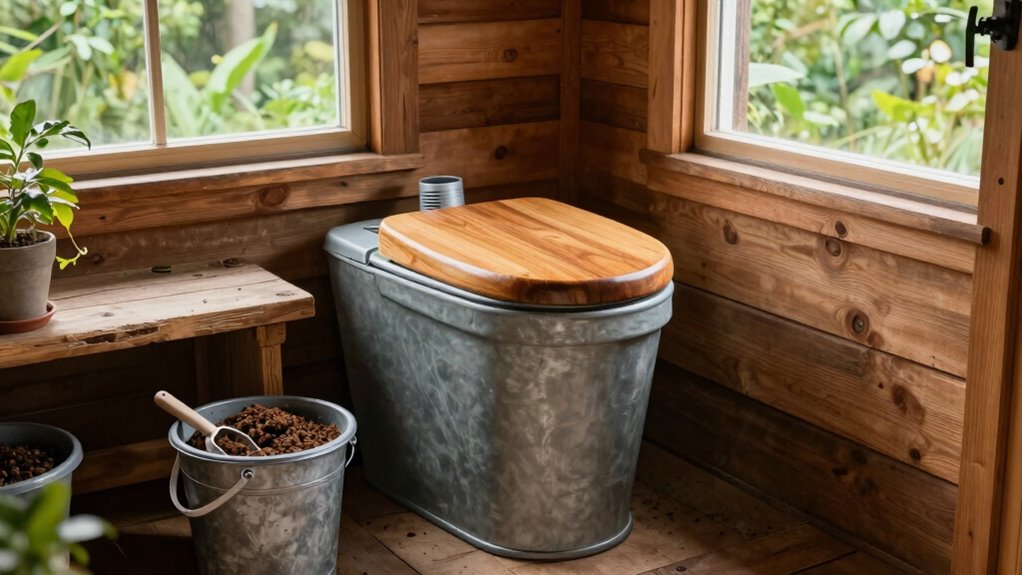
Composting toilets are an eco-friendly alternative to traditional plumbing systems, designed to convert human waste into compost through natural decomposition. When you decide to use one, you’ll find that daily maintenance is straightforward, but it requires some attentiveness to guarantee everything functions smoothly. One of the biggest benefits is water conservation. Unlike conventional toilets that use gallons of water with each flush, composting toilets typically operate with little to no water, making them ideal for off-grid living, cabins, or sustainable setups. You won’t need to worry about flushing; instead, you’ll focus on managing waste and maintaining the composting chamber.
Composting toilets offer eco-friendly waste management with minimal maintenance and water savings.
Odor control is another key aspect of daily use. Good ventilation is essential, so you’ll want to make certain the toilet is equipped with a vent pipe or a fan to direct odors outside. When used properly, composting toilets produce minimal smells, especially if you add carbon-rich materials like sawdust, peat moss, or coconut coir after each use. These materials help absorb moisture and control odors, keeping the bathroom space fresh and odor-free. It’s important to remember that regular topping up of these materials improves odor control and accelerates composting.
On a daily basis, you’ll use the toilet as you normally would, but with a few adjustments. After each use, you’ll add a layer of carbon material to cover the waste, which helps maintain proper moisture levels and encourages microbial activity. This covering not only helps with odor control but also ensures the composting process remains active and efficient. You might also want to check the waste levels periodically, especially if you’re sharing the toilet with multiple people. When the waste chamber gets full, you’ll need to empty or transfer it to a secondary composting area, depending on your system. Regular monitoring of moisture levels helps prevent issues like odors and slow decomposition. Proper ventilation is also crucial to keep odors at bay and promote microbial activity.
Maintaining a good balance of moisture is essential for effective composting. You’ll want to avoid excess liquid buildup, which can cause odors and slow decomposition. Using a urine-diverting model can help manage moisture better, as it separates liquid waste from solids, reducing the risk of unpleasant smells and making the composting process more efficient. Proper ventilation and microbial activity are crucial for breaking down waste efficiently and reducing odors over time. Additionally, understanding the composting process can help you troubleshoot common issues and optimize your system for better results. Overall, daily use of a composting toilet involves mindful addition of cover material, monitoring waste levels, and ensuring proper ventilation. With these simple steps, you’ll enjoy the benefits of water conservation, minimal odors, and a sustainable waste management system that’s eco-friendly and easy to maintain.
composting toilet odor control fan
As an affiliate, we earn on qualifying purchases.
As an affiliate, we earn on qualifying purchases.
Frequently Asked Questions
How Often Should Composting Toilets Be Emptied?
You should empty your composting toilet when the compost bin is about two-thirds full to maintain waste management and system efficiency. Regularly monitoring the level prevents overflows and odors, ensuring peak performance. Typically, this might mean emptying it every few months, depending on usage. Staying attentive to the system’s needs helps keep it functioning smoothly, making your composting toilet a sustainable and hassle-free waste management solution.
Are There Any Odors With Composting Toilets?
Odors with composting toilets are usually minimal if you focus on odor control. Think of the toilet as a garden—adding carbon-rich materials like sawdust or peat helps trap smells, promoting user comfort. Regularly mixing and monitoring the compost keeps odors at bay, making your experience smoother. With proper maintenance, you won’t notice strong smells, allowing you to enjoy a fresh, clean environment every day.
What Maintenance Is Required for Composting Toilets?
You need to regularly check and maintain your composting toilet by adding biodegradable liners and managing the compost. Use a urine diversion system to separate liquids, reducing odor and speeding up composting. Empty the solid waste container when full and turn or aerate the compost regularly to promote decomposition. Keep the toilet clean with minimal soap, avoiding harsh chemicals. Proper maintenance guarantees odor control, efficient composting, and a hygienic experience.
Can Composting Toilets Be Used in Cold Climates?
Like a brave explorer facing icy waters, you can use composting toilets in cold climates, but you’ll need to tackle insulation challenges head-on. Temperature regulation becomes essential, so adding insulation around the unit helps maintain the necessary heat for composting. Using a heater or venting system can also prevent freezing. With these precautions, you can enjoy the comfort of a composting toilet even in chilly environments.
Is Special Toilet Paper Needed for Composting Toilets?
You don’t need special toilet paper for composting toilets, but using biodegradable paper is highly recommended because it breaks down easily and helps maintain compost health. If you prefer, you can try toilet paper alternatives like paper towels or compostable wipes, but make sure they’re suitable for composting. Avoid non-biodegradable products, as they can cause odor issues and slow down the composting process.
As an affiliate, we earn on qualifying purchases.
Conclusion
You’ve seen how composting toilets can transform waste management, but daily use requires commitment. For example, imagine a tiny house owner who initially struggled with odors and maintenance. By adjusting ventilation and learning proper composting techniques, they now enjoy a sustainable, odor-free system that reduces water use and minimizes waste. With patience and proper care, composting toilets can become a reliable, eco-friendly solution, proving that small daily efforts make a significant environmental impact.
As an affiliate, we earn on qualifying purchases.
composting toilet cover material
As an affiliate, we earn on qualifying purchases.
As an affiliate, we earn on qualifying purchases.
Fall Picks
fall essentials
As an affiliate, we earn on qualifying purchases.