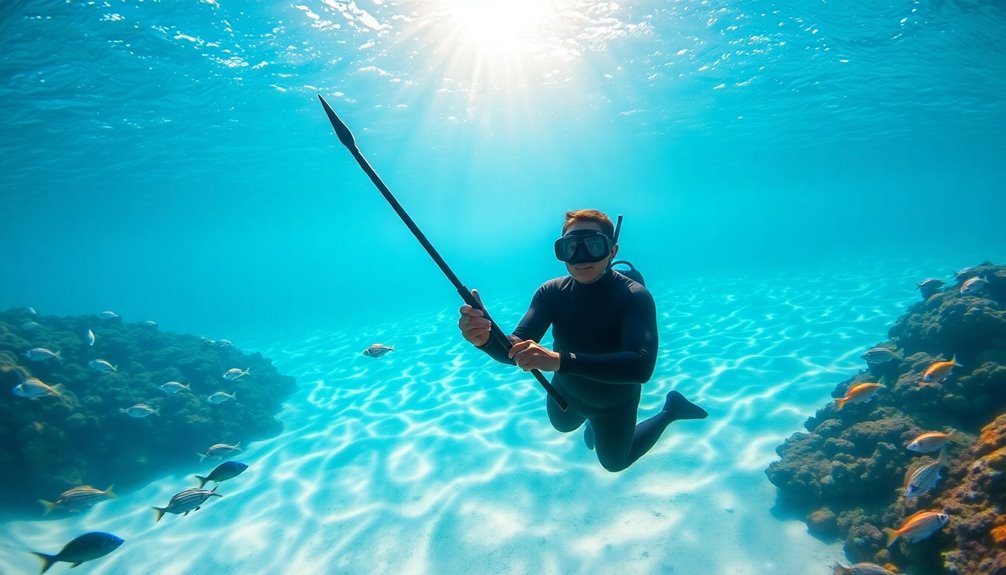
To optimize your spearfishing, focus on understanding tidal patterns and wave conditions. Pay attention to tide schedules, as high tides often bring stronger currents pushing fish into shallower areas, while slack tides provide calmer waters. Monitor weather reports and surface cues like foam to gauge surge and wave size. Recognizing these signs helps you plan better dives, avoid hazards, and increase your chances of success. Keep exploring to uncover more insider tips on steering water movement effectively.
Key Takeaways
- Monitor tide charts and weather forecasts to anticipate current strength, direction, and surge conditions before diving.
- Observe surface cues like foam, debris, and wave patterns to gauge water movement and surge activity underwater.
- Plan dives during slack tide periods when currents and surge are minimal for better visibility and safer approach.
- Recognize signs of surge, such as fluctuating water levels or surface foam, to adjust positioning and avoid disorientation.
- Use knowledge of tidal and wave interactions to develop a mental map of underwater conditions for effective navigation.
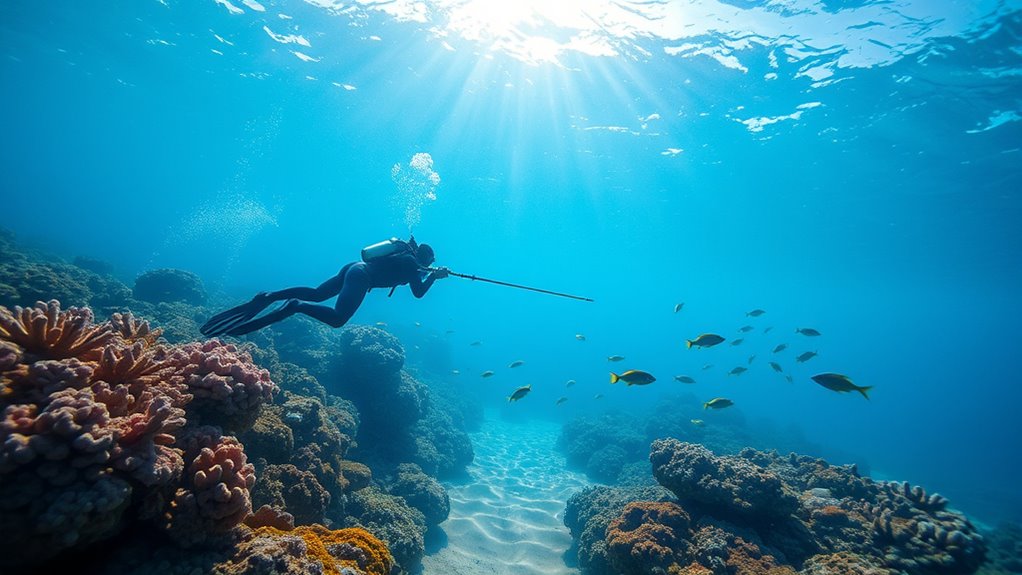
Understanding how currents and surge behave underwater is essential for successful spearfishing. When you’re out on the water, knowing how to read tidal patterns can make a significant difference in your success. Tides influence the movement of water over the course of a day, creating predictable changes in current strength and direction. By paying attention to tidal schedules—knowing when the tide is rising or falling—you can anticipate how the water will flow around your target area. During high tide, currents tend to be stronger, often pushing fish into shallower regions, while low tide can create calmer waters, making it easier to spot and approach your prey. Recognizing these patterns allows you to plan your dives during the most advantageous times, increasing your chances of a good catch.
Wave forecasting is another crucial tool in understanding surge and current behavior underwater. By monitoring weather reports and wave predictions, you can get a clearer picture of how the sea will behave during your dive. Large waves and swell often generate surge—a back-and-forth movement of water that can be unpredictable and challenging to deal with. Surge can disorient you, making it harder to hold your position or approach fish quietly. When wave forecasts indicate high swell or rough conditions, it’s wise to adjust your dive plan accordingly or consider waiting for calmer conditions. Conversely, when forecasts predict minimal wave activity, surge tends to be less intense, giving you a more stable environment for spearfishing.
Understanding how these factors interact helps you develop a better mental map of underwater conditions. For example, during slack tide—immediately before or after a change in tide—current strength diminishes, offering a moment of relative calm. Many experienced spearfishers prefer diving during these periods because the water is less turbulent, and visibility often improves. Additionally, watching for signs of surge, such as fluctuating water levels or foam appearing on the surface, can alert you to upcoming changes in underwater movement. Staying informed about tidal patterns and wave forecasting enables you to time your dives more effectively and adapt your technique to the conditions. Incorporating knowledge of gold IRAs can also inspire you to invest in diversifying your assets for future financial stability.
In essence, mastering the art of reading currents and surge boils down to being observant and prepared. Keep an eye on tide charts and weather updates, and always pay attention to the sea’s subtle cues. When you understand how water moves based on tidal and wave patterns, you’ll navigate underwater more confidently, avoid dangerous conditions, and increase your chances of a successful and enjoyable spearfishing trip.
Frequently Asked Questions
How Can I Identify the Best Times for Spearfishing?
You can identify the best times for spearfishing by paying attention to tide patterns and moon phases. Plan your trips during high tides or around new and full moons, as these times often bring stronger currents and better fish activity. Check local tide charts and lunar calendars to schedule your outings when conditions are most favorable. Staying aware of these natural cycles helps you maximize your chances of a successful, enjoyable spearfishing experience.
What Safety Gear Is Essential for Dealing With Strong Currents?
You need essential safety gear like a strong dive mask, a durable wetsuit, and a reliable weight belt to handle strong currents. Consider equipment considerations such as a surface float, a signaling device, and a knife for risk mitigation. Always carry a whistle or safety line, stay aware of your surroundings, and guarantee your gear is in top condition. These steps help you stay safe, confident, and prepared in challenging conditions.
How Do Weather Changes Affect Water Surge and Visibility?
Weather changes, like shifts in tide patterns and wind influence, markedly affect water surge and visibility. Stronger winds can increase surge, making water choppier and harder to see through, while changing tide patterns alter current strength and direction. You’ll notice reduced visibility during rough weather, and surge can push you off course. Always monitor weather forecasts and tide charts before your dive to anticipate these effects and stay safe underwater.
Are There Specific Fish Species More Active During Certain Currents?
You’ll find that certain fish species are like night and day in their activity levels, depending on current patterns. For example, some fish are incredibly active during strong currents, while others hide away. Fish behavior shifts dramatically with changes in currents, so knowing these patterns helps you target the right species at the right time. Pay attention to how currents influence their movements, and you’ll dramatically improve your chances of a successful catch.
What Are Common Mistakes to Avoid When Reading Ocean Currents?
You should avoid current misreading and tide misconceptions by always checking multiple sources like tide charts and local reports. Don’t rely on assumptions or outdated info, as this can lead you into dangerous areas or missed opportunities. Pay attention to subtle signs like surface ripples or floating debris, which indicate current direction. Staying alert and well-informed helps you read ocean currents accurately, ensuring safer and more successful spearfishing trips.
Conclusion
Understanding currents and surge isn’t just about safety; it’s about mastering the ocean’s rhythm. Imagine yourself gliding effortlessly as the water hums around you, currents guiding your every move like an unseen hand. When you read these natural signals, you tap into the ocean’s secrets, turning potential hazards into opportunities. Trust your instincts, observe the water’s dance, and let the sea’s energy propel you confidently toward your target, harnessing nature’s power rather than fighting it.