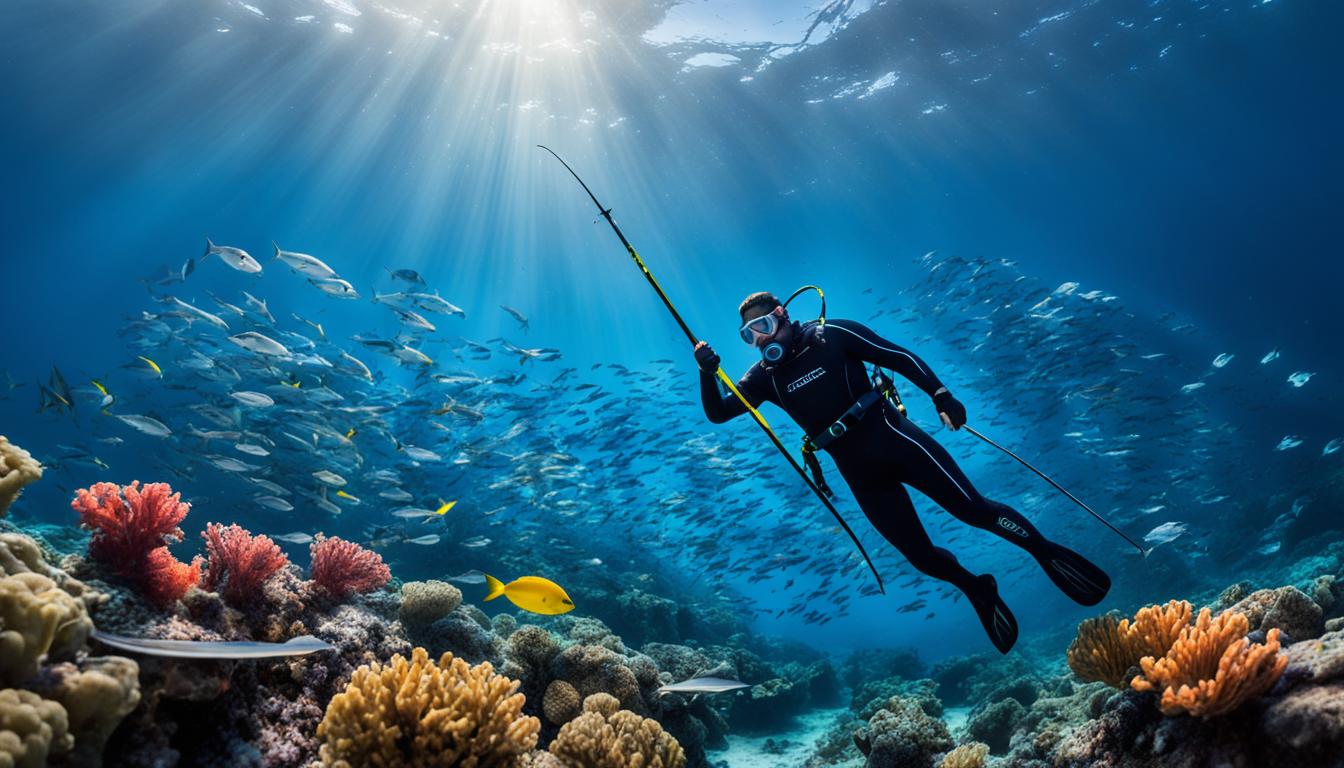
To stay safe and warm during cold-water spearfishing, you should wear a properly fitting dry suit with thermal underlayers and make certain all valves and zippers are operational before entering the water. Always assess ice thickness and stability, use safety gear like ice picks and ropes, and move cautiously on the ice. Diving with a buddy, maintaining communication, and mastering your dry suit are key. Continue exploring these strategies to enhance your cold-water adventures.
Key Takeaways
- Use a properly fitted dry suit with thermal undergarments to stay warm and dry during cold-water dives.
- Assess ice thickness and stability; carry safety equipment like ice picks and throw ropes before entering icy water.
- Double-check seals, zippers, and valves on your dry suit to prevent leaks and ensure safe immersion.
- Dive with a buddy, establish clear communication, and follow safe entry and exit protocols using stable ice or ladders.
- Be aware of signs of hypothermia, monitor your exposure time, and have emergency plans in place for cold-water safety.
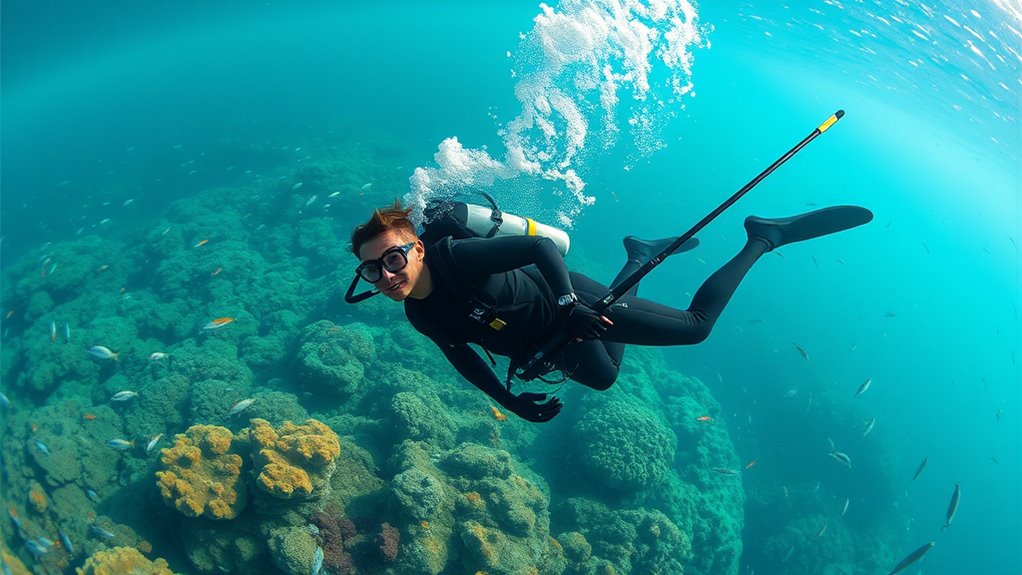
Cold-water spearfishing offers a challenging and rewarding experience for underwater hunters willing to brave lower temperatures. When diving in colder environments, staying warm and safe becomes a top priority, and proper gear plays an essential role. A dry suit is indispensable for maintaining body heat during extended dives in chilly waters. Unlike wetsuits, which trap a thin layer of water that warms up, a dry suit keeps you completely dry, allowing you to wear insulating layers underneath. This not only prolongs your diving time but also reduces the risk of hypothermia. Make sure your dry suit fits well, with no leaks, and that you’re comfortable operating its valves and zippers before heading out. Layer appropriately underneath your suit, with thermal undergarments designed for cold water, to maximize warmth without restricting movement.
A dry suit keeps you warm, dry, and comfortable during cold-water spearfishing, extending dive time and reducing hypothermia risk.
Ice safety is another critical aspect when you’re spearfishing in colder, potentially frozen environments. Before even entering the water, assess the ice thickness and stability. Experts recommend a minimum of four inches of clear, solid ice for walking and diving, but thicker ice is safer for supporting gear and multiple people. Never underestimate freezing conditions—ice can be deceptively thin in some spots, and weak spots or cracks can pose serious danger. Always carry ice safety equipment such as ice picks, a throw rope, and a flotation device. When you’re on the ice, move cautiously, avoid sudden shifts, and keep a clear escape route in case you need to retreat quickly. Remember, cold water immersion can happen rapidly if you fall through, so practicing safe techniques and maintaining situational awareness are essential. Additionally, being aware of thermal protection options can make a significant difference in your comfort and safety during prolonged cold water dives.
Using a dry suit in icy conditions also means paying special attention to your entry and exit points. Use a ladder or carefully step onto stable ice to prevent slips. When you’re ready to dive, ensure your dry suit is properly sealed to prevent water ingress, and double-check your valves and zippers. After your dive, remove your gear carefully to avoid damaging the suit or risking falls on ice. Always dive with a buddy and establish a clear communication plan, especially in icy waters where rescue might take longer. In essence, mastering dry suit usage and ice safety protocols can elevate your cold-water spearfishing experience. It guarantees you stay warm, safe, and focused, so you can enjoy the thrill of the hunt without unnecessary risks. With proper preparation, you’ll find that cold-water spearfishing isn’t just a challenge—it’s an opportunity to connect more deeply with nature while honing your skills in some of the most pristine and rewarding environments.
Frequently Asked Questions
What Are the Best Cold-Water Fish Species to Target?
You should target cold water fish like cod, haddock, and halibut, as they are ideal for cold-water spearfishing. Focus on fish identification to verify you’re targeting the right species, and choose your target species based on local regulations and abundance. These cold water fish have distinct markings and behaviors, making them easier to identify and harvest safely. Always respect size limits and conservation rules to protect these species.
How Do I Prevent Hypothermia During Long Dives?
Imagine your body’s core temperature as a delicate flame that needs shielding. To prevent hypothermia during long dives, wear a wetsuit with proper insulation, ensuring it fits snugly to retain heat. Keep your body warm by limiting dive time, staying active, and taking regular breaks on the surface. Prioritize safety, monitor your condition, and always listen to your body’s signals to avoid the chilling effects of cold water.
What Gear Is Essential for Cold-Water Spearfishing?
For cold-water spearfishing, you need essential gear like a wetsuit with the right thickness, typically 5mm to 7mm, to provide thermal insulation. A hood, gloves, and booties made from the same material help retain body heat. A dry top or vest adds extra warmth, and a weight belt ensures ease of movement. Prioritize gear that offers both thermal protection and mobility for safe, comfortable dives.
How Can I Improve My Breath-Hold in Cold Water?
To improve your breath-hold in cold water, focus on practicing breath-hold techniques like diaphragmatic breathing and CO2 tolerance exercises regularly. Incorporate relaxation exercises to calm your mind and body, which can extend your breath-hold time. Stay relaxed underwater by controlling your movements and avoiding panic. Gradually increase your dive duration during training, and always listen to your body to stay safe.
Are There Specific Safety Protocols for Cold-Water Diving?
Think of safety protocols as your lifeline in cold water diving. You should always establish clear diver communication signals before descending. Follow strict emergency procedures, like sharing your dive plan and having a reliable surface support team. Use a dive buddy system, stay within your limits, and carry appropriate safety gear. These protocols are your safety net, ensuring quick response during unexpected situations and keeping you safe in icy depths.
Conclusion
Now that you’re armed with thermal and safety tips, you’re ready to take on cold-water spearfishing with confidence. Remember, it’s not just about the catch but also staying safe and warm in challenging conditions. Don’t bite off more than you can chew—know your limits and respect the water. With preparation and caution, you’ll find that the cold can be just another piece of the adventure, not a barrier to your passion. Plunge in and enjoy the thrill!