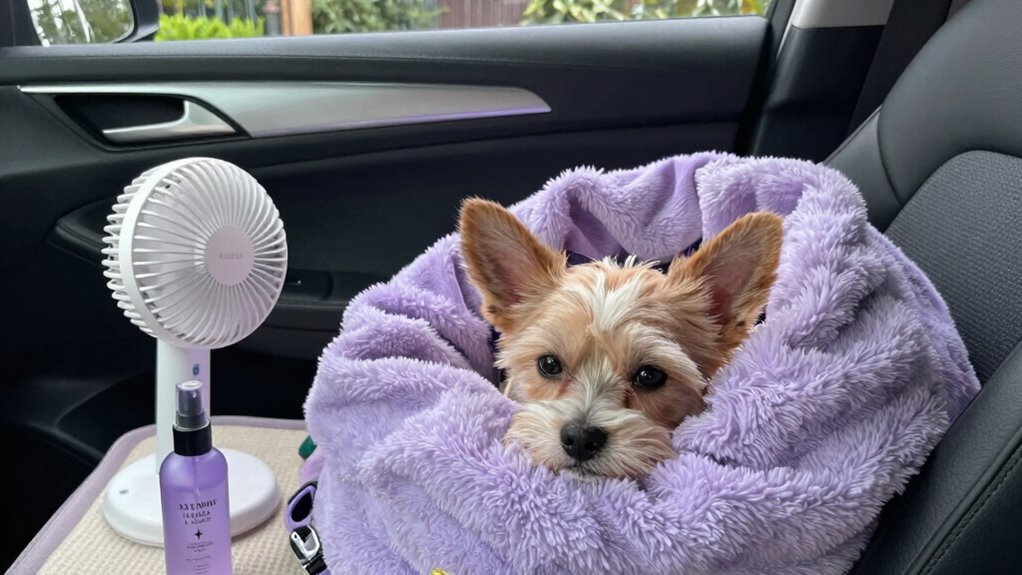
To make car rides easier for your pet, try small changes like giving ginger supplements or adding calming accessories such as vests infused with soothing scents. Creating a cozy environment with familiar blankets and playing calming music also helps reduce stress. Consistency and gradual exposure build positive associations with travel. Combining nutrition, comfort, and environment adjustments can make a big difference. If you want to discover more simple strategies, keep exploring effective ways to ease your pet’s motion sickness.
Key Takeaways
- Incorporate natural remedies like ginger to reduce nausea during car trips.
- Use calming accessories such as pressure vests, pheromone collars, or soft blankets to ease anxiety.
- Create a familiar environment in the vehicle with familiar items and soothing sounds.
- Introduce travel routines gradually and maintain consistency to build positive associations.
- Combine nutritional supplements and calming accessories for a synergistic effect on motion sickness prevention.
Traveling with your pet can be stressful for both of you, especially if they experience motion sickness. It’s frustrating to see your furry friend feeling uncomfortable or nauseous during car rides. Luckily, small changes can make a big difference in easing their symptoms. One effective approach is exploring nutritional remedies. These can include natural supplements or specific foods that help calm your pet’s stomach. For example, ginger is well-known for its anti-nausea properties and can be given in small amounts, either as a supplement or incorporated into treats. Some pet-specific formulas contain ginger or other calming ingredients designed to soothe upset stomachs. Before adding anything new to your pet’s diet, always check with your veterinarian to ensure safety and proper dosage. Incorporating nutritional remedies can help reduce the severity of motion sickness and make your trips more comfortable.
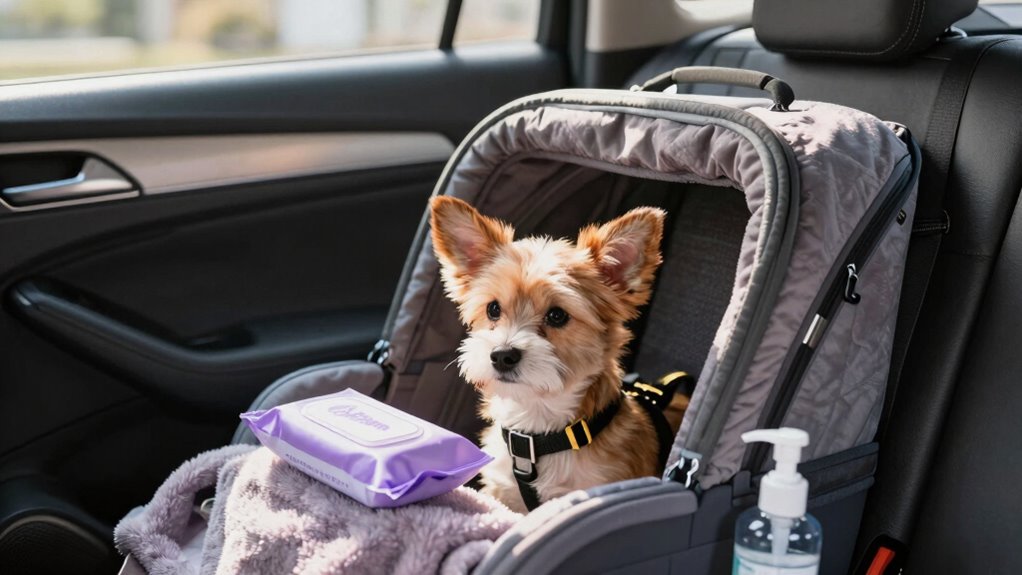
Alongside dietary adjustments, calming accessories can profoundly help your pet stay relaxed during car rides. Items like calming vests or shirts apply gentle, consistent pressure that mimics a comforting hug, which has been shown to decrease anxiety. You might also consider using calming collars infused with pheromones, which emit a scent that helps soothe nervous animals. Soft, cozy blankets or beds placed in the car can create a familiar, secure environment, easing your pet’s stress. Playing calming music or white noise can also help drown out unfamiliar sounds that might trigger anxiety. When you combine these accessories with your pet’s favorite toys or treats, you create a more reassuring atmosphere. The goal is to make the car ride feel less intimidating and more like a safe space. Additionally, understanding the importance of projector features such as soundproofing and acoustic enhancement can contribute to a calmer environment for your pet.
The key is to start these calming strategies gradually, allowing your pet to associate car rides with comfort rather than distress. When you introduce nutritional remedies or calming accessories ahead of time, your pet has the chance to adapt to these new routines. Consistency is essential—using the same calming items and remedies on each trip helps build a sense of familiarity and security. Remember, every pet is different, so it might take some trial and error to find what works best for your furry friend. The combination of nutritional remedies and calming accessories can work synergistically to reduce motion sickness symptoms, making traveling less stressful and more enjoyable for both of you. Small, thoughtful adjustments can turn car rides from a source of anxiety into a more pleasant experience for your beloved pet.
Frequently Asked Questions
Can Certain Breeds Be More Prone to Motion Sickness?
Yes, certain breeds are more prone to motion sickness due to breed tendencies and size considerations. Small breeds, like Chihuahuas and Yorkies, often have more sensitivity, making them more susceptible. Larger breeds, such as Labrador Retrievers, tend to handle car rides better. Knowing your pet’s breed tendencies helps you prepare better, like providing comfort and taking breaks, to make car rides more enjoyable and less stressful for your furry friend.
How Long Does It Typically Take for a Pet to Adapt?
You’ll find your pet usually needs an acclimation period of a few days to a couple of weeks, depending on their personality and previous experiences. During this duration adjustment, patience is key—think of it as a mini boot camp for their comfort. Some pets adapt faster, while others take longer, but with consistent rides, you’ll notice a calmer, more confident travel buddy. Remember, persistence turns motion sickness into motion success.
Are There Natural Remedies for Pet Motion Sickness?
You can try natural remedies like herbal supplements, which may help calm your pet’s stomach and reduce nausea. Acupressure techniques are also effective; applying gentle pressure to specific points can ease motion sickness symptoms. Always consult your veterinarian before starting any new remedies to guarantee safety. Combining these natural options with gradual exposure can make car rides more comfortable, helping your pet adapt faster and enjoy travel more peacefully.
What Signs Indicate My Pet Is Feeling Unwell During a Trip?
If your pet is feeling unwell during a trip, watch for pet behavior cues like excessive drooling, whining, or pawing at their face. Travel discomfort signs also include restlessness, vomiting, or yawning. You might notice your pet trying to escape or acting unusually anxious. Recognizing these signs early helps you take quick action, like stopping for a break or offering comfort, to ease their discomfort and keep them safe.
Is It Safe to Give My Pet Medication for Motion Sickness?
You should always check with your vet before giving your pet medication for motion sickness. Medication safety is vital, as some drugs might cause adverse effects or interact with other treatments. If you’re hesitant, explore alternative remedies like calming sprays, gentle massage, or natural supplements. Always prioritize professional advice to guarantee your furry friend’s health and comfort during car rides.
Conclusion
By making small adjustments, you can prevent pet motion sickness and create calmer car rides. By choosing the right position, providing fresh air, and keeping your pet calm, you help reduce anxiety and discomfort. By staying consistent, patient, and attentive, you build trust and comfort. Remember, these simple steps aren’t just about easing their journey—they’re about fostering safety, comfort, and happiness for your furry friend. Because when your pet feels better, every trip becomes a shared adventure.