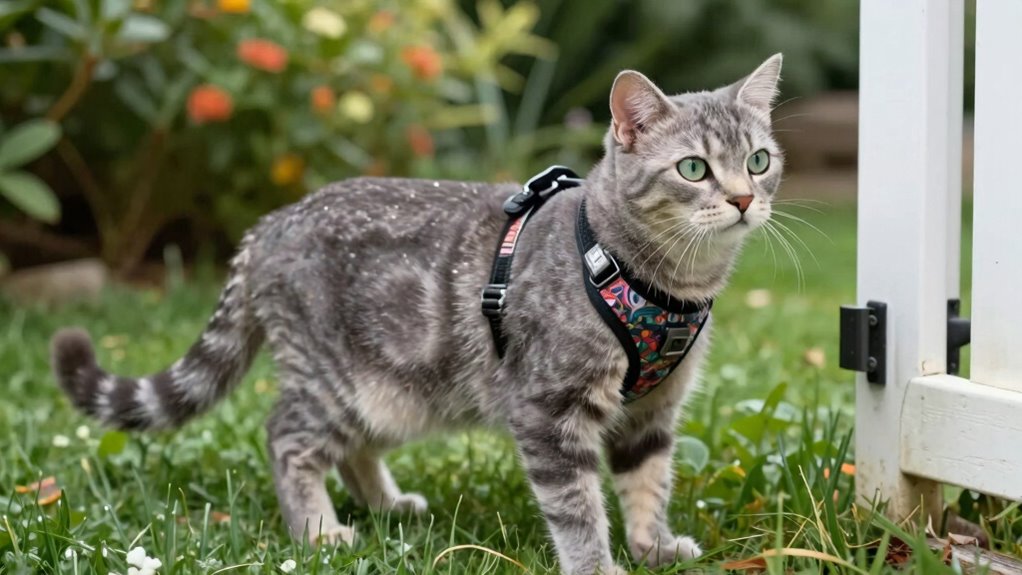

To prevent your cat from escaping outdoors, focus on gradual harness training that builds trust and comfort. Introduce the harness in a calm environment, letting your cat sniff and investigate it at their own pace. Use treats and praise to create positive associations. Make certain the harness fits snugly but comfortably, and supervise outdoor outings closely. This careful approach helps your cat feel secure, reducing escape attempts and making outdoor time safer. Keep exploring to learn more about effective harness training techniques.

Get garden gear delivered free — and shop member deals
- Fast, free delivery on millions of items
- Access to Prime Big Deal Days deals on October 6–7
- Prime Video, Amazon Music and more included
Key Takeaways
- Gradually introduce and fit the harness to build trust and comfort with your cat.
- Use positive reinforcement, like treats and praise, during harness training sessions.
- Ensure the harness fits snugly but comfortably, allowing two fingers for safety.
- Supervise outdoor outings closely and attach a leash to prevent escape attempts.
- Increase outdoor exposure gradually to help your cat feel secure and reduce the urge to escape.
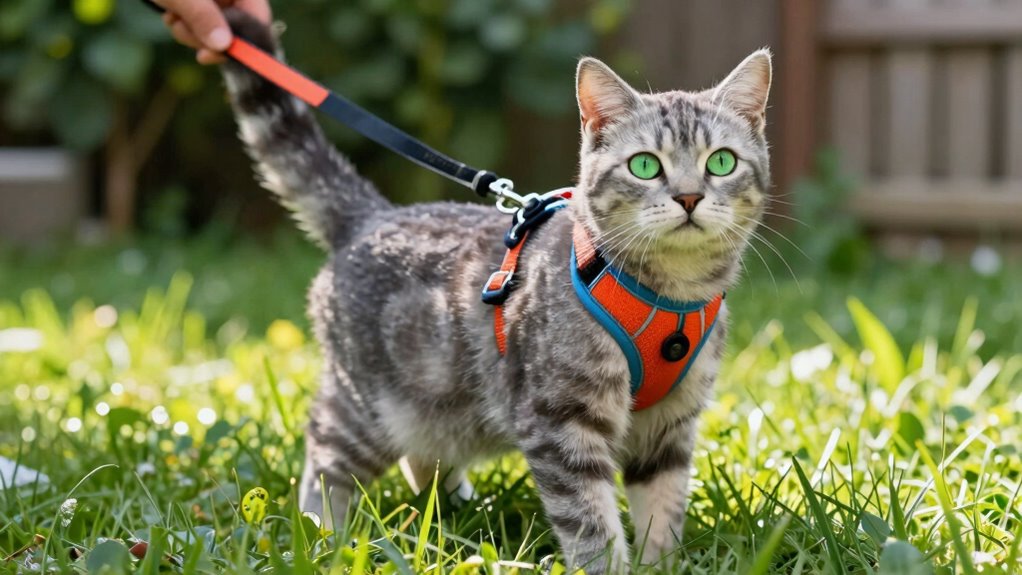
Training your cat to wear a harness might seem challenging at first, but with patience and the right approach, it can be a smooth process. One of the most important steps in harness training is understanding behavior modification. Cats are naturally cautious animals, so you need to gently coax them into accepting the harness rather than forcing it on them. Start by introducing the harness in a calm environment, allowing your cat to sniff and investigate it at their own pace. Use treats and praise to create positive associations, helping your cat to see the harness as something safe and non-threatening. Gradually, you can begin to place the harness on their body for short periods, always monitoring their reactions. If your cat shows signs of stress or resistance, take a step back and proceed more slowly. The goal is to build trust and comfort, so never rush this process. Incorporating connected fitness technology such as GPS trackers or activity monitors can also help you keep an eye on your outdoor explorations, ensuring your cat’s safety and well-being. Safety precautions are essential when training your cat to wear a harness, especially if you plan to take them outdoors. A securely fitted harness prevents escapes and keeps your feline safe during outdoor adventures. To guarantee safety, measure your cat carefully and select a harness that fits snugly but isn’t too tight. You should be able to fit two fingers between the harness and your cat’s body. Once fitted, double-check the fit before each outing. During training sessions, always supervise your cat closely, especially when they’re wearing the harness for the first time. Avoid leaving the harness on unsupervised until you’re confident your cat is comfortable and secure in it. This prevents accidental escapes or injuries. When you’re ready to venture outside, keep your cat on a leash attached to the harness, and stay within enclosed, safe areas. Never allow your cat to roam freely without supervision, as they may become frightened or attempt to escape. Using safety precautions reduces the risk of injury or escape and helps your cat associate outdoor experiences with positive feelings.
As an affiliate, we earn on qualifying purchases.
Frequently Asked Questions
How Long Does It Typically Take to Fully Train a Cat With a Harness?
Training your cat with a harness typically takes around one to two weeks, but it varies based on your cat’s personality. You should expect a gradual training timeline, allowing your feline to get comfortable with the harness and leash. Consistent, positive reinforcement helps speed up the process. Be patient and keep sessions short, ensuring your cat feels safe and confident, which ultimately prevents escape attempts outdoors.
What Are Signs That My Cat Is Comfortable With the Harness?
You’ll know your cat is comfortable with the harness when their body language shows relaxed ears, slow blinking, and a loose tail. They won’t resist or try to scratch or bite at the harness, indicating harness comfort. Watch for signs like calm behavior and curiosity, rather than agitation or hiding. When your cat freely explores and doesn’t attempt to escape, it’s a clear sign they’re at ease with their harness.
Can Harness Training Help Prevent Outdoor Accidents or Injuries?
Harness training can indeed help prevent outdoor accidents or injuries by improving leash safety, increasing control, and reducing your cat’s chances of wandering into outdoor hazards. When your cat is comfortable with a harness, you can guide them away from dangers like traffic, toxic plants, or aggressive animals. This proactive approach guarantees safer outdoor adventures, giving you peace of mind knowing your feline friend is better protected from potential outdoor risks.
Are There Specific Harness Types Better for Certain Cat Breeds?
Certain harness types suit specific cat breeds better. For example, cats with delicate or sensitive skin, like Siamese or Sphynx, benefit from soft, lightweight harness material options such as padded nylon or mesh. Breeds with more muscular builds, like Maine Coons, may require a sturdy, adjustable harness that provides extra support. Always consider your cat’s breed preferences, comfort, and activity level when choosing a harness to make certain safe, enjoyable outdoor adventures.
How Should I Introduce My Cat to Outdoor Harness Walks Safely?
Imagine your cat, Luna, cautiously approaching her harness. To introduce her safely, start with a gradual introduction, letting her sniff and explore the harness indoors. Attach the leash loosely at first, then gradually increase the duration of walks. Make sure the leash attachment is secure and comfortable. Keep sessions calm and positive, and watch her reactions. This approach builds trust and helps prevent escape attempts during outdoor walks.
adjustable cat harness for outdoor training
As an affiliate, we earn on qualifying purchases.
As an affiliate, we earn on qualifying purchases.
Conclusion
By mastering harness training, you give your cat safe outdoor adventures and prevent escape attempts. Did you know that 65% of outdoor cat injuries happen when they try to run away? With patience and positive reinforcement, you can make outdoor exploration a secure, enjoyable experience. Remember, consistent training builds trust and confidence. So, take that step today—your cat’s safety and happiness are worth it!
As an affiliate, we earn on qualifying purchases.
As an affiliate, we earn on qualifying purchases.
Fall yard work Picks
leaf blowers
As an affiliate, we earn on qualifying purchases.