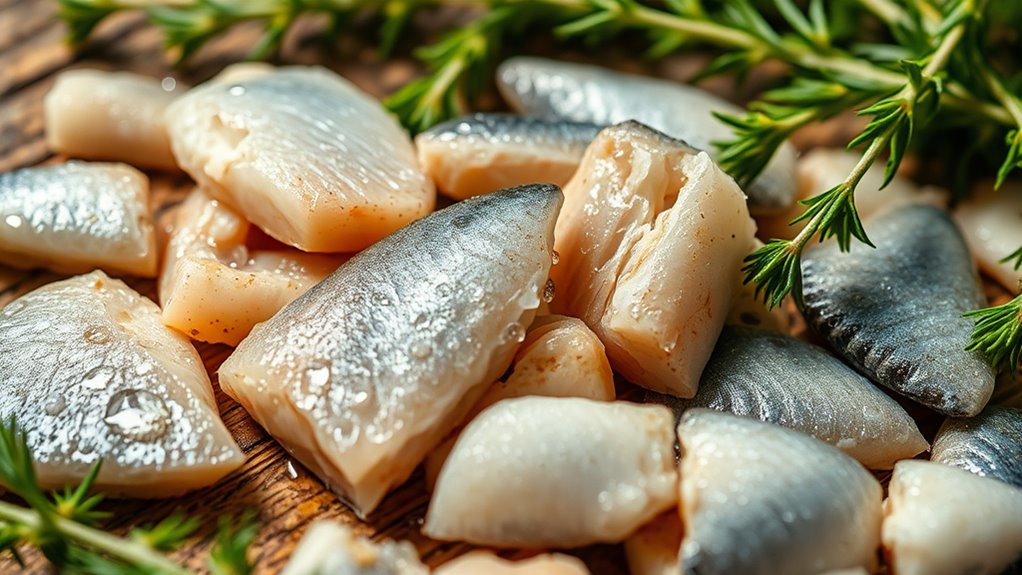

In a crisis, sourcing and cooking fresh, foraged fish bits for your cat offers a natural, nutritious protein boost while supporting sustainable practices. Make certain to clean, fillet, and remove all bones, then cook the fish thoroughly by boiling or steaming to retain nutrients. Serve small portions at room temperature to ensure safety. Want to discover more tips on preparing safe, healthy fish treats for your feline friend? Keep exploring for detailed guidance.
Key Takeaways
- Ensure fish is sustainably foraged, properly cleaned, and boneless before cooking to maximize safety and nutritional value for cats.
- Boil or steam fish thoroughly without added salt or spices to preserve nutrients and prevent health issues.
- Cool the cooked fish completely and serve in small portions to monitor feline reactions and avoid choking hazards.
- Incorporate homemade fish treats into a balanced diet to provide omega-3s and high-quality protein naturally.
- Follow local regulations and sustainable practices to protect marine ecosystems while sourcing fish for your cat’s treats.

If you’re interested in providing your cat with a natural and nutritious treat, foraging for fish bits can be a rewarding option. Not only does this approach give your feline a fresh, wholesome snack, but it also aligns with sustainable sourcing practices that benefit the environment. When you gather fish directly from local waters, you reduce reliance on mass-produced pet treats, which often involve questionable supply chains and excessive packaging. This method allows you to control the quality of what your cat consumes, making sure it’s free from additives, preservatives, and other unwanted chemicals. Furthermore, sourcing fish yourself can help you select species that are sustainably harvested, supporting healthier marine ecosystems and avoiding overfished stocks that threaten aquatic biodiversity. It’s a responsible way to enhance your cat’s diet while positively impacting the planet.
Preparing these fish bits for your feline involves more than just catching and serving raw. Cooking the fish correctly is essential to preserve its nutrients and eliminate potential parasites or bacteria. You’ll want to start by thoroughly cleaning and filleting your catch, removing any bones that could pose a choking hazard or cause internal damage. Boiling or steaming the fish is preferable to frying, as it retains more nutrients and avoids adding unnecessary fats or oils. Once cooked, let the fish cool completely before offering it to your cat. Small, manageable portions work best, especially if it’s a new treat, to monitor how your cat reacts to the change in diet. Remember, moderation is key—fish bits should complement a balanced diet, not replace essential feline nutrition from complete cat food. Additionally, be aware of the regional bank opening hours and holiday schedules to plan your fishing trips accordingly, ensuring you can access local markets or fishing licenses when needed.
Incorporating homemade fish treats into your cat’s diet offers several benefits. Fresh fish is rich in omega-3 fatty acids, which promote healthy skin, shiny coat, and cognitive function. It’s also a good source of high-quality protein, supporting muscle maintenance and overall vitality. By cooking foraged fish bits at home, you can customize the seasoning—avoiding salt, spices, or artificial flavorings that could upset your cat’s stomach. This personalized approach ensures your pet’s safety and satisfaction. Plus, it’s an excellent bonding activity, giving you the chance to connect with your cat over a natural, healthful treat. Just remember to do your research on safe fish species, follow sustainable sourcing guidelines, and prioritize your feline’s nutritional needs. When prepared thoughtfully, these foraged fish bits can be a delightful, nutritious addition to your cat’s diet, emphasizing natural feeding and responsible sourcing.
Frequently Asked Questions
How Do I Identify Safe Fish Species to Forage for Cats?
When it comes to foraging fish species for your cats, safety is key. You should learn safe identification by researching local fish types, focusing on species known to be edible and non-toxic. Use reliable field guides or consult experts to distinguish safe fish from harmful ones. Always verify the fish’s health, avoid fish with unusual colors or odors, and make sure it’s free from pollutants before offering it to your cats.
What Are the Signs of Fish Poisoning in Cats?
Imagine your cat suddenly becomes lethargic and shows a fish odor on its breath—these are signs of fish poisoning. If your cat exhibits lethargy symptoms, vomiting, or diarrhea, it could be due to toxins from contaminated fish. Fish odor combined with behavioral changes signals potential poisoning. Always monitor for unusual behaviors after foraging and consult your vet immediately if you notice these signs to guarantee your feline’s safety.
Can Wild Fish Be Given to Kittens or Only Adult Cats?
You might wonder if wild fish is safe for kittens or just adult cats. Generally, wild fish can support fish nutrition and benefit adult cats, but kittens have sensitive digestion and unique nutritional needs. It’s best to consult your vet before offering wild fish to kittens, as improper feeding could impact their growth and overall health. Always prioritize safe, balanced diets to ensure ideal kitten health.
How Should I Store Foraged Fish to Prevent Spoilage?
Think of your foraged fish as a treasure chest of freshness. To keep it secure from spoilage, you should prioritize freshness preservation by refrigerating it immediately if used soon. For longer storage, place the fish in airtight freezer storage containers or vacuum-sealed bags, then freeze. This method prevents freezer burn and maintains quality, ensuring your feline friends receive safe, fresh protein whenever they need it.
Are There Any Supplements Needed When Feeding Wild-Caught Fish?
When feeding your cat wild-caught fish, you might wonder if supplements are necessary. While fish provides many nutrients, it can have nutritional gaps, especially lacking in certain vitamins and minerals. To guarantee your cat’s diet is balanced, you should consider supplement necessity, like adding taurine or omega-3s, depending on the fish’s nutrient profile. Always consult a vet to confirm that your cat gets all essential nutrients.
Conclusion
Now that you know how to prepare these foraged fish bits, you’re giving your cat a wild, nutritious treat straight from nature. It’s a simple way to boost their health and show them some love during tough times. Isn’t it rewarding to provide such a natural, nourishing meal? Just imagine the purrs of gratitude as your feline friend enjoys this homemade, wild-inspired feast. Why not give it a try and see the difference it makes?