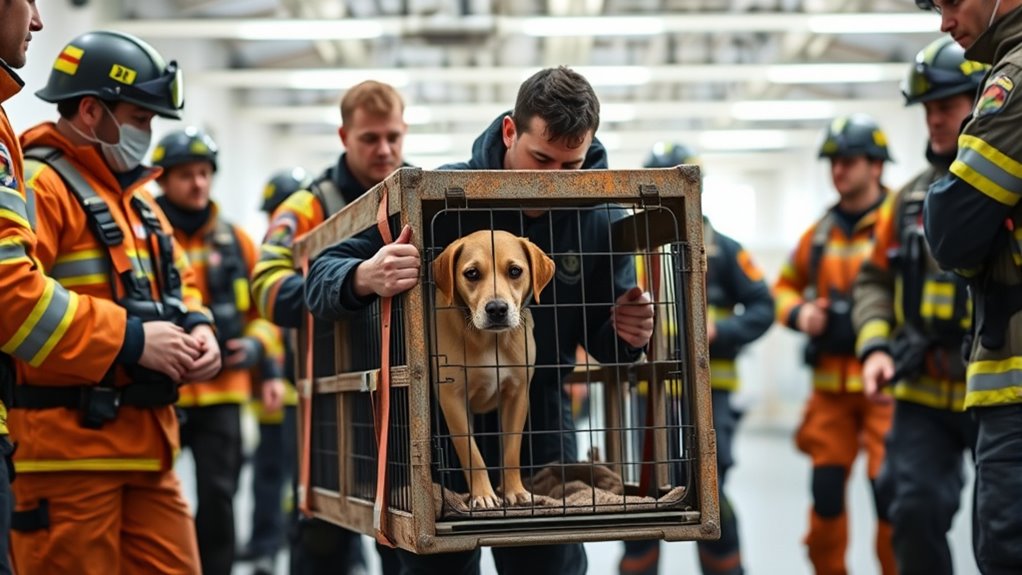

To achieve calm transport during stress, focus on positive reinforcement to make the crate a safe, familiar space. Use treats, toys, and praise to encourage your pet to explore and relax inside. Keep crate sessions calm, brief, and consistent, gradually increasing duration to build confidence. Make certain the crate fits well and is sturdy for safety. Consistent training helps your pet stay calm and cooperative during emergencies. Keep going to learn simple tips for successful crate training.
Key Takeaways
- Introduce the crate gradually using treats and praise to foster positive associations and reduce fear during stressful situations.
- Keep crate sessions calm, quiet, and consistent to promote relaxation and trust in your pet.
- Ensure the crate is appropriately sized, sturdy, and placed in accessible, familiar areas for safety and comfort.
- Practice regular crate training to build confidence and help pets remain calm during emergencies.
- Use simple commands and praise to reinforce calm behavior and facilitate smooth transportation under stress.
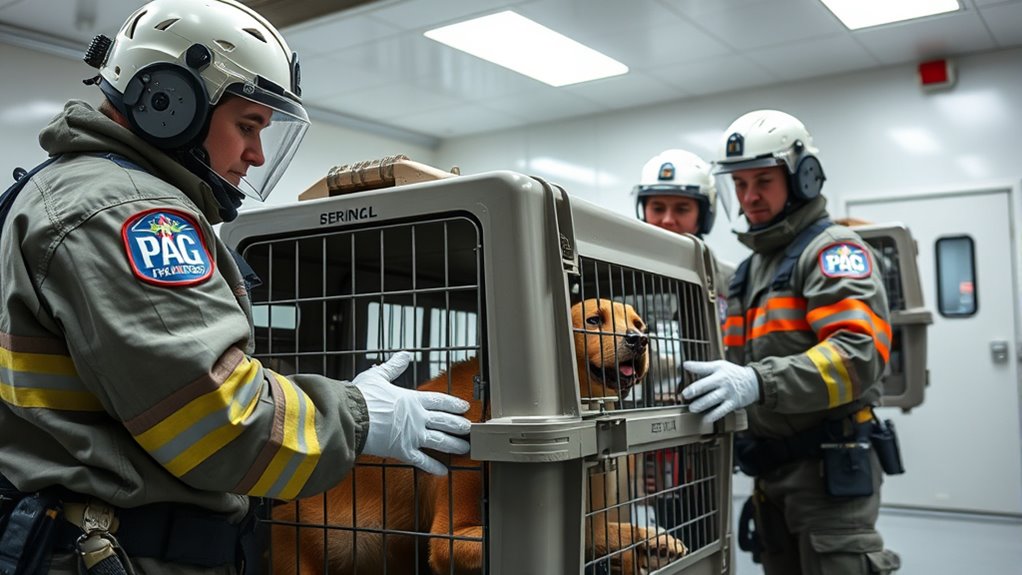
Evacuation crate training is essential for ensuring your pets stay safe during emergencies. When you prepare your pet to be comfortable in a crate, you’re not just teaching them to stay confined—you’re creating a safe space that can be relied on when chaos strikes. Proper crate safety is crucial; a well-trained pet will feel secure, reducing their anxiety during stressful situations. By establishing positive associations with the crate, you help your pet see it as a refuge rather than a source of fear. This training not only makes emergency evacuations smoother but also promotes calmer behavior during routine travel. Regular use can lead to better application timing and placement, making your pet more adaptable in various situations. Stress management is a vital component of effective crate training. During emergencies, pets can become highly anxious, which makes them more difficult to handle. Your goal is to minimize this stress by making the crate a familiar, comforting environment long before any crisis occurs. Start by placing the crate in a common area where your pet spends a lot of time, and encourage them to explore it at their own pace. Use treats, toys, and praise to create positive associations, so they begin to see the crate as a safe haven. Avoid forcing your pet inside; instead, let them decide to go in naturally, reinforcing that the crate is a good place to be. Consistency is key. Incorporate short, frequent crate sessions into your daily routine, gradually increasing the duration. This helps your pet build confidence and learn that the crate doesn’t mean punishment. During these sessions, keep the environment calm and quiet, speaking softly and offering treats when they enter or stay inside. As your pet becomes comfortable, introduce simple commands like “go to your crate” to reinforce obedience and cooperation. When you practice this regularly, you’re not just training for emergencies—you’re creating a foundation of trust and calmness that benefits everyday life. During stressful moments, your pet’s ability to stay calm in their crate can make all the difference. If they’re used to being crated calmly, they’ll be less likely to panic or become destructive if you need to evacuate quickly. Remember, crate safety involves ensuring the crate is the right size—allow enough space for your pet to stand, turn around, and lie comfortably—and that it’s sturdy enough to withstand movement. Avoid using a crate that’s too small or unstable, as this can increase anxiety and risk injury. Proper crate safety and stress management work hand-in-hand to prepare your pet for emergencies, giving you peace of mind knowing they’re as safe and calm as possible during stressful times.
Frequently Asked Questions
How Long Does Evacuation Crate Training Typically Take?
Evacuation crate training usually takes a few weeks, but it varies based on your pet’s comfort and crate size. You should spend consistent, short sessions daily, gradually increasing duration. Start with positive reinforcement to help your pet associate the crate with safety. The training duration depends on your pet’s response, but patience and regular practice are key to ensuring they stay calm during transport under stress.
Can Evacuation Crates Be Customized for Different Animals?
Like a tailor fitting a suit, you can customize evacuation crates for different animals. You’ll want to contemplate animal comfort and crate design, ensuring each crate fits the specific size and needs of your pet. Custom options include ventilation, padding, and door placement. This personalized approach helps your animals feel secure and reduces stress during transport, making evacuation less frightening and more manageable for everyone involved.
What Are Common Mistakes During Evacuation Crate Training?
A common mistake during evacuation crate training is choosing the wrong crate size, which can make your pet uncomfortable or anxious. You also might lack training consistency, confusing your animal and hindering progress. To avoid this, make certain the crate is appropriately sized—big enough for your pet to stand and turn around—and establish a regular, positive training routine. Consistency helps your pet feel safe and calm during transport.
How Do I Assess My Pet’s Readiness for Crate Training?
You can assess your pet’s readiness for crate training by observing their behavior assessment and crate comfort. For example, if your dog willingly enters the crate without resistance and remains calm, they’re ready. Gradually introduce the crate, noting if your pet shows signs of stress or anxiety. If they relax, explore the space confidently, and don’t try to rush, your pet is likely prepared for safe, calm transport under stress.
Are There Specific Safety Standards for Evacuation Crates?
Yes, evacuation crates should meet safety standards like safety certifications and compliance requirements. Check if the crate is approved by organizations such as the USDA or CE. Confirm it’s sturdy, well-ventilated, and secure to prevent escapes or injuries. Always verify the manufacturer’s documentation and labels for compliance details. Using a crate that adheres to these standards helps keep your pet safe and reduces stress during emergencies.
Conclusion
Imagine guiding your pet calmly into the crate as if leading them through a peaceful forest trail. With proper evacuation crate training, you create a safe haven amid chaos, turning stressful moments into manageable ones. Picture their trust in your gentle hand and the quiet comfort of the crate, ready to carry them through any storm. When you train with patience, you equip yourself and your pet to face emergencies together—calm, confident, and prepared for whatever lies ahead.