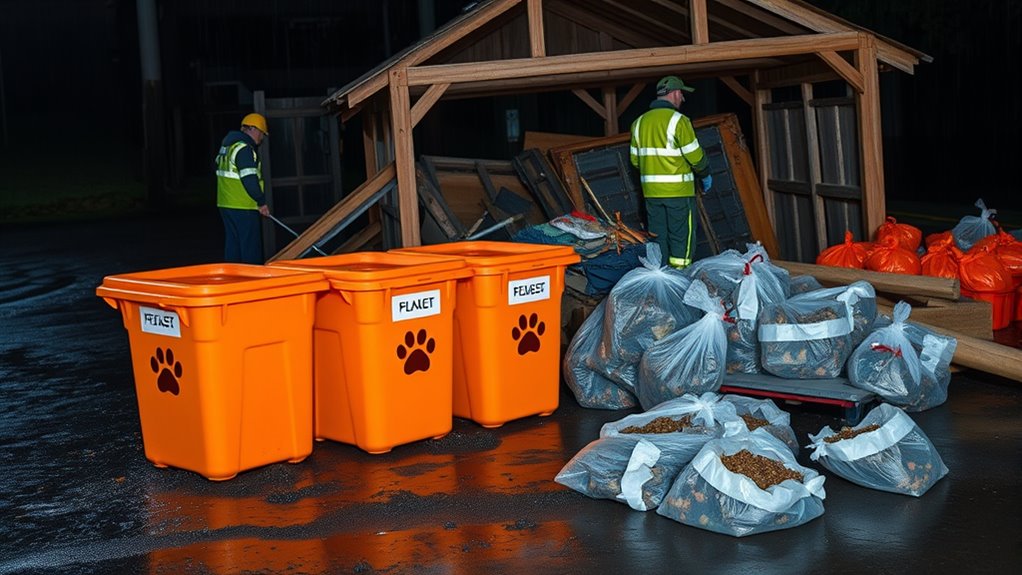

During disasters, managing pet waste properly is vital to protect your health and the environment. You should stock biodegradable bags, use sealable containers, and avoid disposal in natural water sources during floods. Proper containment, double-bagging, and storing waste in designated areas help prevent odors and pest attraction. Staying informed about local regulations and incorporating waste plans into your disaster preparedness can make a big difference. Keep going to learn more tips to keep your pets and community safe.

Get garden gear delivered free — and shop member deals
- Fast, free delivery on millions of items
- Access to Prime Big Deal Days deals on October 6–7
- Prime Video, Amazon Music and more included
Key Takeaways
- Stockpile biodegradable waste bags and disinfectants for effective pet waste collection during emergencies.
- Use sealable, double-bagged containers to securely store pet waste and prevent leaks or odors.
- Avoid disposing of pet waste in natural water sources, especially during floods, to prevent contamination.
- Follow local regulations and utilize community disposal stations when available for responsible waste management.
- Incorporate pet waste disposal strategies into disaster preparedness plans to mitigate health and environmental risks.

Have you ever wondered what happens to your pet’s waste after it’s left on the ground? During a disaster, understanding pet waste disposal becomes even more critical. When emergencies strike—whether a hurricane, earthquake, or flood—the usual routines for waste management often get disrupted. That’s why incorporating pet waste disposal into your disaster preparedness plan is essential. You need to be ready to handle pet waste safely and responsibly, even when conventional waste disposal services may be unavailable or overwhelmed.
In a disaster situation, unmanaged pet waste can pose serious health risks. It can attract pests, spread diseases, and contaminate water sources, compounding the chaos of an already stressful event. As part of your disaster preparedness, you should have a plan for managing pet waste in emergency conditions. This might include stockpiling biodegradable waste bags, disinfectants, and portable containers for waste collection. Being prepared means you won’t have to scramble for supplies when disaster strikes, reducing stress and ensuring your pet’s health and safety.
Proper pet waste disposal during emergencies involves more than just picking up after your pet. It requires understanding how to contain and transport waste safely. Use sturdy, sealable bags to prevent leaks and odors. Double-bagging waste can provide an extra layer of protection, especially when waste must be stored temporarily before disposal. If you’re in an area prone to floods or water contamination, avoid disposing of waste in natural water sources, as this can spread bacteria and viruses. Instead, designate a specific container for pet waste, and plan to dispose of it at a designated waste facility once the situation stabilizes. Additionally, understanding proper venting of waste containers is important to prevent odors and bacterial growth.
Use sealable bags and designated containers to safely contain and dispose of pet waste during emergencies.
In addition to having supplies on hand, it’s helpful to know local regulations and resources related to pet waste disposal during emergencies. Some communities offer special disposal stations or guidelines during disasters. Staying informed ensures you’re following best practices and not inadvertently contributing to environmental contamination or health hazards. Remember, disaster preparedness isn’t just about food and shelter—it’s also about managing waste responsibly to protect your pet, yourself, and the community.
Ultimately, integrating pet waste disposal strategies into your disaster preparedness plan helps you respond quickly and effectively when emergencies happen. By having the right supplies and knowledge, you help prevent the spread of disease and keep your pet comfortable and safe during difficult times. Proper pet waste management during disasters isn’t just good practice—it’s a crucial part of responsible pet ownership and community health.
Frequently Asked Questions
How Can Pet Waste Be Safely Disposed of During a Power Outage?
During a power outage, you can safely dispose of pet waste by storing it in sealed, sturdy bags or containers to prevent odors and leaks. Use portable trash bins or outdoor compost areas if available. Avoid flushing waste to prevent plumbing issues. Rely on alternative disposal methods, like designated waste collection sites or outdoor trash, and make certain pet waste storage is secure until you can properly dispose of it.
What Are Eco-Friendly Options for Pet Waste Disposal in Emergencies?
Think of eco-friendly pet waste disposal as planting seeds for a greener tomorrow. You can use biodegradable bags to pick up waste, ensuring it breaks down naturally over time. For composting solutions, consider small, contained compost bins designed for pet waste, which can turn waste into nutrient-rich soil without harming the environment. These options help you stay responsible and sustainable during emergencies, protecting both your pets and the planet.
How to Prevent Pet Waste From Contaminating Water Supplies During Disasters?
To prevent pet waste from contaminating water supplies during disasters, you should focus on waste containment and proper disposal. Always keep pet waste sealed in biodegradable bags and store it away from water sources. Avoid runoff by placing waste in designated containers or safe areas, and prevent floodwaters from spreading contaminants. By managing waste effectively, you reduce water contamination risks and protect both your community and environment during emergencies.
Are There Special Containers for Storing Pet Waste During Evacuations?
Did you know that over 60% of pet owners worry about waste disposal during evacuations? You should use portable containers or odor-proof bins to store pet waste safely. These specially designed containers help contain odors and prevent contamination, making evacuation easier and more hygienic. Always have a few on hand in your emergency kit, so you’re prepared to manage pet waste efficiently during emergencies.
How to Educate Pet Owners About Waste Management in Disaster Preparedness Plans?
You should implement training programs and community outreach initiatives to educate pet owners about waste management in disaster plans. Distribute easy-to-understand materials, hold workshops, and use social media to raise awareness. Emphasize the importance of proper waste disposal, packing supplies, and storing waste containers. By actively engaging pet owners, you’ll help guarantee they’re prepared, responsible, and confident in managing pet waste during emergencies.
Conclusion
In disasters, pet waste management might seem small, but it’s a crucial act of responsibility. While chaos surrounds you, your effort to clean up shows compassion and care, reminding us that even in the worst moments, kindness persists. Neglecting this duty can harm the environment and others, yet taking action brings dignity and hope. In these challenging times, your mindful steps create a safer, cleaner world—for your pets, your community, and yourself.
Fall yard work Picks
leaf blowers
As an affiliate, we earn on qualifying purchases.