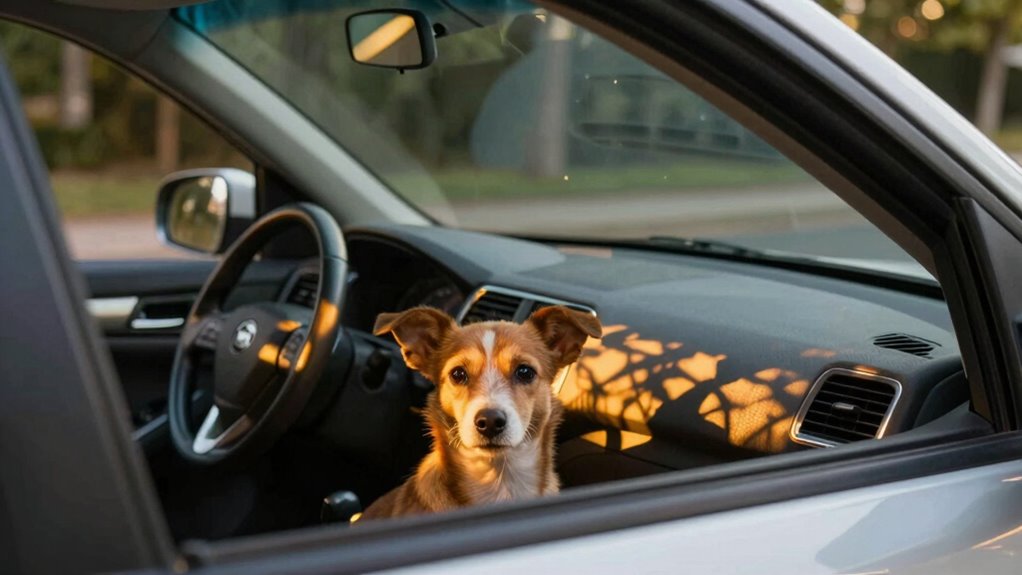
Even just a minute inside a parked car can be risky because temperatures can rise by as much as 20°F in that short time on warm days. The interior heats up quickly, making pets vulnerable to heatstroke and even death. Ventilation and air conditioning help, but they aren’t foolproof in extreme heat. It’s essential to understand how fast the danger grows so you can keep your pets safe—if you want to learn more, keep going.
Key Takeaways
- Temperatures inside a vehicle can rise by 20°F in just 10 minutes, quickly reaching dangerous levels for pets.
- Even brief absences can cause rapid heat buildup, risking heatstroke and death in pets.
- Proper ventilation and functioning air conditioning are crucial to prevent dangerous temperature increases.
- Never underestimate the risk of just a minute; heat can escalate dangerously in that short time.
- Always supervise or leave pets in cool, shaded areas instead of inside parked vehicles.
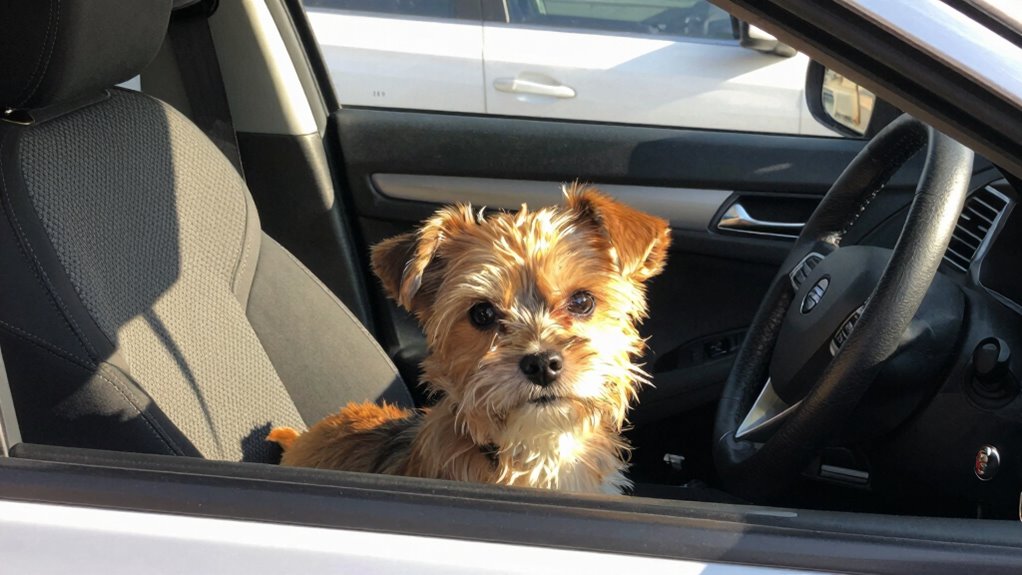
Have you ever underestimated how quickly a car can heat up? It’s one of those moments that seem harmless—running a quick errand or grabbing a bite—yet your car’s interior can become dangerously hot in just minutes. When it comes to pets, that quick rise in temperature can be deadly. Unlike humans, pets can’t tell you they’re feeling overwhelmed or uncomfortable. That’s why understanding the timeline of heat buildup and knowing how to use air conditioning effectively for pet safety is essential.
The first few minutes may seem like no big deal, but even a brief absence can lead to rapid temperature increases inside your vehicle. On a warm day, the temperature inside your car can soar by as much as 20 degrees in just 10 minutes. That’s enough to put your pet at risk of heatstroke, which can develop quickly and be fatal. Air conditioning can be a lifesaver here, helping to keep the interior cooler longer. If you plan to leave your pet in the car, always ensure the air conditioning is on and functioning properly, and that the vehicle is well-ventilated. It’s also wise to crack the windows open slightly to allow for airflow, but keep in mind that even this isn’t foolproof, especially in extreme heat.
Pet safety should be your top priority whenever you’re around vehicles in hot weather. Never assume that a quick run into a store or a moment to grab something won’t turn into a dangerous situation. The reality is that heat can build up so rapidly that your pet could be in distress within just a few minutes. It’s important to develop habits that prevent this—such as leaving pets at home in a cool, shaded place if you can’t take them with you, or making sure someone is always nearby if you’re parked and need to step away briefly. Remember, your pet’s comfort and safety depend on your awareness of how quickly the heat can escalate and the proactive measures you take.
Frequently Asked Questions
How Quickly Can a Car’s Interior Temperature Rise?
Your car’s interior can heat up dangerously in just 10 minutes, especially if air conditioning fails or the vehicle’s insulation traps heat. Even on cooler days, the temperature can rise rapidly, making it unsafe for pets or anyone left inside. You need to stay vigilant, never leave pets alone, and guarantee your AC works properly. Quick action can prevent heatstroke and save lives.
What Signs Indicate a Pet Is Overheating?
Overheating your pet is like a fire waiting to happen. Watch for heat exhaustion signs such as excessive panting, drooling, lethargy, and red or glazed eyes. If your pet is struggling to cool down, they may also have rapid heartbeat or vomiting. Recognizing these pet cooling and heat exhaustion signs early can save their life. Act quickly—move them to a cooler area and offer water.
Are There Any Legal Penalties for Leaving Pets in Cars?
Yes, there are legal penalties for leaving pets in cars. Laws vary by state, but you could face fines, charges of animal cruelty, or even criminal liability if your pet is harmed. Enforcement measures include police or bystanders intervening and reporting incidents. You’re responsible for understanding local laws, and neglecting them can lead to serious legal consequences if your pet suffers from heat exhaustion or heatstroke.
How Can I Prevent My Pet From Heatstroke?
To prevent your pet from heatstroke, make certain they stay well-hydrated by providing plenty of fresh water. Use cooling vests to help regulate their body temperature, especially on hot days. Never leave your pet in a parked car, even for a minute. Keep them in shaded, cool areas and avoid outdoor walks during peak heat. Regularly check for signs of overheating, like excessive panting or weakness.
What Emergency Steps Should I Take if I Find a Pet in a Hot Car?
If you find a pet in a hot car, act quickly to guarantee their safety. Call emergency services immediately and stay with the pet, providing water if possible. Use a tool to break the window if necessary, prioritizing the pet’s health and safety. Your swift emergency response can save their life. Always remember, quick action is essential to protect pets from heatstroke and ensure their well-being.
Conclusion
Remember, every minute counts when it comes to your pet’s safety in a hot car. Even a quick “just a minute” can turn deadly faster than you think. Are you willing to risk your furry friend’s life for a moment’s forgetfulness? Always double-check before leaving your vehicle, and never underestimate how quickly temperatures can rise. Your pet depends on you to keep them safe—so stay alert and act immediately if you see a pet in distress.