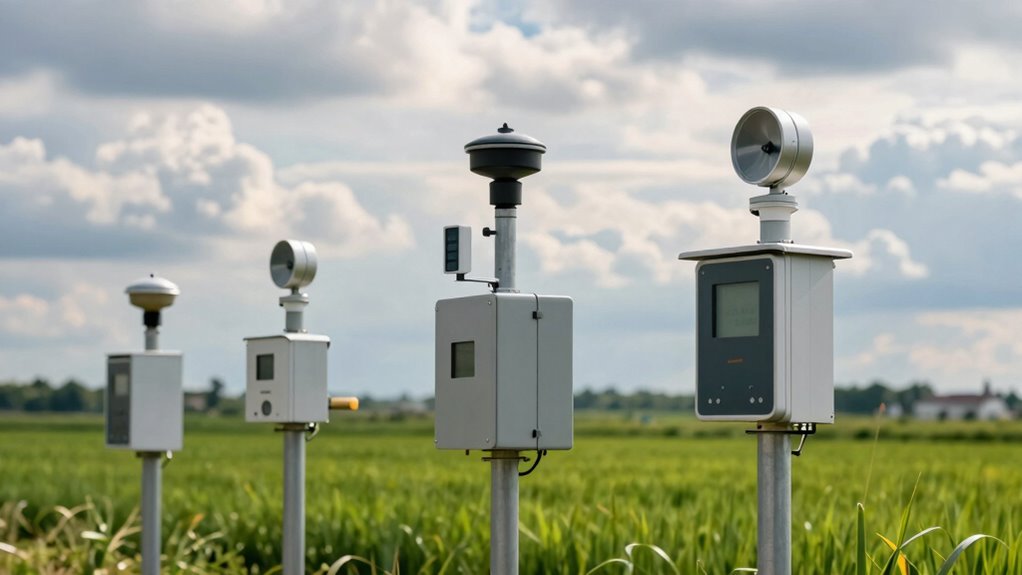

To effectively monitor land, focus on key data from weather stations like temperature, humidity, wind speed, and atmospheric conditions. Soil moisture levels are vital for understanding water availability and preventing drought or overwatering issues. These measurements help you assess vegetation health, detect environmental stress early, and optimize land use or crop management. If you want to discover which other data can boost your land monitoring efforts, keep exploring the options available.

Get garden gear delivered free with Prime
- Fast, free delivery on millions of items
- Prime Video, Amazon Music and more included
- Member-only deals all year
Key Takeaways
- Soil moisture levels are crucial for assessing water availability and guiding irrigation strategies.
- Temperature and humidity data influence plant health and help detect environmental stress.
- Wind speed measurements assess physical damage risk and transpiration rates in vegetation.
- Atmospheric conditions like rainfall and atmospheric pressure support understanding climate patterns.
- Real-time environmental data enables proactive land management and early stress detection.
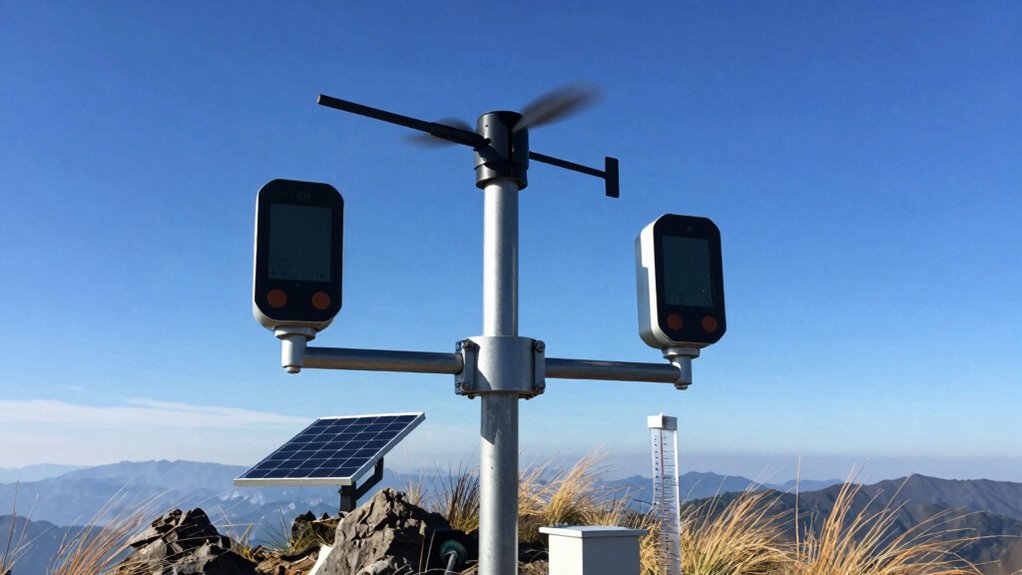
Weather stations play a pivotal role in land monitoring by providing real-time data on temperature, humidity, wind speed, and other atmospheric conditions. But their importance extends beyond just weather forecasting; they are essential tools for managing soil moisture and evaluating vegetation health. When you’re tracking land, understanding soil moisture levels helps you determine how much water is available for crops, forests, or natural landscapes. Too little soil moisture can signal drought stress, making plants vulnerable and reducing yields. On the other hand, excessive moisture might lead to runoff or root diseases. By monitoring soil moisture consistently, you can make informed decisions about irrigation schedules, drainage, and land management practices, ensuring ideal conditions for healthy plant growth.
Vegetation health is another key aspect that weather stations influence. Changes in temperature, humidity, and wind impact how plants grow and survive. For example, high temperatures combined with low humidity can cause water stress in plants, leading to wilting or leaf scorch. Wind speed data helps you gauge the risk of physical damage and transpiration loss, which affects overall plant vigor. When weather stations track these variables, they give you a clear picture of how environmental conditions influence vegetation. This information is essential for farmers, land managers, and conservationists aiming to maintain healthy ecosystems or improve crop production.
Furthermore, weather stations enable you to anticipate and respond to environmental stressors before they cause significant damage. If soil moisture sensors detect a drop below critical levels, you can activate irrigation systems promptly to prevent drought stress. Similarly, if conditions favor the spread of pests or diseases, early detection through weather data allows for targeted interventions. Keeping tabs on atmospheric conditions also helps you understand seasonal patterns and climate variability, supporting long-term land use planning and conservation efforts. Additionally, utilizing biodiversity data collected alongside weather information can enhance ecosystem management by identifying vulnerable habitats and species.
In essence, the data collected by weather stations isn’t just about current weather; it’s about understanding the intricate relationship between atmosphere, soil, and plants. Soil moisture and vegetation health stand out as two of the most essential indicators for land management, guiding actions that foster sustainability and resilience. By leveraging this real-time data, you can maximize land use, improve crop yields, protect natural habitats, and adapt to changing climate conditions with confidence. Weather stations empower you with the insights needed to maintain healthy, productive land in an increasingly unpredictable environment.
digital weather station for land monitoring
As an affiliate, we earn on qualifying purchases.
As an affiliate, we earn on qualifying purchases.
Frequently Asked Questions
How Often Should Weather Station Data Be Calibrated for Accuracy?
You should calibrate your weather station sensors at least once a year to guarantee accuracy. Regular sensor maintenance and calibration frequency are essential, especially if you notice discrepancies in data or after severe weather events. For critical measurements like temperature and humidity, consider more frequent calibration—every 6 months. Proper calibration helps maintain reliable data, supporting effective land monitoring and decision-making processes.
Can Weather Stations Predict Extreme Weather Events Accurately?
You can’t rely solely on weather stations to predict extreme weather events accurately. For example, climate modeling combines station data with satellite info, improving prediction reliability. While weather stations provide essential real-time data, their data reliability alone isn’t enough for precise forecasts. Continuous calibration and integrating multiple data sources enhance the accuracy of extreme weather predictions, helping communities prepare better for hurricanes, tornadoes, or floods.
What Is the Lifespan of Most Land Monitoring Weather Stations?
Most land monitoring weather stations last about 10 to 15 years, depending on sensor durability and maintenance. You can prolong their lifespan by regularly calibrating sensors and protecting equipment from harsh environmental conditions. Reliable data depends on the station’s durability; when sensors degrade, data accuracy drops. Staying proactive with maintenance ensures your weather station continues providing dependable, high-quality data for land monitoring efforts over its lifespan.
Are There Eco-Friendly Options for Sustainable Weather Station Deployment?
Yes, eco-friendly options exist for sustainable weather station deployment. Did you know that solar-powered stations can operate with zero emissions? By choosing weather stations made from eco-friendly materials and powered by solar energy, you reduce your carbon footprint considerably. These options not only support environmental conservation but also lower long-term operating costs, making them a smart, sustainable choice for land monitoring.
How Do Weather Stations Integrate With Other Land Monitoring Tools?
You’ll find that weather stations integrate seamlessly with other land monitoring tools through sensor integration and data interoperability. These stations can connect with GIS systems, remote sensing devices, and IoT platforms, sharing real-time data effectively. This integration allows you to analyze climate patterns, soil health, and land use changes collectively, enabling more informed decision-making for land management, environmental conservation, and sustainable development.
soil moisture sensor for agriculture
As an affiliate, we earn on qualifying purchases.
As an affiliate, we earn on qualifying purchases.
Conclusion
As you stand beneath the vast sky, remember that the data from weather stations acts like a compass guiding land management. Focus on temperature, humidity, and soil moisture—these are the pillars that reveal the land’s story. With accurate measurements, you can anticipate changes and protect your environment. Like a lighthouse guiding ships through stormy seas, the right data illuminates your path, ensuring you make informed decisions to nurture and sustain the land you cherish.
weather station with wind speed measurement
As an affiliate, we earn on qualifying purchases.
As an affiliate, we earn on qualifying purchases.
environmental monitoring station for farms
As an affiliate, we earn on qualifying purchases.
As an affiliate, we earn on qualifying purchases.
Fall yard work Picks
leaf blowers
As an affiliate, we earn on qualifying purchases.