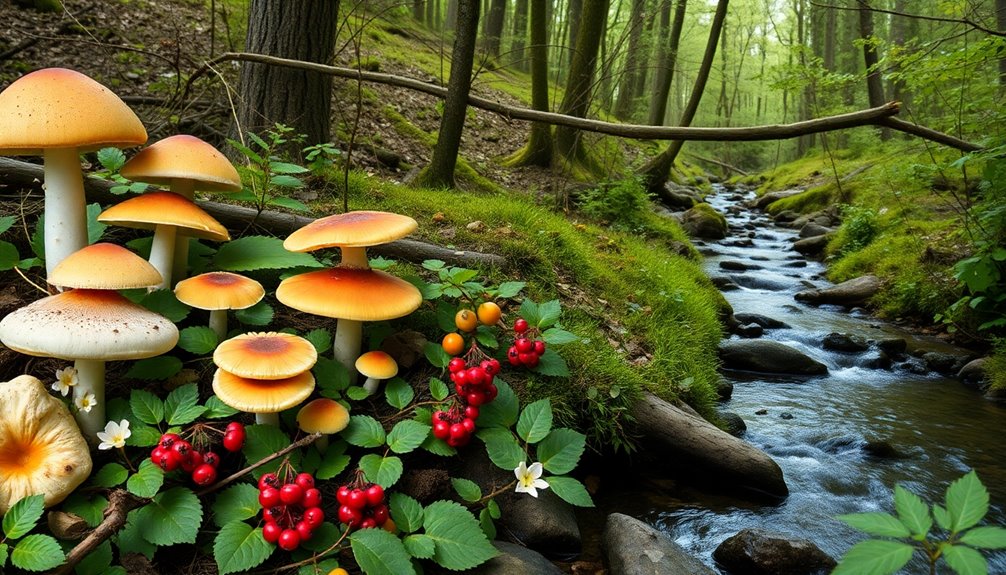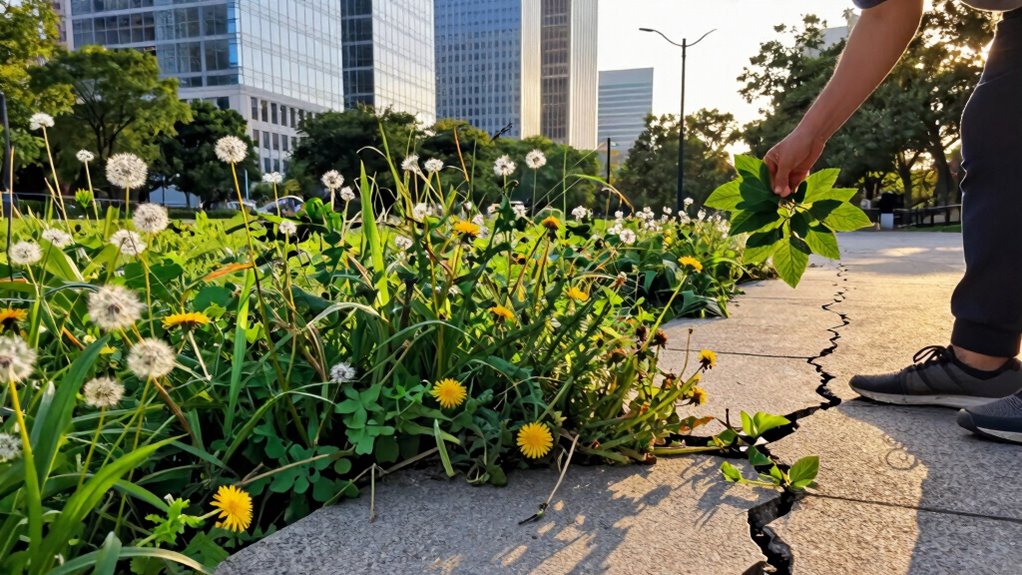
Urban foraging can be rewarding when you choose green spaces like parks with known, clean histories, providing fresh, free food and connecting you with nature. However, it gets risky near busy roads, factories, or contaminated sites where plants may absorb pollutants or chemicals. You need to identify plants carefully and be cautious of potential toxins or soil contamination. If you keep exploring, you’ll discover how to forage safely and sustainably in city environments.

Get garden gear delivered free with Prime
- Fast, free delivery on millions of items
- Prime Video, Amazon Music and more included
- Member-only deals all year
Key Takeaways
- Urban foraging is safest in parks and green spaces with clean histories, away from busy roads and industrial areas.
- Pollution from heavy metals and chemicals poses health risks, requiring site knowledge and soil testing before foraging.
- Proper plant identification and avoiding toxic lookalikes are essential to prevent poisoning.
- Washing plants reduces chemical residues but does not eliminate contamination from polluted environments.
- Responsible foraging involves understanding local regulations and prioritizing safety to ensure sustainability.

Urban foraging has become increasingly popular as people seek sustainable ways to connect with nature and find free, fresh food. You might walk through city parks, alleyways, or even vacant lots, gathering wild edible plants that grow in unexpected places. It’s a way to reduce grocery bills, enjoy outdoor activity, and rediscover the natural environment right in your city. But before you start snipping leaves or plucking berries, you need to consider some important realities. While urban foraging offers exciting opportunities, it also comes with risks, especially related to pollution concerns and plant safety.
One of the biggest challenges you’ll face is understanding where it’s safe to forage. Many wild edible plants thrive in urban environments, but they can also absorb pollutants from the air, soil, or water. Heavy metals like lead, cadmium, and arsenic tend to settle in soil contaminated by traffic emissions, industrial waste, or old construction debris. If you’re not careful, you could end up ingesting toxins that pose health risks. That’s why knowing the history of a site becomes vital. Avoid areas near busy roads, factories, or abandoned buildings where pollution is more likely. Stick to parks or green spaces with cleaner histories, and learn how to identify plants that are less prone to absorbing harmful substances. Additionally, understanding soil contamination levels can help you determine safer foraging spots. Being aware of urban pollution sources can also help you make better foraging decisions. Conducting soil testing or consulting local environmental resources can further assist in assessing safety. Recognizing the sources of urban pollution can help you avoid risky locations altogether. Moreover, staying informed about local environmental conditions can further protect you from unforeseen hazards.
Avoid polluted areas; choose parks and green spaces with cleaner histories for safe urban foraging.
Another pollution concern involves chemical residues that might linger on plant surfaces. Pesticides, herbicides, or other chemicals used in nearby landscaping or nearby agriculture can contaminate wild edibles. Even plants that look healthy and vibrant can harbor residues that aren’t safe for consumption. Washing plants thoroughly can help, but it doesn’t eliminate all risks. Foraging in areas that are not designated for edible plants, or where chemical use is common, increases your chances of accidental poisoning or long-term health issues. It’s essential to familiarize yourself with local regulations and avoid foraging in areas with signs of chemical treatment or excessive pollution.
Plus, not all wild edible plants are safe to eat, even if grown in cleaner environments. Proper identification is critical; some plants have toxic lookalikes that can cause serious health problems if ingested. Consulting reliable foraging guides or experts can help prevent dangerous mistakes. Remember, just because a plant is wild and free doesn’t mean it’s edible or safe. When foraging in urban areas, you’re balancing the thrill of discovering free food with the responsibility of ensuring your safety. Being cautious about pollution concerns and plant identification makes your urban foraging adventures both sustainable and safe.
urban foraging plant identification guide
As an affiliate, we earn on qualifying purchases.
As an affiliate, we earn on qualifying purchases.
Frequently Asked Questions
What Are the Legal Implications of Urban Foraging?
You need to be aware that urban foraging can have legal implications due to legal restrictions and property rights. If you forage on private property without permission, you risk trespassing charges. Public land might have rules limiting plant collection, so always check local regulations. Respect property rights to avoid fines or legal trouble. Being informed helps you forage responsibly and stay within the law.
How Do I Identify Safe Edible Plants in Cities?
To identify safe edible plants in cities, focus on accurate plant identification using reliable guides or apps, paying close attention to leaves, flowers, and growth patterns. Always practice toxin awareness by recognizing plants that look similar to edible ones but are toxic, such as wild carrots versus poison hemlock. When in doubt, avoid consuming unfamiliar plants, and consider consulting local foraging groups or experts to guarantee safety.
Are There Specific Seasons for Urban Foraging?
Yes, there are specific seasons for urban foraging. Seasonal variations influence which plants are available and safe to harvest. For example, many edible plants bloom in spring and early summer, making them easier to identify and harvest. In fall, you might find berries and nuts, while winter foraging is limited. Pay attention to plant blooming cycles, as they signal the best times to forage safely and sustainably.
Can Urban Foraging Replace Grocery Shopping Entirely?
You can’t replace grocery shopping entirely with urban foraging, as the saying goes, “Don’t put all your eggs in one basket.” While wild food can supplement your diet, foraging myths sometimes overstate its reliability. Urban environments offer some edible finds, but they’re often limited and unpredictable. Relying solely on foraging risks nutritional gaps and safety issues, so it’s best to view it as a supplement, not a complete substitute.
How Can I Ensure Sustainable Foraging Practices?
To guarantee sustainable foraging practices, focus on accurate plant identification to avoid harming non-target species. You should harvest ethically by taking only what you need, leaving enough behind for the plant to regenerate, and avoiding over-harvesting. Respect private property and local regulations. By practicing responsible foraging, you help preserve urban green spaces and maintain ecological balance, ensuring these resources remain available for future generations.
soil testing kit for urban gardening
As an affiliate, we earn on qualifying purchases.
As an affiliate, we earn on qualifying purchases.
Conclusion
As you venture into city parks and alleyways, remember that urban foraging offers both bounty and danger. Picture lush greens dotted with ripe berries—yet behind every corner, pollution and hidden hazards lurk. It’s a delicate dance between the thrill of discovery and the risk of harm. Embrace the bounty wisely, balancing curiosity with caution, so you can enjoy the city’s edible secrets without falling into its unseen traps.
As an affiliate, we earn on qualifying purchases.
As an affiliate, we earn on qualifying purchases.
Fall Picks
fall essentials
As an affiliate, we earn on qualifying purchases.