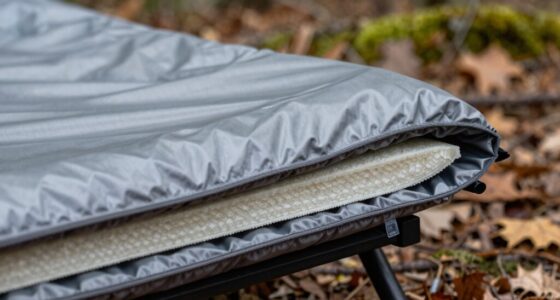
Winter sleeping bag temperature ratings show the lowest temperature where you’ll stay warm, but they’re based on standardized tests with mannequins, so your actual comfort may vary. Factors like your metabolism, clothing, and sleep habits influence how warm you feel. Bags rated lower than your expected temperature help guarantee warmth in cold conditions. Knowing how insulation materials and design affect warmth can help you pick the right bag—keep exploring to learn more.

Get garden gear delivered free — and shop member deals
- Fast, free delivery on millions of items
- Access to Prime Big Deal Days deals on October 6–7
- Prime Video, Amazon Music and more included
Key Takeaways
- Temperature ratings indicate the lowest comfortable sleeping temperature based on standardized tests, but individual comfort varies.
- Ratings are often categorized as “comfort,” “limit,” and “extreme,” reflecting different levels of warmth and safety.
- Personal factors like metabolism, clothing, and sleep habits influence how warm a bag feels beyond its rated temperature.
- Down insulation typically offers better warmth-to-weight ratio for cold conditions, while synthetic performs better when wet.
- Choosing a sleeping bag rated lower than expected temperatures provides extra warmth for colder winter nights.

Are you unsure how to choose the right winter sleeping bag for cold conditions? Understanding what the temperature ratings really mean is vital, and it all starts with grasping how insulation materials and sleeping bag construction work together to keep you warm. Manufacturers use specific tests to assign temperature ratings, but these figures can sometimes be confusing or misleading if you don’t know what to look for.
Insulation materials are at the heart of a sleeping bag’s warmth. Down insulation, typically made from duck or goose feathers, offers excellent warmth-to-weight ratios, compresses well, and is highly durable. Synthetic insulation, on the other hand, is often made from polyester fibers and is less expensive, dries faster, and retains warmth even when wet. When choosing a bag for cold conditions, it’s essential to weigh how these materials perform in low temperatures—down tends to excel in extreme cold, but synthetic can be more reliable in damp or humid environments.
Down insulates well but needs dry conditions; synthetic performs better in damp, humid environments.
The construction of the sleeping bag also plays a significant role in its temperature rating. The way the insulation is sewn into the fabric affects how well heat is retained. Mummy-shaped bags, with their tapered design, minimize dead space and reduce heat loss, making them ideal for cold weather. Baffles—channels that contain the insulation—help prevent cold spots by keeping the fill evenly distributed. Some bags feature differential cut or continuous baffle construction, which can improve insulation efficiency by allowing more fill in critical areas like the torso and foot boxes. Additionally, the outer shell material matters; tightly woven, water-resistant fabrics help prevent heat loss caused by moisture penetration.
When you see a temperature rating on a winter sleeping bag, it usually indicates the lowest temperature at which a standard user can expect to sleep comfortably. However, these ratings are based on standardized tests using a mannequin or a test dummy, not real-world conditions. Your personal comfort depends on factors like your metabolism, clothing, and sleep habits. So, if you tend to feel cold easily, opt for a bag rated several degrees lower than the temperatures you expect. Conversely, if you’re a warm sleeper, you might get away with a slightly higher rating.
winter sleeping bag with high warmth-to-weight ratio
As an affiliate, we earn on qualifying purchases.
As an affiliate, we earn on qualifying purchases.
Frequently Asked Questions
How Do I Choose the Right Temperature Rating for My Climate?
To choose the right temperature rating, consider your climate and typical winter conditions. Look for sleeping bags with insulation suited to your environment, and pay attention to temperature rating standards, which guarantee consistency. If you camp in extremely cold weather, opt for a bag rated lower than the coldest temperatures you expect, providing extra warmth. This way, you stay comfortable and safe, no matter how chilly it gets.
Do Different Brands Use the Same Temperature Standards?
Brands battle with boundaries, but they often don’t follow the same standards. While some prioritize precise temperature standards, others may fudge figures for marketing. Brand consistency can vary greatly, so don’t solely rely on numbers. Always check each brand’s specific testing methods, and look for independent reviews. This way, you verify your sleeping bag’s temperature rating truly matches your cold-climate needs, regardless of the brand’s claims.
How Accurate Are Sleeping Bag Temperature Ratings in Real Conditions?
Sleeping bag temperature ratings give a good starting point, but they aren’t always perfectly accurate in real conditions. Your sleep comfort depends on insulation materials, your body heat, and weather. Factors like wind, moisture, and personal metabolism can affect how warm you stay. Always consider layering and select a bag rated slightly lower than your expected lows to guarantee comfort and safety during cold nights.
Can I Layer Sleeping Bags for Colder Temperatures?
Like a knight donning armor, you can layer sleeping bags for colder temps. Use layering techniques by stacking bags with compatible insulation materials—like down inside synthetic for maximum warmth. Make sure each layer fits well without compressing insulation. This approach boosts your overall insulation, helping you brave extreme cold. Just remember, the key is choosing bags with compatible temperature ratings and materials tailored to your adventure’s demands.
What Are the Signs My Sleeping Bag Isn’t Keeping Me Warm Enough?
If you notice you’re waking up cold or feeling damp despite your sleeping bag, it’s a sign it isn’t providing enough insulation for sleep comfort. Pay attention to areas where heat escapes, like around zippers or seams. Poor insulation materials or compression can reduce warmth. Consider upgrading to a bag with better insulation or layering appropriately. Ensuring your sleeping bag’s insulation materials are suitable for the conditions will keep you warmer.
down insulated sleeping bag for cold weather
As an affiliate, we earn on qualifying purchases.
As an affiliate, we earn on qualifying purchases.
Conclusion
Understanding winter sleeping bag temperature ratings helps you pick the right gear for your adventures. Remember, these ratings aren’t set in stone—they’re a guideline, so be prepared for the unexpected. Always dress appropriately and consider your own comfort zone. When in doubt, choose a bag rated for colder conditions. After all, it’s better to be safe than sorry, especially when the cold shoulder is headed your way. Stay warm and sleep soundly out there!
synthetic sleeping bag for damp conditions
As an affiliate, we earn on qualifying purchases.
As an affiliate, we earn on qualifying purchases.
mummy sleeping bag for winter camping
As an affiliate, we earn on qualifying purchases.
As an affiliate, we earn on qualifying purchases.
Fall Picks
fall essentials
As an affiliate, we earn on qualifying purchases.