To maximize your portable solar panels’ efficiency at basecamp, focusing on adjusting the angles is key. As the sun moves across the sky, changing your panels’ tilt to match the sun’s position can considerably boost energy output. Fixed setups waste potential power, while active angle management guarantees ideal sunlight absorption. Remember, environmental factors like weather and season also impact performance. Keep exploring for practical tips to get the most from your solar setup.

Get garden gear delivered free with Prime
- Fast, free delivery on millions of items
- Prime Video, Amazon Music and more included
- Member-only deals all year
Key Takeaways
- Adjusting portable panel angles throughout the day maximizes sunlight absorption and enhances energy output at basecamp.
- Proper tilt and orientation are more critical than panel location, especially in variable weather conditions.
- Active management of sun angles compensates for environmental factors like clouds and dust, improving efficiency.
- Seasonal and daily sun position changes require frequent angle adjustments for optimal solar gain.
- Using adjustable mounts allows quick, effective positioning to ensure maximum sunlight capture at basecamp.

When you’re at basecamp, staying powered up can be a challenge, especially in remote locations where traditional electricity isn’t available. Portable solar panels are a popular solution, but their effectiveness hinges on more than just size or brand. The real game-changer is understanding how sunlight angles impact solar panel efficiency. Many assume that placing panels flat on the ground or directly facing the sun is enough, but that’s a misconception. To truly optimize your setup, you need to pay attention to sunlight optimization—adjusting your panels to catch the maximum amount of sunlight throughout the day.
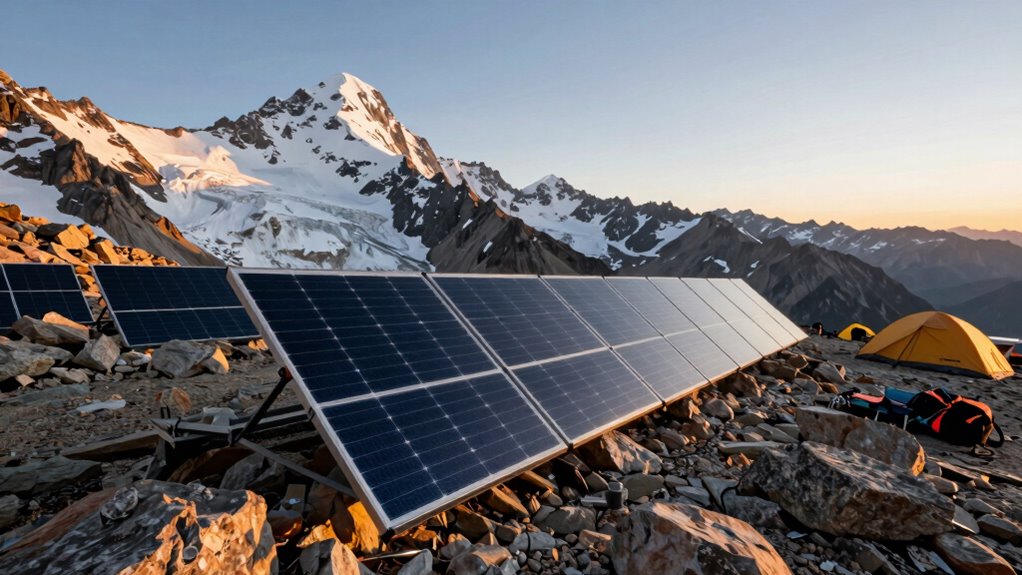
Sunlight angles vary as the sun moves across the sky, and this movement directly influences how much solar energy your panels can absorb. When you position your panels correctly, you dramatically improve their efficiency. For example, angling panels towards the sun during peak hours ensures you’re capturing the maximum sunlight possible. It’s not just about pointing them south or north; it’s about adjusting the tilt based on the time of day and your geographic location. This small tweak can significantly boost your power output, especially in the early morning or late afternoon when sunlight hits at a steeper angle.
Adjust panel tilt throughout the day to maximize sunlight absorption and boost efficiency.
You might think that leaving panels flat or fixed in one position is enough, but that approach often results in wasted energy. The key is to continually optimize panel angles in response to the sun’s position. Portable panels with adjustable mounts make this easier, allowing you to shift their orientation throughout the day. This isn’t just about convenience; it’s about making every photon count. The more sunlight your panels absorb, the more reliable your power supply becomes, especially if you’re relying on them for critical gear or communication devices. Regularly assessing and adjusting solar angles ensures you’re not missing out on potential energy generation.
Another aspect to consider is how environment and weather can affect sunlight and, consequently, your solar efficiency. Cloud cover, dust, and even the time of year influence sunlight angles and intensity. By understanding these factors, you can better anticipate how to position your panels for optimal sunlight exposure. Remember, the goal isn’t just to set up your solar panels and forget about them; it’s about actively managing their positioning to maximize sunlight absorption and ensure your power needs are met.
Additionally, understanding the importance of solar radiation can help you better gauge the potential energy your panels can produce under different conditions. Remember, the goal isn’t just to set up your solar panels and forget about them; it’s about actively managing their positioning to maximize sunlight absorption and ensure your power needs are met.
portable solar panel adjustable mount
As an affiliate, we earn on qualifying purchases.
As an affiliate, we earn on qualifying purchases.
Frequently Asked Questions
How Do Weather Conditions Affect Solar Panel Efficiency at Basecamp?
Weather conditions markedly impact your solar panel efficiency at basecamp. Cloud cover reduces sunlight, lowering energy output, so your panels generate less power on cloudy days. Wind impact can cause panels to shake or shift, decreasing their efficiency and possibly damaging them. Stay aware of these conditions, and consider adjusting panel angles or using protection to optimize performance despite weather challenges. Proper planning helps maximize your solar energy even when weather isn’t ideal.
What Maintenance Is Required for Portable Solar Panels During Extended Trips?
Think of your solar panel as a loyal guardian, standing watch at your basecamp. To keep it strong, you should regularly check for dust, debris, or scratches—simple maintenance to guarantee peak Panel durability. Wipe it clean as needed, especially after storms or heavy dust. Maintenance frequency depends on weather conditions, but generally, a quick inspection every few days keeps your panels efficient, ready to harness the sun’s power day after day.
Can Portable Solar Panels Be Used to Charge All Types of Devices?
Yes, portable solar panels can charge most devices, but device compatibility and power output matter. You need to check if your device’s charging port matches the panel’s output options and whether the panel provides enough power. Smaller panels might charge phones efficiently, while larger ones can handle tablets or cameras. Always verify the power output specs, so your devices get the right charge without damage or slow charging.
What Is the Best Storage Method for Solar Panels When Not in Use?
You should store your solar panels in a cool, dry place to keep them in top shape. Wrap them in protective covers to prevent dust and scratches, and avoid extreme temperatures. Use battery storage for excess energy to guarantee you’re prepared for cloudy days. Proper panel protection and efficient battery storage help maintain your panels’ performance and extend their lifespan when not in use, making your solar setup more reliable.
How Do Different Terrains Impact the Placement of Solar Panels?
Think of terrain as the stage where your solar panels perform. Varying terrain variation can cast shadows, so you need to master shade management to keep sunlight shining on your panels. Flat, open ground offers the clearest shot at the sun’s rays, while hills and uneven surfaces might require careful positioning. By understanding the landscape, you can optimize panel placement, ensuring your solar setup captures maximum sunlight regardless of terrain challenges.
solar panel tilt angle controller
As an affiliate, we earn on qualifying purchases.
As an affiliate, we earn on qualifying purchases.
Conclusion
So, next time you set up your portable solar panel at basecamp, remember—it’s not just about catching the sun, but catching it at the right angle. A slight shift could mean more power or less. Will you discover the perfect spot before your supplies run low? The sun’s position holds secrets that could make or break your adventure. Stay alert, stay strategic—your energy depends on it. The true sunlight game is just beginning.
As an affiliate, we earn on qualifying purchases.
portable solar charger with angle adjustment
As an affiliate, we earn on qualifying purchases.
As an affiliate, we earn on qualifying purchases.
Columbus Day / Indigenous Peoples' Day Picks
long weekend sales
As an affiliate, we earn on qualifying purchases.